

Historical Figure
William Henry Harrison
1773–1841
President of the United States in 1841
Talk to William Henry Harrison
Have a conversation with this historical figure through AI
Biography
William Henry Harrison was the ninth president of the United States, serving from March 4 to April 4, 1841, the shortest presidency in U.S. history. He was also the first U.S. president to die in office, causing a brief constitutional crisis, since presidential succession was not then fully defined in the U.S. Constitution. Harrison was the last president born as a British subject in the Thirteen Colonies. He was a member of the Harrison family of Virginia, and a son of Benjamin Harrison V, who was a U.S. Founding Father. His own son John Scott Harrison was the father of Benjamin Harrison, the 23rd U.S. president.
Timeline
The story of William Henry Harrison, told in moments.
Born at Berkeley Plantation, Virginia. Son of a signer of the Declaration of Independence. Last president born as a British subject. Studied classics and history at Hampden-Sydney College before dropping out to join the army.
Led 1,000 soldiers against Tecumseh's confederacy at the Battle of Tippecanoe in Indiana Territory. The victory was contested and messy, but it made him a national figure. He'd been governor of the territory for a decade, negotiating (and pressuring) Native American land cessions.
Won the presidency with the slogan "Tippecanoe and Tyler Too." He was 67, the oldest president elected until Ronald Reagan. Campaigned on his log cabin image though he'd grown up on a plantation.
Delivered the longest inaugural address in American history. 8,445 words. Nearly two hours. In the rain and cold. Without a hat or overcoat.
Died of pneumonia (likely complicated by typhoid) after 31 days in office. The shortest presidency in U.S. history. His grandson Benjamin Harrison became the 23rd president 48 years later.
In Their Own Words (10)
Sir, I wish you to understand the true principles of the government. I wish them carried out. I ask nothing more.
Last words to John Tyler. Quoted in Jebediah Whitman, "A Memorial to Our Dear Departed President" (New Ark, DE: Printed by the Author, 1841)., 1841
I have determined never to remove a Secretary of the Treasury without communicating all the circumstances attending such removal to both Houses of Congress.
1841
There is no part of the means placed in the hands of the Executive which might be used with greater effect for unhallowed purposes than the control of the public press.
1841
Fellow-citizens, being fully invested with that high office to which the partiality of my countrymen has called me, I now take an affectionate leave of you. You will bear with you to your homes the remembrance of the pledge I have this day given to discharge all the high duties of my exalted station according to the best of my ability, and I shall enter upon their performance with entire confidence in the support of a just and generous people.
1841
The only legitimate right to govern is an express grant of power from the governed.
1841
Artifacts (15)

William Henry Harrison
Charles Balthazar Julien Févret de Saint-Mémin

William Henry Harrison
William Strickland


William Henry Harrison
Alfred M. Hoffy, active 1835 - 1864


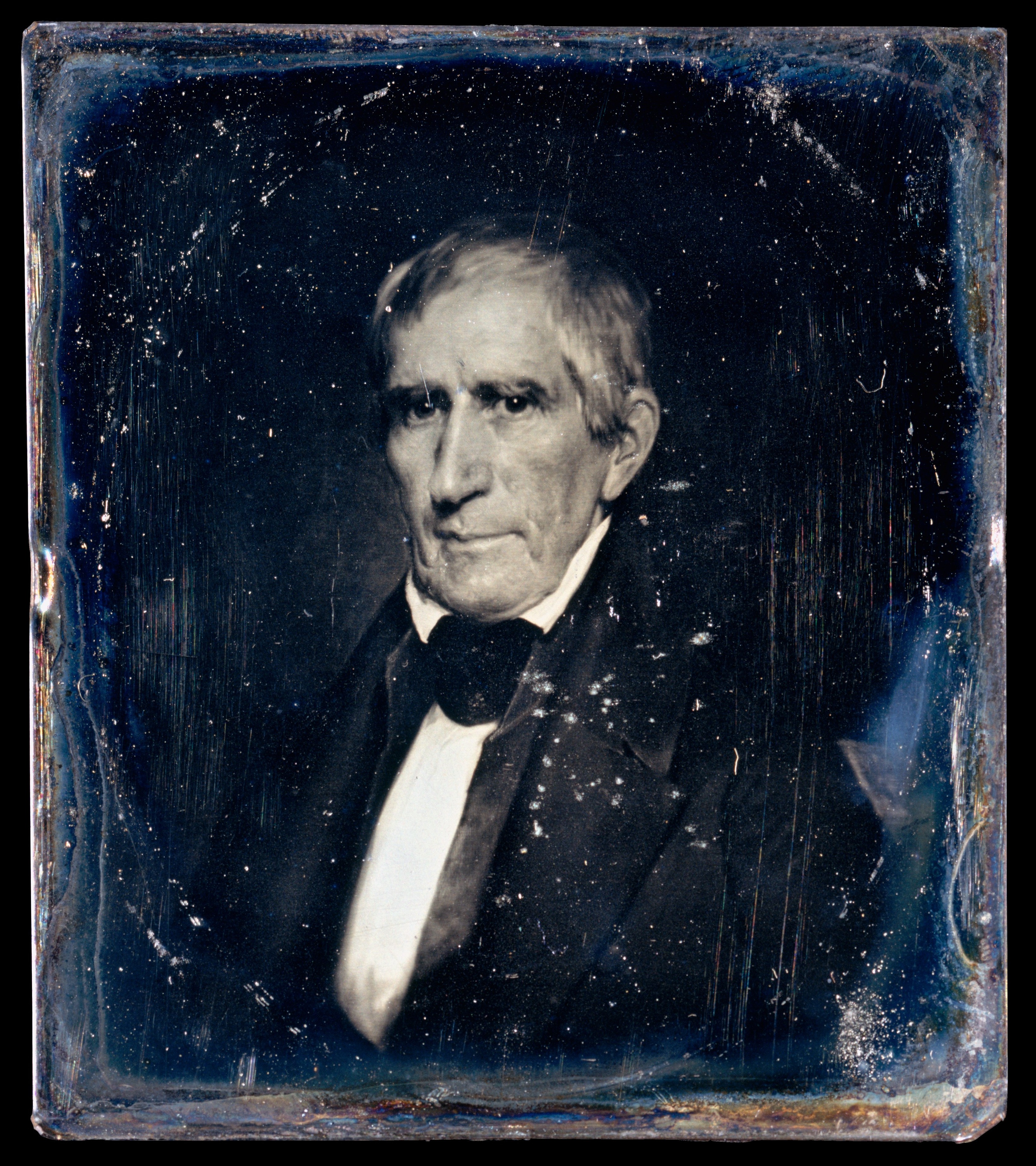
William Henry Harrison
Albert Sands Southworth|Josiah Johnson Hawes|Southworth and Hawes|Albert Gallatin Hoit


William Henry Harrison
Nathaniel Currier
do not reflect those of Microsoft or Mojang
craft and did not invite him to the 10-year anniversary celebration of the game. A spokesperson for Microsoft stated that his views "do not reflect those of Microsoft or Mojang". He is still...
a flat, infinite world created by a man called Markus
rson for Microsoft stated that his views "do not reflect those of Microsoft or Mojang". He is still mentioned in the End Poem ("a flat, infinite world created by a man called Markus"). == Awards...
an increasingly polarizing figure, tweeting offensive statements regarding race,...
tter regarding feminism, race, and transgender rights have caused public controversies. He has been described as "an increasingly polarizing figure, tweeting offensive statements regarding race,...
More from the Enlightenment


Explore what happened on the days that shaped William Henry Harrison's life. Today In History connects historical figures with the events, births, and deaths that defined their era. Browse all historical figures or explore today's events.