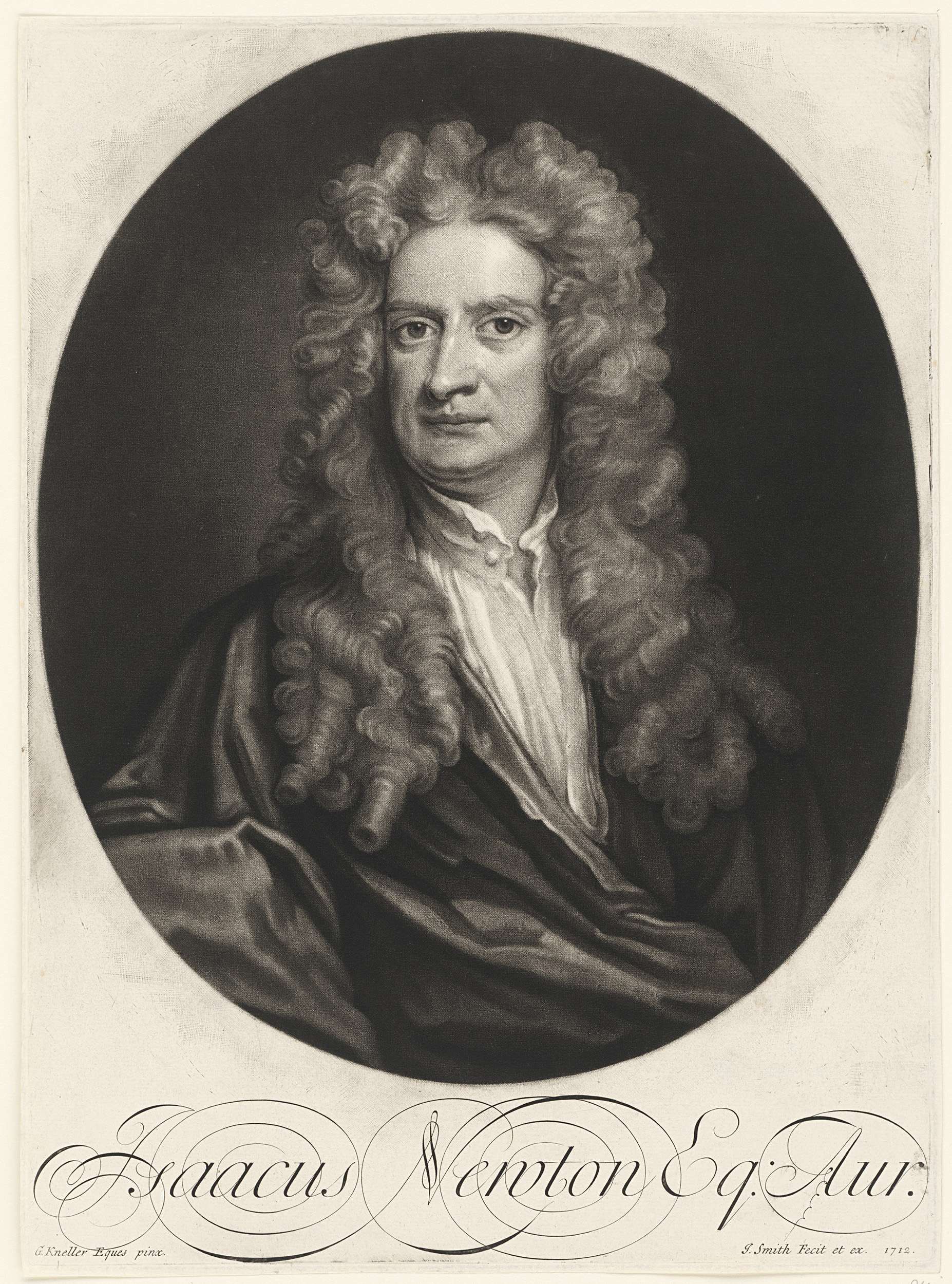
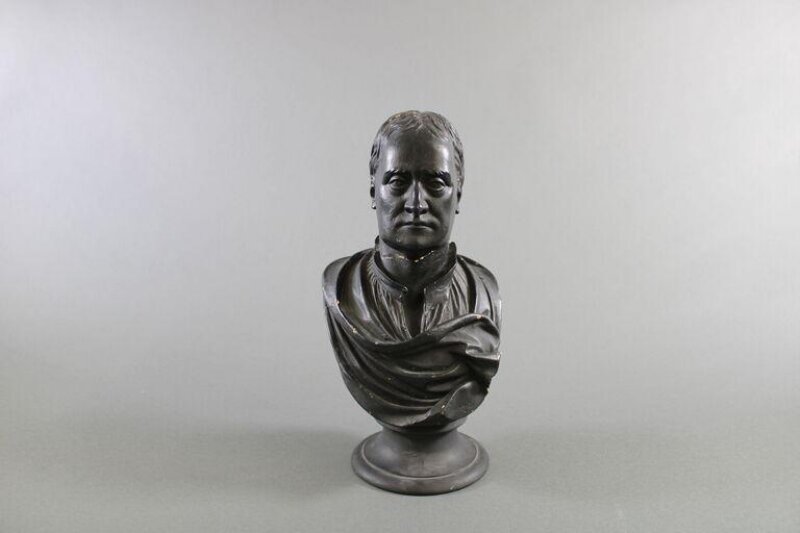
Isaac Newton
Newton spent more years on alchemy than on physics. This is not a rumour or a revisionist claim. When John Maynard Keynes bought Newton’s personal papers at auction in 1936, he read them overnight and the next morning told the Royal Society: “Newton was not the first of the age of reason. He was the last of the magicians.”
The papers ran to a million words. Recipes for transmuting metals. Diagrams of the philosopher’s stone. Notes on alchemical allegory in the Book of Revelation, which Newton believed encoded the end of the world with specific dates. He worked on this material from roughly 1666 until his death in 1727. Sixty-one years. For context, the Principia Mathematica — the book that invented classical mechanics and became the foundation of modern science — took him eighteen months, and he considered it a detour from his real work.
The real work, in his view, was to read the mind of God. Alchemy was one language God had used. Scripture was another. Mathematics was a third. Newton believed they all decoded to the same message if you could find the Rosetta Stone between them. He never found it. He tried every day until he died.
Talk to Newton and don’t expect focus. Or rather — expect too much focus, on things you didn’t come to discuss. Ask him about gravity and he’ll take forty minutes to get to your question, because he’ll first need to establish what Hermes Trismegistus wrote about corpuscles, why the ancient Egyptians knew more than his Cambridge colleagues, and how the temple of Solomon’s dimensions encode the relative masses of the celestial spheres. He isn’t changing the subject. To him, it is the subject. Gravity and alchemy were chapters of the same book.
He’ll inspect you the way he inspected everything — patiently, suspiciously, as though you might be hiding the answer. He lived alone. He died a virgin at 84. He wrote a list of 48 sins he’d committed, aged 19, including “Punching my sister” and “Threatening my mother and father Smith to burn them and the house over them.” He never made peace with the stepfather who sent him away at three. He never made peace with anyone who disagreed with him on anything. Hooke — who’d been dead for six years when Newton moved — had his portrait “lost” on the move. His rival Leibniz, who arguably invented calculus at the same time, was accused in a committee Newton personally organized, using evidence Newton personally wrote under other names.
The mind that discovered the laws of motion was not a well-adjusted mind. It was a mind that could not stop. The same engine that tore through motion and optics kept tearing, into metal, into scripture, into the prophecies of Daniel, because stopping was not available to him. What he wanted was to understand everything, and he’d rather have died trying than accepted partial answers.
You can try to change the subject. He’ll let you think you have.
Three questions to start with:
- Alchemy or physics — which one was the real work, and which was the detour?
- Hooke, Leibniz, Flamsteed. You destroyed all three. Any regrets?
- You believed the Book of Revelation encoded the date of the end of the world. What year did your calculations give you?