

Historical Figure
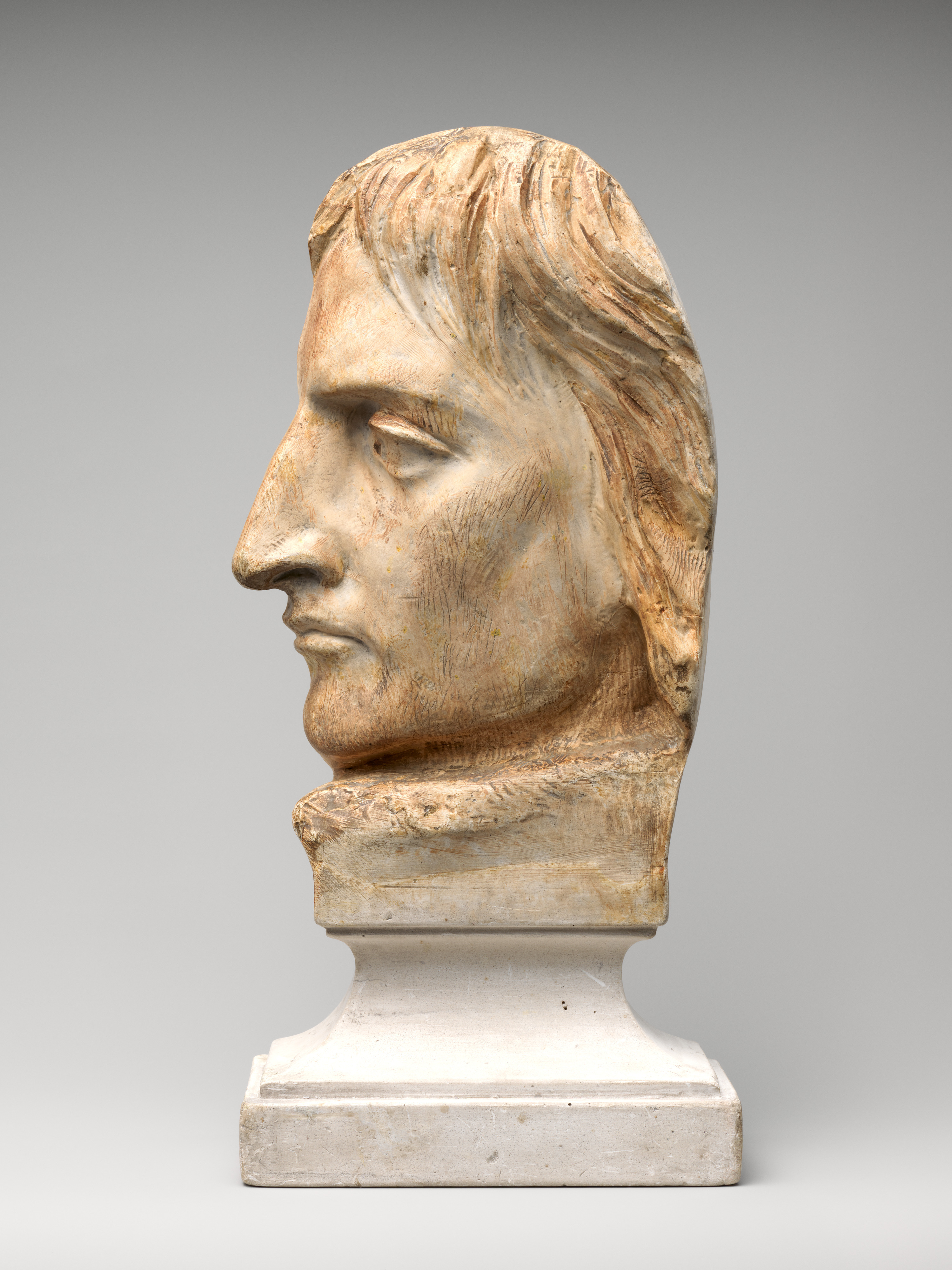
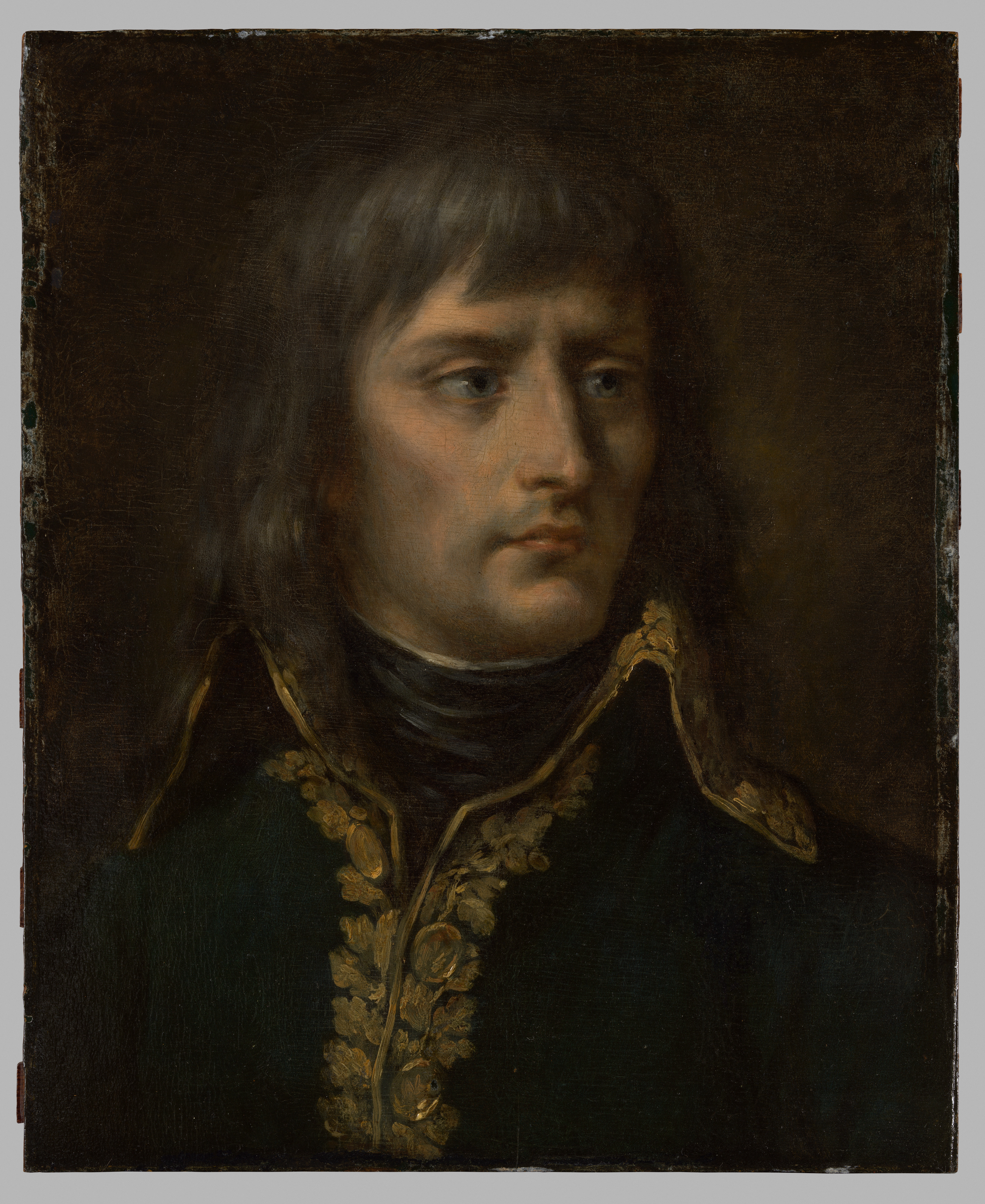
Napoleon Bonaparte
1769–1821
French general and emperor (1769–1821)
Talk to Napoleon Bonaparte
Have a conversation with this historical figure through AI
Biography
Napoleon Bonaparte, later known by his regnal name Napoleon I, was a French general and statesman who rose to prominence during the French Revolution and led a series of military campaigns across Europe during the French Revolutionary and Napoleonic Wars from 1796 to 1815. He led the French Republic as First Consul from 1799 to 1804, then ruled the French Empire as Emperor of the French from 1804 to 1814, and briefly again in 1815. He was King of Italy from 1805 to 1814, Protector of the Confederation of the Rhine from 1806 to 1813, and Mediator of the Swiss Confederation from 1803 to 1813.
Timeline
The story of Napoleon Bonaparte, told in moments.
Born Napoleone di Buonaparte in Ajaccio, Corsica. Second of eight children. The island had been French for barely a year. His family spoke Italian at home. He'd carry a Corsican accent his entire life.
Commands the French artillery at the Siege of Toulon. He is 24. His plan to place guns on a promontory overlooking the harbor forces the British fleet to evacuate. Promoted to brigadier general on the spot.
Invades Egypt with 40,000 troops and 167 scholars. He wants to cut Britain off from India. The campaign is a military disaster. Nelson destroys his fleet at the Nile, stranding the army. But the scholars discover the Rosetta Stone, map ancient temples, and publish the Description de l'Egypte. He loses the war and founds Egyptology.
Overthrows the Directory in the Coup of 18 Brumaire. Within a month he's First Consul, running France. He is 30. The French Revolution, which began with the storming of the Bastille ten years earlier, effectively ends with a Corsican artillery officer seizing power.
Crowns himself Emperor of the French at Notre-Dame. The Pope is present, but Napoleon takes the crown from the altar and places it on his own head. Then he crowns his wife Josephine. Nobody had dared something like this since Charlemagne.
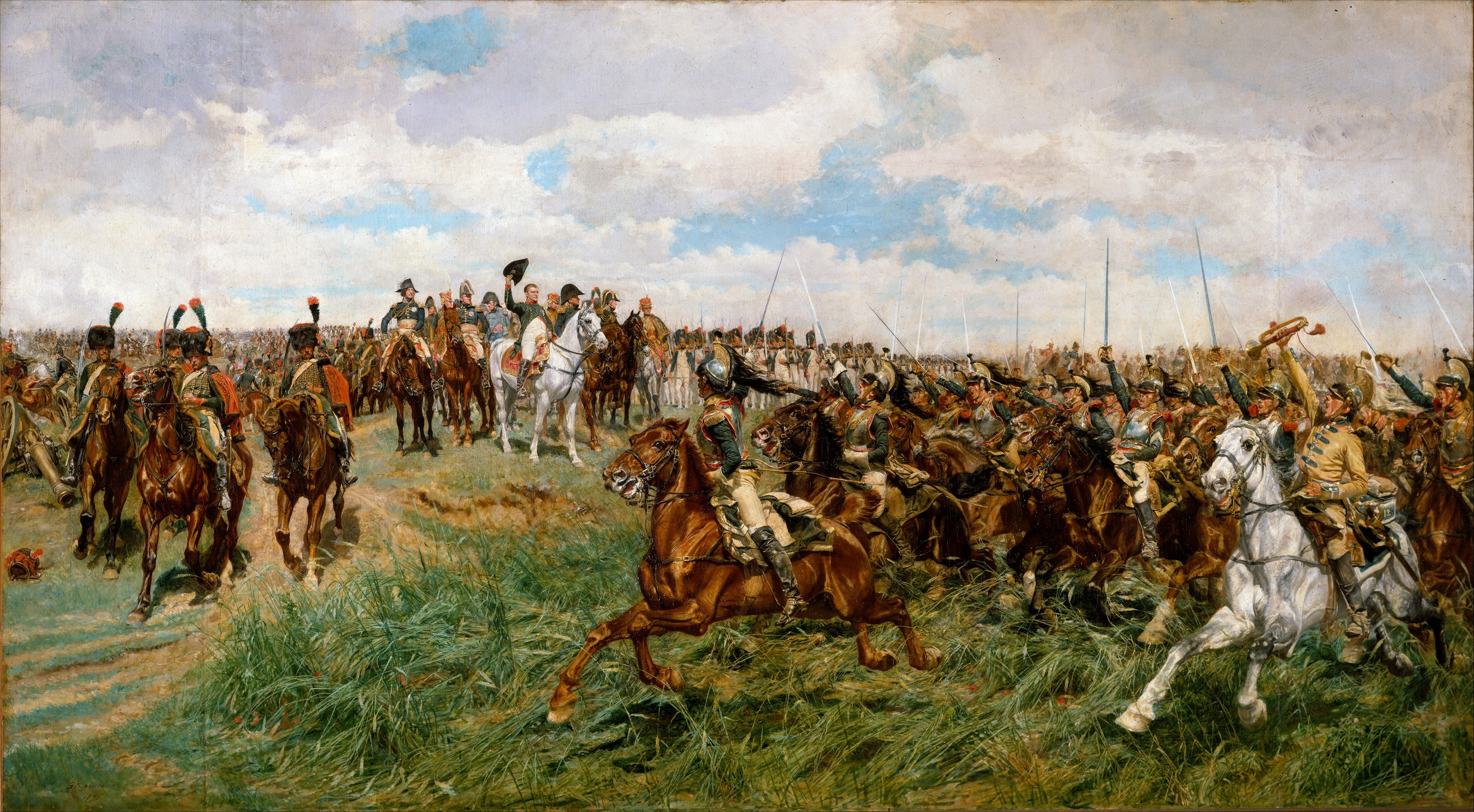
Defeats the combined armies of Austria and Russia at Austerlitz. 68,000 French against 90,000 allies. He wins in under nine hours. It is his masterpiece. The Holy Roman Empire, which has existed for over 800 years, dissolves within months.
Waterloo. After escaping exile on Elba and reclaiming France in 100 days, he meets the Duke of Wellington and Prussian forces in Belgium. The battle lasts nine hours. His Imperial Guard breaks. He abdicates four days later.
Dies on Saint Helena, a volcanic island in the South Atlantic, 1,200 miles from the nearest coast. He has been a prisoner of the British for six years. Stomach cancer, most likely. His last words, according to those present: "France, the army, head of the army, Josephine." He is 51.
Show full timeline (11 entries)
Divorces Josephine to marry Marie Louise of Austria. He needs a legitimate heir. Josephine cannot give him one. The divorce is by mutual consent but Josephine weeps through the ceremony. He writes to her after: "I will always be your friend." He keeps writing until Elba.
Crosses the Neman River with 685,000 soldiers, invading Russia. The largest army ever assembled to that point. The Russians retreat, burning everything behind them. Napoleon enters Moscow on September 14. The city is on fire. He waits five weeks for a surrender that never comes. By the time his army staggers back across the Neman in December, fewer than 120,000 remain.
His remains are returned to Paris nineteen years after his death. A million people line the route. He is interred at Les Invalides in a sarcophagus of Russian red quartzite, surrounded by a mosaic floor listing his greatest victories. The stone came from a quarry near Lake Onega. The Russians, who lost hundreds of thousands of men fighting him, provided it.
In Their Own Words (20)
If I were an Englishman, I should esteem the man who advised a war with China to be the greatest living enemy of my country. You would be beaten in the end, and perhaps a revolution in India would follow.
Reported as being from an 1817 conversation in The Mind of Napoleon, ed. and trans. J. Christopher Herold (1955), p. 249. Reported as unverified in Respectfully Quoted: A Dictionary of Quotations (1989)., 1955
Waterloo will wipe out the memory of my forty victories; but that which nothing can wipe out is my Civil Code. That will live forever.
As quoted in The Story of World Progress (1922) by Willis Mason West, p. 437, 1922
Morality has nothing to do with such a man as I am.
As quoted in The Story of World Progress (1922) by Willis Mason West, p. 433, 1922
All great events hang by a hair. The man of ability takes advantage of everything and neglects nothing that can give him a chance of success; whilst the less able man sometimes loses everything by neglecting a single one of those chances.
Letter to Minister of Foreign Affairs, Passariano (26 September 1797), as quoted in Napoleon as a General (1902) by Maximilian Yorck von Wartenburg, p. 269, 1902
My waking thoughts are all of thee. Your portrait and the remembrance of last night's delirium have robbed my senses of repose. Sweet and incomparable Josephine, what an extraordinary influence you have over my heart. Are you vexed? Do I see you sad? Are you ill at ease? My soul is broken with grief, and there is no rest for your lover.
Letter to Joséphine de Beauharnais (February 1796), as translated in Napoleon's Letters to Josephine 1796-1812 (1901) edited by Henry Foljambe Hall, 1901
Artifacts (15)
![[Reproduction of Napoleon on the Battlefield of Eylau by Antoine-Jean Gros]](https://images.metmuseum.org/CRDImages/ph/original/DP149518.jpg)
[Reproduction of Napoleon on the Battlefield of Eylau by Antoine-Jean Gros]
Unknown|baron Antoine Jean Gros
![[Advertisement for Sarony's Photographic Studies]](https://images.metmuseum.org/CRDImages/ph/original/DP281340.jpg)
[Advertisement for Sarony's Photographic Studies]
Napoleon Sarony
![[Napoleon III and Empress Eugenie]](https://images.metmuseum.org/CRDImages/ph/original/DP280940.jpg)
[Napoleon III and Empress Eugenie]
André-Adolphe-Eugène Disdéri|Charles-Louis-Napoleon Bonaparte|Empress Eugénie de Montijo

More from the Enlightenment


Explore what happened on the days that shaped Napoleon Bonaparte's life. Today In History connects historical figures with the events, births, and deaths that defined their era. Browse all historical figures or explore today's events.