

Historical Figure
Otto von Bismarck
1815–1898
Chancellor of Germany from 1871 to 1890
Talk to Otto von Bismarck
Have a conversation with this historical figure through AI
Biography
Otto Eduard Leopold, Prince of Bismarck, Count of Bismarck-Schönhausen, Duke of Lauenburg was a German statesman and diplomat who oversaw the unification of Germany and served as its first chancellor from 1871 to 1890. Bismarck's Realpolitik and firm governance earned him the nickname Iron Chancellor.
Timeline
The story of Otto von Bismarck, told in moments.
Born at Schonhausen, a Junker estate west of Berlin. His father is a mediocre farmer from old Prussian stock. His mother is the well-educated daughter of a senior government official. He speaks English, French, Italian, Polish, and Russian. People see a backwoods aristocrat. He lets them.
Appointed Minister President of Prussia. Gives his "Blood and Iron" speech to the budget committee: "The great questions of the time will not be resolved by speeches and majority decisions but by iron and blood." The liberals despise him. The king keeps him.
Provokes war with Austria. Prussia wins in seven weeks. He dismantles the old German Confederation and builds the North German Confederation under Prussian control. Austria is out. He is 51 and has redrawn the map of Europe.
The German Empire is proclaimed at Versailles. In the Hall of Mirrors. While France burns from the siege of Paris outside. Bismarck has unified Germany through three wars in nine years. He becomes its first chancellor. They call him the Iron Chancellor.
Introduces the world's first national healthcare system. Then accident insurance, then old-age pensions. He's not doing it because he's kind. He's doing it to steal the socialists' platform. It works.
Kaiser Wilhelm II forces him to resign. Bismarck is 75. The young emperor wants to rule himself. Bismarck retires to write his memoirs and predict, accurately, that Wilhelm will lose everything he built.
Dies at Friedrichsruh at 83. His last recorded words: "I do not want a lying official epitaph. Write on my tomb that I was the faithful servant of my master, the first German Emperor, King Wilhelm I."
In Their Own Words (18)
Preventive war is like committing suicide for fear of death.
Quoted as a remark of Bismark without quotation marks, in Thinking About the Unthinkable in the 1980s (1984) by , p. 136, a paraphrase of what Bismarck told the Reichstag on Feb. 9, 1876. Referring to March 1875, when the French National Assembly had decided to strengthen their army by 144,000 additional troops, Bismarck asked the deputies to imagine he had told them a year ago that one had to wage war without having been attacked or humiliated: „Würden Sie da nicht sehr geneigt gewesen sein, zunächst nach dem Arzte zu schicken (Heiterkeit), um untersuchen zu lassen, wie ich dazu käme, dass ich nach meiner langen politischen Erfahrung die kolossale Dummheit begehen könnte, so vor Sie zu treten und zu sagen: Es ist möglich, dass wir in einigen Jahren einmal angegriffen werden, damit wir dem nun zuvorkommen, fallen wir rasch über unsere Nachbarn her und hauen sie zusammen, ehe sie sich vollständig erholen – gewissermaßen Selbstmord aus Besorgniß vor dem Tode" (Would you not have been inclined very much to send for a physician in the first place and let him find out, how I with my long experience in politics could commit the colossal stupidity of [...] telling you: It is possible that in some years we might be attacked; to pre-empt that, let us overrun our neighbors and smash them before they have fully recovered [from the war of 1870/71] - in a way [commit] suicide from fear of death) reichstagsprotokolle.de 1875/76,2 p. 1329-30, 1984
Faust complains of having two souls in his breast. I have a whole squabbling crowd. It goes on as in a republic.
As quoted in '' (1955) by A. J. P. Taylor, p. 12. Cf. Goethe, Faust, Part I: Zwei Seelen wohnen, ach! in meiner Brust, / Die eine will sich von der andern trennen'' ("Two souls, alas! reside within my breast, / and each is eager for a separation")., 1955
The politician has not to revenge what has happened but to ensure that it does not happen again.
In 1867, following public criticism of courtesy shown to the defeated Napoleon III after the battle of Sedan, as quoted in A. J. P. Taylor, Bismarck: The Man and the Statesman (1955), p. 115. Also quoted in Oxford Dictionary of Political Quotations (1997), p. 46., 1955
A statesman cannot create anything himself. He must wait and listen until he hears the steps of God sounding through events; then leap up and grasp the hem of His garment.
As quoted in A. J. P. Taylor, Bismarck: The Man and the Statesman (1955), p. 115, 1955
They treat me like a fox, a cunning fellow (Schlaukopf) of the first rank. But the truth is that with a gentleman I am always a gentleman and a half, and when I have to do with a pirate, I try to be a pirate and a half.
Talking to Gyula Andrássy in Salzburg on 18 September 1877. As quoted in Disraeli, Gladstone, and the Eastern Question. A Study in Diplomacy and Party Politics (1935) by Robert William Seton-Watson, p. 224 books.google; "Schlaukopf" is translated elsewhere as "clever dick" or "smart aleck.", 1935
Artifacts (15)
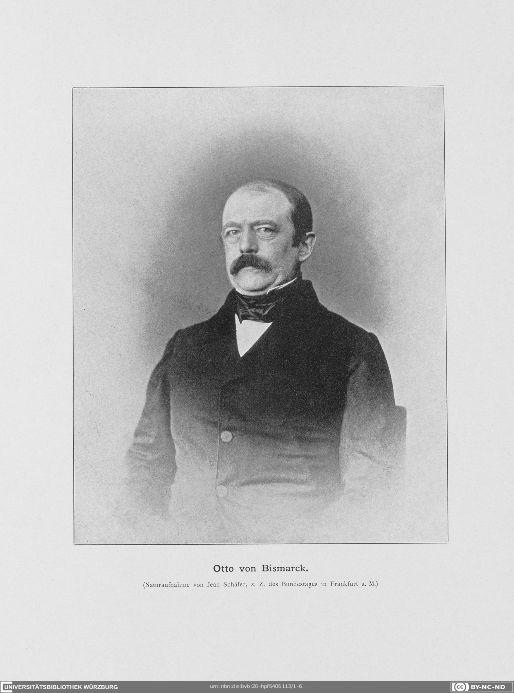
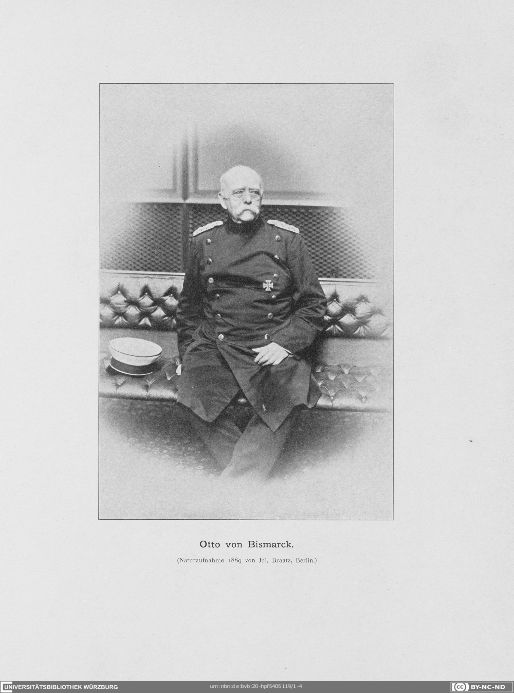
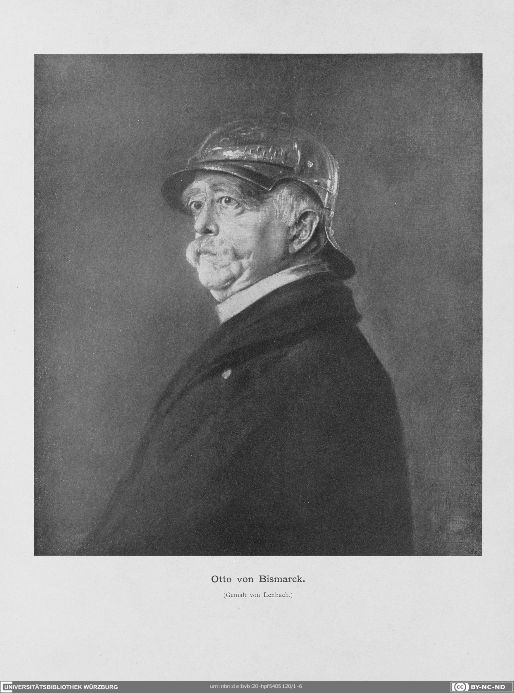
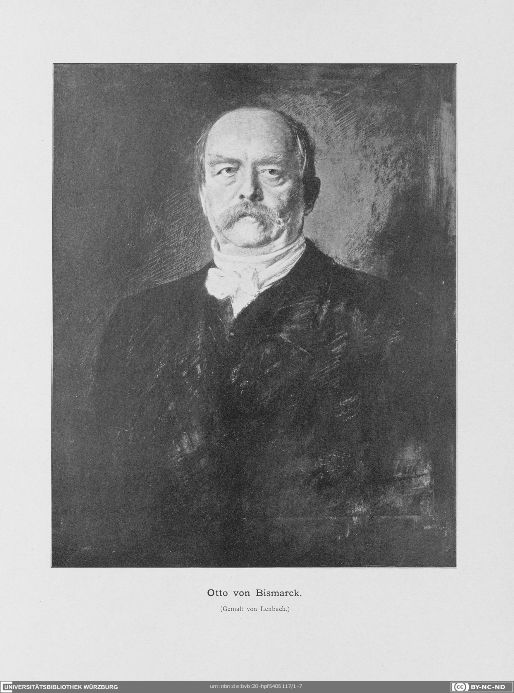
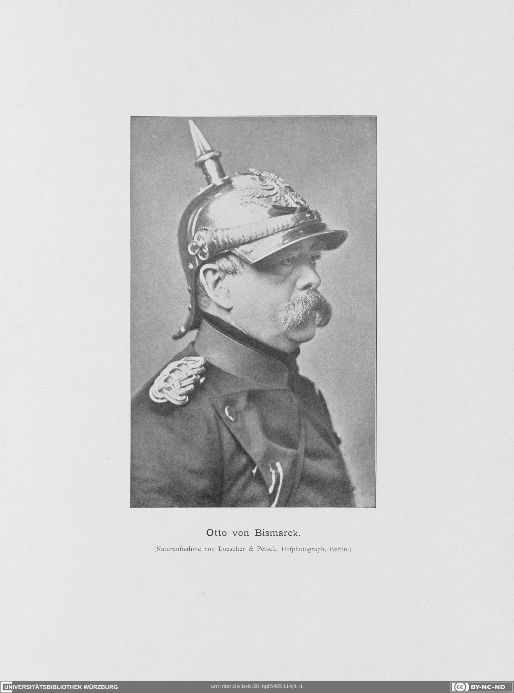
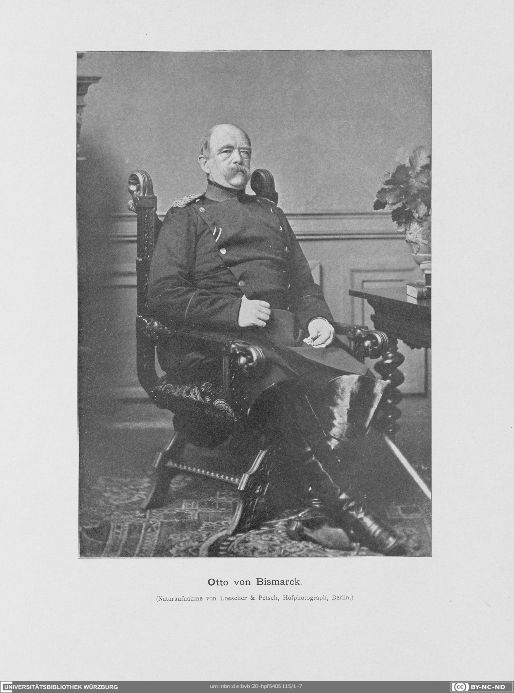
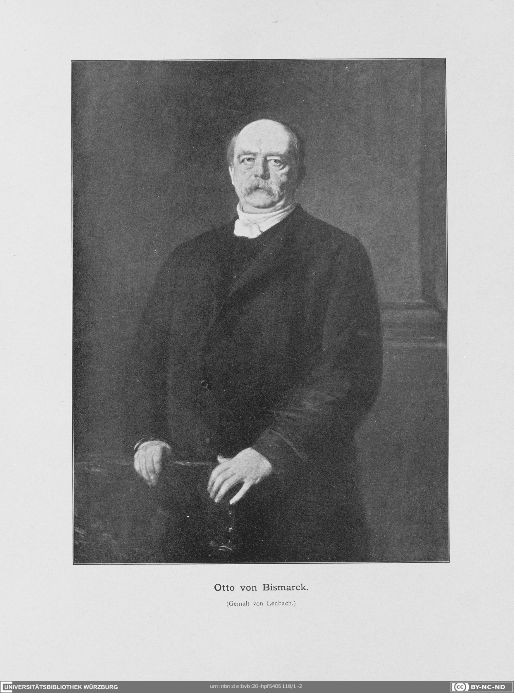
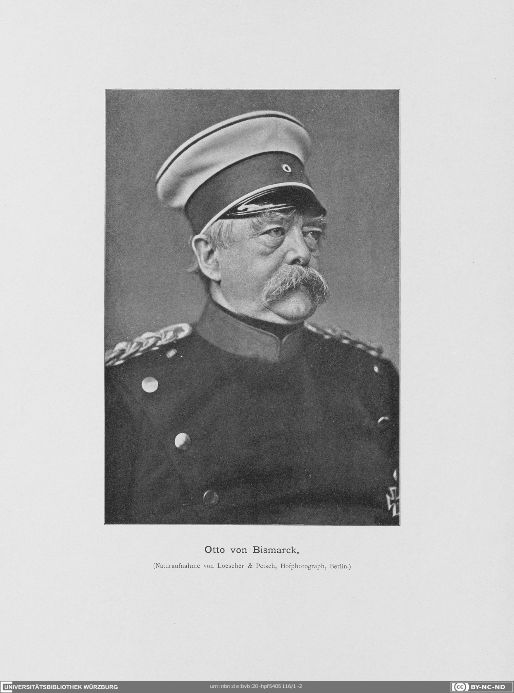

![[Otto von Bismarck]](http://zeiller2.literaturtirol.at/omekas/iiif/2/8817/full/full/0/default.jpg)

Prince Otto Von Bismarck ,
http://www.wikidata.org/entity/Q110975090
More from the Industrial Revolution


Explore what happened on the days that shaped Otto von Bismarck's life. Today In History connects historical figures with the events, births, and deaths that defined their era. Browse all historical figures or explore today's events.