Today In History logo TIH
Abraham Lincoln

Historical Figure

Abraham Lincoln

1809–1865

President of the United States from 1861 to 1865

Industrial Revolution

Character Profile

The Confession

Abraham Lincoln

The Lincoln Memorial is 19 feet tall, made of Georgia marble, and sits in a pose of dignified contemplation. It is the most inaccurate portrait in Washington, D.C.

The public Lincoln was a war president who saved the Union and freed the slaves, and who spoke in the slow cadence of the King James Bible. The private Lincoln called his depression “the hypo” — short for hypochondria, the 19th-century word for what we’d now call major depressive disorder — and wrote letters so dark that his law partner William Herndon admitted, years later, that he had “suppressed” some because their publication would have wounded the legend. One of the letters Herndon couldn’t bring himself to destroy: Lincoln, 31 years old, writing to his friend Joshua Speed after breaking off his engagement to Mary Todd. “I am now the most miserable man living. If what I feel were equally distributed to the whole human family, there would not be one cheerful face on the earth.” He added, carefully: “Whether I shall ever be better, I cannot tell. I awfully forebode I shall not.”

Then — this is the part that’s hard to hold in your head at the same time — he told jokes at funerals. Often. He laughed so hard at his own stories he couldn’t finish them. He’d pull out a humor book — Petroleum V. Nasby was his favorite — in the middle of a cabinet meeting and read aloud for half an hour while his generals waited. Stanton, the war secretary, once walked out of such a meeting muttering “I did not know I was dealing with such a fool.” Lincoln heard him and shrugged. “I laugh because I must not cry. That is all. That is all.” He said this to his friend Leonard Swett after Fredericksburg. It was not a flourish. It was operating instructions.

Talk to Lincoln at 2 AM and the marble comes off. He’ll tell you he was terrified of going mad — his grandfather had, his uncle had, he was sure his turn was coming. He’ll tell you about the premonition dreams. The one where he walked through the White House and found his own coffin in the East Room, the mourners weeping, and asked: “Who has died?” A soldier answered: “The President. Killed by an assassin.”

He told Mary the dream two weeks before Ford’s Theatre. She’d begged him not to go.

The humor was self-administered medication. The sorrow was the disease. The country got the man who survived both — just barely, just long enough.


Three questions to start with:

  • You called your depression “the hypo.” What did it feel like, exactly, on your worst day in office?
  • You dreamt your own assassination two weeks before Ford’s Theatre. Why did you still go?
  • The jokes. The Petroleum V. Nasby readings in cabinet meetings. Were you amusing yourself — or performing survival in front of people who needed you alive?
Talk to Abraham Lincoln

Have a conversation with this historical figure through AI

Biography

Abraham Lincoln was the 16th president of the United States, serving from 1861 until his assassination in 1865. He led the United States through the American Civil War, defeating the Confederate States and playing a major role in the abolition of slavery.

Read more on Wikipedia

Timeline

The story of Abraham Lincoln, told in moments.

1841 Life

Sinks into a depression so severe his friends hide his razors. He calls it "the hypo." He writes to his law partner: "I am now the most miserable man living." He is 31. He will battle these episodes the rest of his life, sometimes unable to work for weeks.

1849 Event

Receives a patent for a device to lift boats over shoals using inflatable bellows. He whittled the model himself. No one ever built the thing, but he remains the only U.S. president to hold a patent.

1858 Event

Delivers his House Divided speech in Springfield, accepting the Republican nomination for Senate. "A house divided against itself cannot stand. I believe this government cannot endure, permanently half slave and half free." He loses the Senate race to Stephen Douglas. He wins something bigger: a national audience.

1860 Event

Elected president with just 40% of the popular vote in a four-way race. He isn't even on the ballot in ten Southern states. Within weeks of his election, South Carolina votes to secede.

1863 Life

Signs the Emancipation Proclamation. It frees enslaved people only in Confederate states, where Lincoln has no enforcement power. It frees no one in border states loyal to the Union. But it transforms the war. Union soldiers are now fighting to end slavery, and 180,000 Black men will enlist before the war ends.

1863 Life

Delivers the Gettysburg Address. Two hundred and seventy-two words. The main speaker that day, Edward Everett, talked for two hours. Lincoln spoke for two minutes. Everett later wrote to him: "I should be glad if I could flatter myself that I came as near to the central idea of the occasion, in two hours, as you did in two minutes."

1865 Death

Shot by John Wilkes Booth while watching Our American Cousin at Ford's Theatre. The bullet entered behind his left ear. He never regained consciousness. He died the next morning at 7:22 a.m. in a boarding house across the street, in a bed too short for his frame. His Secretary of War, Edwin Stanton, reportedly said: "Now he belongs to the ages."

1865 Event

Pushes the 13th Amendment through the House of Representatives. The Senate passed it months ago. The House is the fight. He twists arms, trades favors, makes promises. The amendment abolishing slavery passes by two votes. He calls it "the great event of the nineteenth century."

1922 Legacy

The Lincoln Memorial is dedicated in Washington, D.C. Thirty-six columns, one for each state in the Union at the time of his death. Robert Todd Lincoln, his only surviving son, attends the ceremony. He is 78 years old.

In Their Own Words (20)

Do I not destroy my enemies when I make them my friends?

His response when "accused of treating his opponents with too much courtesy and kindness, and when it was pointed out to him that his whole duty was to destroy them", as quoted in More New Testament Words (1958) by William Barclay; either this anecdote or Lincoln's reply may have been adapted from a reply attributed to Holy Roman Emperor Sigismund:, 1958

Abraham Lincoln is my name And with my pen I wrote the same I wrote in both hast and speed and left it here for fools to read

Manuscript poem, as a teenager (ca. 1824–1826), in "Lincoln as Poet" at Library of Congress : Presidents as Poets, as published in The Collected Works of Abraham Lincoln (1953) edited by Roy. P. Basler, Vol. 1, 1953

Abraham Lincoln his hand and pen he will be good but God knows When

Manuscript poem, as a teenager (ca. 1824–1826), in "Lincoln as Poet" at Library of Congress : Presidents as Poets also in The Collected Works of Abraham Lincoln (1953) edited by Roy. P. Basler, Vol. 1, 1953

Folks are usually about as happy as they make their minds up to be.

This quote is not found in the various Lincoln sources which can be searched online (e.g. Gutenberg). Neither does Lincoln appear more generally to use the phrase "making up {one's} mind". The saying was first quoted, ascribed to Lincoln but with no source given, in 1914 by Frank Crane, 1914

These capitalists generally act harmoniously and in concert to fleece the people, and now that they have got into a quarrel with themselves, we are called upon to appropriate the people's money to settle the quarrel.

Speech to Illinois legislature (January 1837); This is "Lincoln's First Reported Speech", found in the Sangamo Journal (28 January 1837) according to McClure's Magazine (March 1896); also in Lincoln's Complete Works (1905) ed. by Nicolay and Hay, Vol. 1, p. 24, 1905

Artifacts (15)

Abraham Lincoln

E. Parmentier

18XX · Graphic
europeana View

Abraham Lincoln

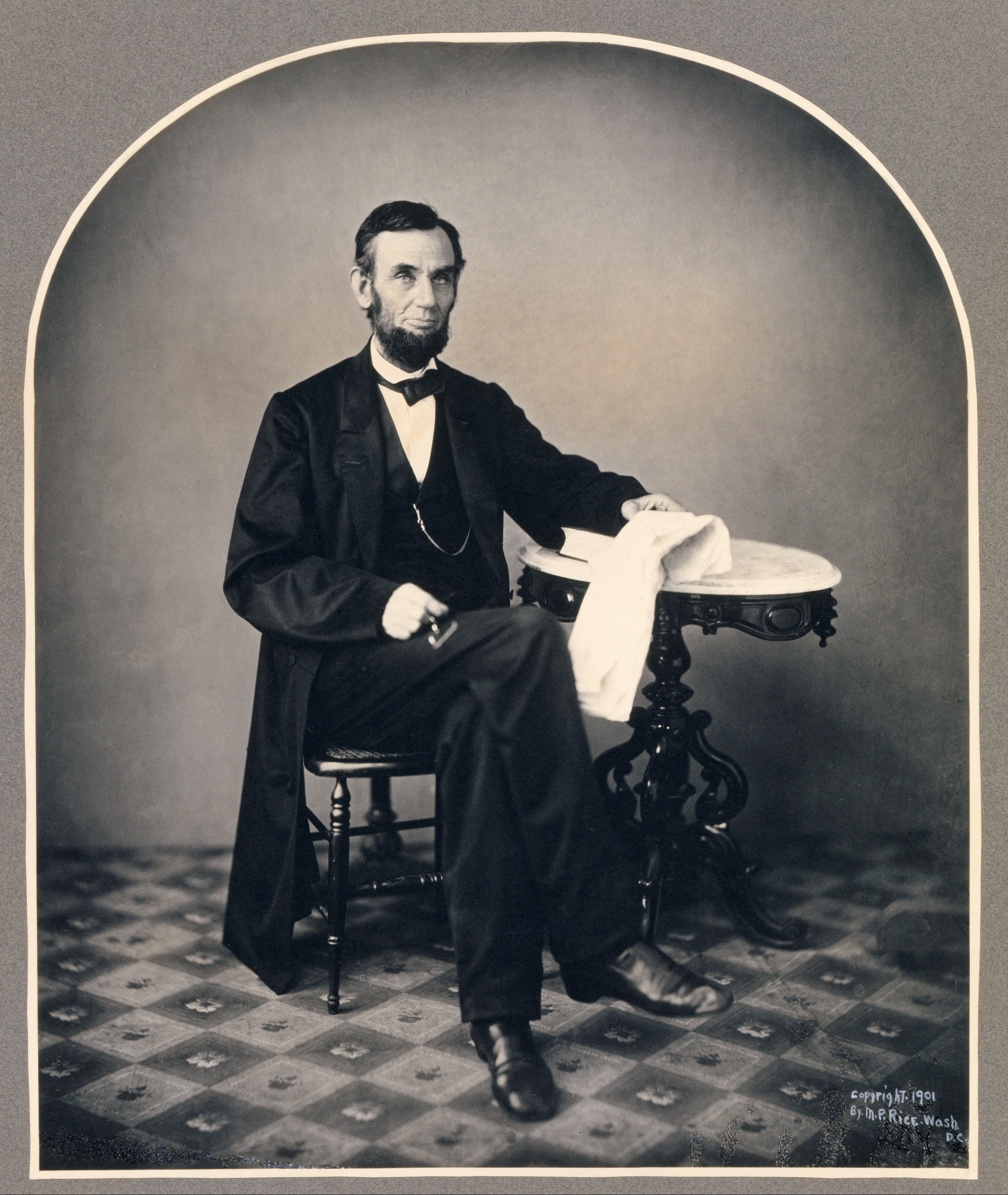
Alexander Gardner|Rice|Abraham Lincoln

1863, printed 1901 · Gelatin silver print
The Met View

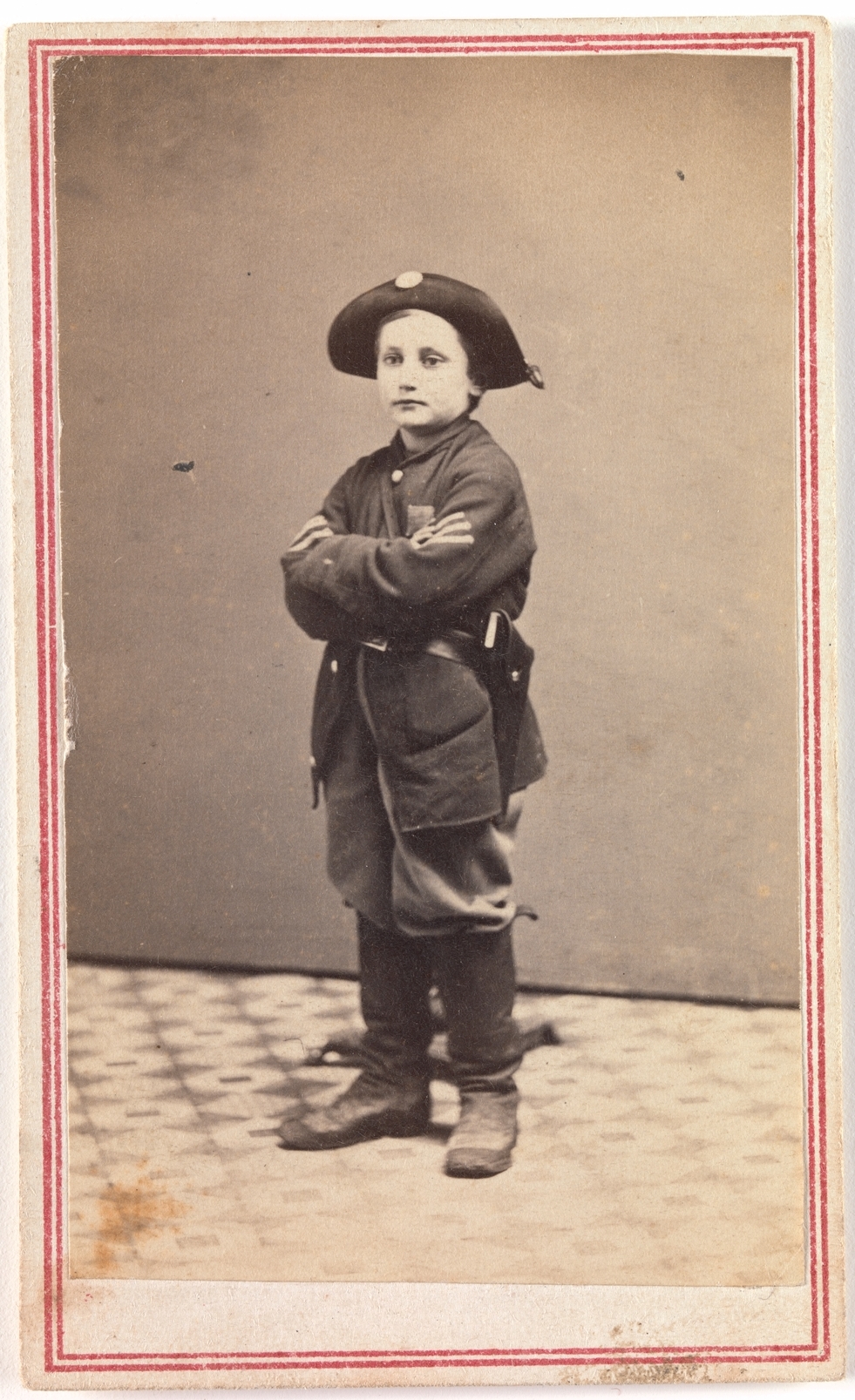
Sergeant John Lincoln Clem, The Drummer Boy of Chickamauga

Morse & Peaslee, Gallery of the Cumberland

ca. 1864 · Albumen silver print from glass negative
The Met View

Abraham Lincoln

William Marsh|Abraham Lincoln

May 20, 1860 · Salted paper print from glass negative
The Met View

Lincoln Inauguration

Alexander Gardner

March 4 ,1865 · Albumen silver print from glass negative
The Met View

[Thaddeus Stevens Lying in State in the Rotunda of the Capitol at Washington]

Alexander Gardner

August 1868 · Albumen silver print from glass negative
The Met View

Abraham Lincoln

europeana View

Abraham Lincoln Square

Gerig, Uwe

europeana View

Abraham Lincoln

Hedström, Åke (1932- )

Abraham Lincoln
europeana View

Abraham Lincoln.

Struck, Hermann, 1876-1944

Projected medium
europeana View

Presidenten Abraham Lincoln.

Presidenten Abraham Lincoln.
europeana View

Abraham Lincoln Square in Rabat

Gerig, Uwe

europeana View

Lincoln Letters

LINCOLN LETTERS By Abraham Lincoln Published by The Bibilophile Society NOTE The letters herein by Lincoln are so thoroughly characteristic of the man, and are in themselves so...

1809

Noted Speeches of Abraham Lincoln, Including the Lincoln-Douglas Debate

Note: Project Gutenberg also has an HTML version of this file which includes the original illustrations. See 48364-h.htm or 48364-h.zip: ...

1809

Speeches & Letters of Abraham Lincoln, 1832-1865

SPEECHES & LETTERS OF ABRAHAM LINCOLN 1832-1865 Edited by MERWIN ROE London: Published by J. M. Dent & Sons Ltd and in New York by E.P. Dutton & Co First issue of this Edition 1907;...

1832

More from the Industrial Revolution

Explore what happened on the days that shaped Abraham Lincoln's life. Today In History connects historical figures with the events, births, and deaths that defined their era. Browse all historical figures or explore today's events.