

Historical Figure
Charles Darwin
1809–1882
English naturalist and biologist (1809–1882)
Talk to Charles Darwin
Have a conversation with this historical figure through AI
Biography
Charles Robert Darwin was an English naturalist, geologist, and biologist, widely known for his contributions to evolutionary biology. His proposition that all species of life have descended from a common ancestor is now generally accepted and considered a fundamental scientific concept. In a joint presentation with Alfred Russel Wallace, he introduced his scientific theory that this branching pattern of evolution resulted from a process he called natural selection, in which the struggle for existence has a similar effect to the artificial selection involved in selective breeding. Darwin has been described as one of the most influential figures in human history and was honoured by burial in Westminster Abbey.
Timeline
The story of Charles Darwin, told in moments.
Boards HMS Beagle as an unpaid gentleman naturalist. He is 22, fresh out of Cambridge, where he studied divinity. The voyage is supposed to last two years. It lasts five.
The Beagle reaches the Galapagos Islands. Darwin collects finches, mockingbirds, tortoises, and iguanas. He doesn't realize what he has until he gets home and ornithologist John Gould identifies the finches as separate species, island by island.
Opens a notebook labeled "B" and sketches a branching tree of life. Writes "I think" at the top. It's the first diagram of evolution by common descent. He tells almost no one for twenty years.
Marries his first cousin, Emma Wedgwood. They will have ten children together. Three die in childhood. He worries constantly that inbreeding contributed to their illnesses. The man who will explain natural selection cannot stop wondering if his own family is evidence.
His daughter Annie dies at ten after months of illness. Darwin is destroyed. He writes a memorial calling her 'the joy of the household.' Some biographers say Annie's death kills his remaining faith in God.
Receives a letter from Alfred Russel Wallace describing a theory of natural selection nearly identical to his own. Twenty years of careful secrecy, and someone else arrives at the same idea independently. Friends arrange a joint presentation to the Linnean Society. Almost no one notices.
On the Origin of Species is published. 1,250 copies in the first print run. All sell on the first day. The book avoids the word "evolution" and mentions humans only once, in the final pages: "Light will be thrown on the origin of man and his history."
Publishes The Descent of Man. This time he says it directly: humans evolved from primates. He also introduces the theory of sexual selection. The public reaction is as furious as he'd feared for three decades.
Dies at Down House, Kent, at 73. His family plans a local burial, but a campaign by his colleagues secures a state funeral. He is buried in Westminster Abbey, a few feet from Isaac Newton.
The Scopes Trial. A Tennessee teacher is prosecuted for teaching Darwin's theory of evolution in a public school. Forty-three years after Darwin's death, his ideas are still on trial.
In Their Own Words (20)
This leads me to remark that I have almost always been treated honestly by my reviewers, passing over those without scientific knowledge as not worthy of notice.
page 125, 1958
I discovered, though unconsciously and insensibly, that the pleasure of observing and reasoning was a much higher one than that of skill and sport. The primeval instincts of the barbarian slowly yielded to the acquired tastes of the civilized man.
page 79, 1958
To my mind there are no advantages and many disadvantages in lectures compared with reading.
page 47, 1958
The time is always ripe for the re-interpretation of theories in the light of new vision and of new facts. This is the very province of science.
page 13, 1958
Science consists in grouping facts so that general laws or conclusions may be drawn from them.
page 70, 1958
Artifacts (15)
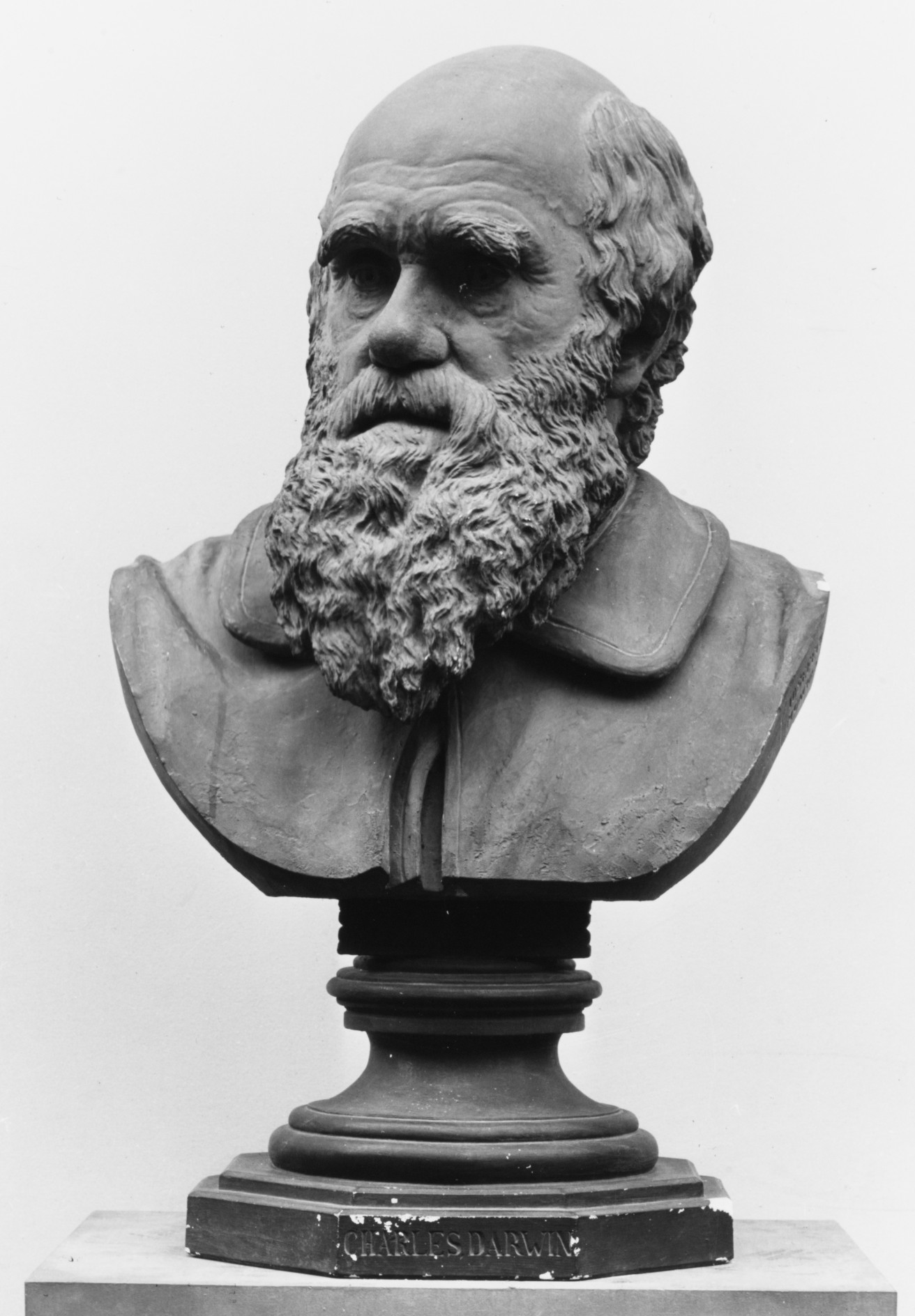
Charles Darwin
Joseph Echteler




More from the Industrial Revolution


Explore what happened on the days that shaped Charles Darwin's life. Today In History connects historical figures with the events, births, and deaths that defined their era. Browse all historical figures or explore today's events.