

Historical Figure
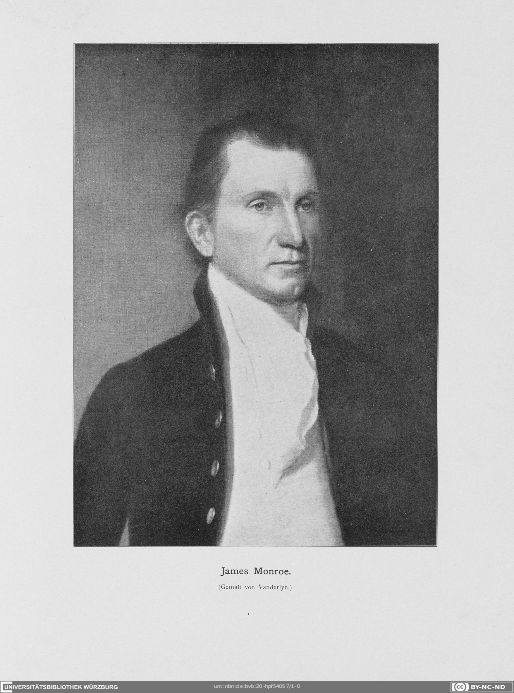
James Monroe
1758–1831
Founding Father, U.S. president from 1817 to 1825
Talk to James Monroe
Have a conversation with this historical figure through AI
Biography
James Monroe was an American Founding Father who served as the fifth president of the United States from 1817 to 1825. He was the last Founding Father to serve as president as well as the last president of the Virginia dynasty. Monroe was a member of the Democratic-Republican Party, and his presidency coincided with the Era of Good Feelings, concluding the First Party System era of American politics. He issued the Monroe Doctrine, a policy of limiting European colonialism in the Americas. Monroe previously served as Governor of Virginia, a member of the United States Senate, U.S. ambassador to France and Britain, the seventh secretary of state, and the eighth secretary of war.
Timeline
The story of James Monroe, told in moments.
Crossed the Delaware with Washington and was shot through the shoulder at the Battle of Trenton. He nearly bled to death. A doctor clamped the severed artery just in time. He was 18.
As minister to France, helped negotiate the Louisiana Purchase. Napoleon offered the entire territory for $15 million. Monroe and Robert Livingston signed the deal without waiting for Jefferson's approval.
Inaugurated as the fifth president. Won the election so decisively that his two terms became known as the "Era of Good Feelings." He ran virtually unopposed for reelection in 1820.
Signed the Missouri Compromise. Missouri entered as a slave state, Maine as free, and slavery was banned above the 36 30 line. It held the union together for 30 years.
Declared the Monroe Doctrine. Warned European powers against further colonization or interference in the Americas. The policy shaped U.S. foreign relations for two centuries.
In Their Own Words (7)
The American continents, by the free and independent condition which they have assumed and maintain, are henceforth not to be considered as subjects for future colonization by any European power.
1823
We owe it, therefore, to candor and to the amicable relations existing between the United States and those powers to declare that we should consider any attempt on their part to extend their system to any portion of this hemisphere as dangerous to our peace and safety. With the existing colonies or dependencies of any European power we have not interfered and shall not interfere. But with the Governments who have declared their independence and maintain it, and whose independence we have, on great consideration and on just principles, acknowledged, we could not view any interposition for the purpose of oppressing them, or controlling in any other manner their destiny, by any European power in any other light than as the manifestation of an unfriendly disposition toward the United States.
1823
In the wars of the European powers in matters relating to themselves we have never taken any part, nor does it comport with our policy so to do.
1823
The mention of Greece fills the mind with the most exalted sentiments, and arouses in our bosoms the best feelings of which our nature is susceptible.
Message to Congress (December 1822), 1822
National honor is the national property of the highest value.
First Inaugural Address (4 March 1817), 1817
Artifacts (15)



More from the Enlightenment


Explore what happened on the days that shaped James Monroe's life. Today In History connects historical figures with the events, births, and deaths that defined their era. Browse all historical figures or explore today's events.