

Historical Figure
Alexander Hamilton
1755–1804
American Founding Father (1755–1804)
Talk to Alexander Hamilton
Have a conversation with this historical figure through AI
Biography
Alexander Hamilton was an American military officer, statesman, and Founding Father who served as the first U.S. secretary of the treasury from 1789 to 1795 under the presidency of George Washington. He also founded America's first political party, the Federalist Party, in 1791.
Timeline
The story of Alexander Hamilton, told in moments.
Born out of wedlock on the island of Nevis in the British West Indies. His father abandons the family. His mother dies when he is 13. Orphaned, broke, and Caribbean. He writes his way out.
Commands an artillery company in New York at 21. His bravery at the Battle of Trenton catches George Washington's eye. Washington makes him aide-de-camp, a role Hamilton holds for four years.
Leads a bayonet charge at the Siege of Yorktown, capturing a British redoubt in ten minutes. The victory seals American independence.
Becomes the first Secretary of the Treasury at 34. Over the next six years he designs the national bank, the tax system, the customs service, and the coast guard. He writes 51 of the 85 Federalist Papers.
Begins an affair with Maria Reynolds, then pays her husband hush money. When political enemies accuse him of financial corruption, Hamilton publishes the entire affair himself to prove the payments were personal, not from the Treasury. It works. His marriage barely survives.
Shot by Vice President Aaron Burr in a duel at Weehawken, New Jersey. The bullet lodges in his spine. He dies the next afternoon at 49, surrounded by his wife Eliza and their seven children.
In Their Own Words (20)
It is now proper to proceed a step further, and to enumerate the principal circumstances, from which it may be inferred, that manufacturing establishments not only occasion a positive augmentation of the Produce and Revenue of the Society, but that they contribute essentially to rendering them greater than they could possibly be, without such establishments. These circumstances are:
1. The division of labour., 1791
Every power vested in a government is in its nature sovereign, and includes by force of the term a right to employ all the means requisite...to the attainment of the ends of such power.
Opinion on the Constitutionality of the Bank (23 February 1791), 1791
When the Manufacturing Capitalist of Europe shall advert to the many important advantages, which have been intimated, in the Course of this report, he cannot but perceive very powerful inducements to a transfer of himself and his Capital to the United States.
1791
It is very conceivable, that the labor of man alone laid out upon a work, requiring great skill and art to bring it to perfection, may be more productive, in value, than the labour of nature and man combined, when directed towards more simple operations and objects
1791
Constitutions should consist only of general provisions; the reason is that they must necessarily be permanent, and that they cannot calculate for the possible change of things.
Elliot's Debates, volume 2, p. 364. (28 July 1788), 1788
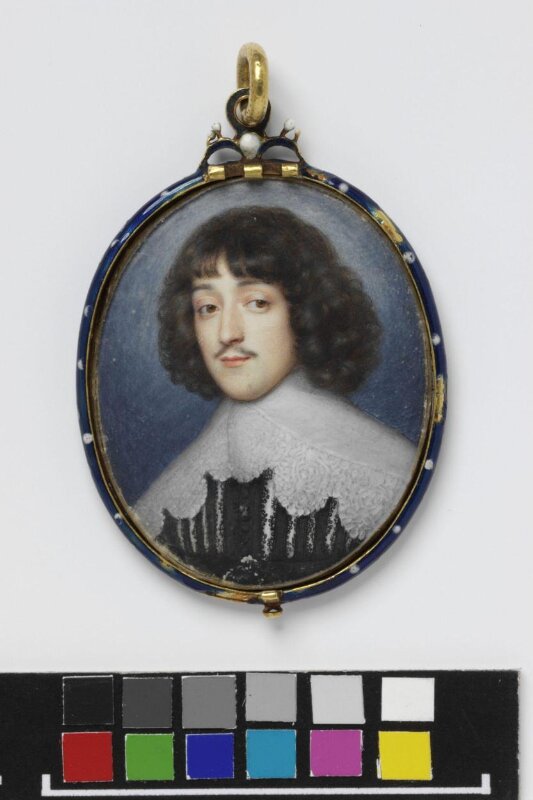
Artifacts (15)




More from the Enlightenment


Explore what happened on the days that shaped Alexander Hamilton's life. Today In History connects historical figures with the events, births, and deaths that defined their era. Browse all historical figures or explore today's events.