Today In History
March 6 in History
Your birthday shares the stage with stories that shaped the world. Born on this day: Gabriel García Márquez, David Gilmour, and Mary Wilson.

Bayer Synthesizes Aspirin: The World's First Wonder Drug
Bayer registered the trademark "Aspirin" on March 6, 1899, for a pill that would become the most widely consumed medication in human history. The drug — acetylsalicylic acid — had been synthesized by Bayer chemist Felix Hoffmann in August 1897, but the name and the trademark turned a chemical compound into a household word that has sold roughly 100 billion tablets since its introduction. The active principle behind aspirin had been known for millennia. Ancient Egyptians, Greeks, and Native Americans used willow bark and meadowsweet to treat pain and fever. In 1763, the Reverend Edward Stone of Oxfordshire conducted the first clinical study of willow bark extract on fifty patients with fever. By 1829, French pharmacist Henri Leroux had isolated the active compound, salicin, and Italian chemist Raffaele Piria converted it to salicylic acid in 1838. The problem was that salicylic acid devastated the stomach. Patients who took it for chronic conditions like rheumatism suffered severe gastric bleeding and nausea. Hoffmann, whose own father suffered from rheumatic pain, searched for a less irritating derivative. He acetylated salicylic acid, producing acetylsalicylic acid (ASA), which proved far gentler on the stomach while retaining full analgesic and anti-inflammatory properties. The compound had actually been synthesized decades earlier by French chemist Charles Frederic Gerhardt in 1853, but Gerhardt had not recognized its medical potential and never pursued it. Bayer's head of pharmacology, Heinrich Dreser, initially resisted marketing ASA — he was more excited about another drug Hoffmann had synthesized the same year: diacetylmorphine, which Bayer sold under the brand name Heroin. Dreser eventually relented, and Bayer launched Aspirin commercially on March 6, 1899, in powder form, with tablets following in 1900. The drug's versatility proved extraordinary. Beyond pain relief and fever reduction, researchers in the 1970s discovered that aspirin inhibits platelet aggregation, making low-dose aspirin effective for preventing heart attacks and strokes. Current global consumption exceeds 40,000 tonnes annually. Bayer lost its Aspirin trademark in many countries as war reparations under the Treaty of Versailles in 1919, making "aspirin" a generic term everywhere except Germany, Canada, and a few other nations.
Famous Birthdays
1927–2014
b. 1946
1944–2021
Bronisław Geremek
1932–2008
Jakob Fugger
1459–1525
Cyprien Ntaryamira
d. 1994
Duan Qirui
b. 1865
Georg Luger
b. 1849
Marion Barry
1936–2014
Nasri
b. 1981
Sylvia Robinson
1936–2011
Wes Montgomery
1923–1968
Historical Events
Augustus merged the Roman state with Roman religion on a single day in 12 BC when he assumed the title of Pontifex Maximus, making himself both the political ruler of the empire and the supreme authority over its religious life. The office had existed for centuries as an elected position among Roman priests. Augustus made it inseparable from imperial power, and every emperor after him held it until Gratian renounced the title in 382 AD — nearly four centuries later. The timing was deliberate. Augustus had waited years for this moment. The previous Pontifex Maximus was Marcus Aemilius Lepidus, his former ally in the Second Triumvirate, who had been stripped of political power after a failed power grab in 36 BC but retained the religious title because it was held for life. Augustus refused to seize it by force, choosing instead to wait for Lepidus to die. When Lepidus died in 13 BC, Augustus allowed a decent interval before claiming the office through a formal election in March 12 BC. The Pontifex Maximus held authority over the Vestal Virgins, the Roman calendar, public religious ceremonies, and the interpretation of sacred law. The position granted access to the Regia, the symbolic heart of Rome's religious establishment in the Forum. Augustus consolidated this with his existing powers as princeps, imperator, and holder of tribunician authority, creating a concentration of sacred and secular power that no Roman had possessed before. Augustus’s assumption of the office completed a transformation of Roman governance that had begun with his victory over Mark Antony and Cleopatra at Actium in 31 BC. By controlling religion alongside legislation, military command, and the treasury, he eliminated any independent institutional check on his authority. The Senate retained formal prerogatives but could not challenge a ruler who spoke for both the state and the gods. The title Pontifex Maximus outlasted the Roman Empire itself. When Christianity became the state religion, the title was eventually adopted by the Bishop of Rome, and the Pope holds it today. Augustus's consolidation of religious and political authority in 12 BC created the template for divine-right rulership that shaped European governance for the next eighteen centuries.
Santa Anna's Mexican army stormed the Alamo before dawn on March 6, 1836, overwhelming the 187 Texan defenders in a battle that lasted roughly ninety minutes. Every defender was killed. Within seven weeks, "Remember the Alamo" became the battle cry that rallied the Texan army to decisive victory, transforming a military disaster into the founding myth of an independent republic. The siege had lasted thirteen days. William Barret Travis, a 26-year-old lawyer commanding the Alamo garrison, had sent repeated dispatches pleading for reinforcements. His February 24 letter "To the People of Texas and All Americans in the World" became one of the most famous documents of the Texas Revolution: "I shall never surrender or retreat... Victory or Death." Roughly thirty-two volunteers from Gonzales managed to slip through Mexican lines to join the defenders, but the main Texan army under Sam Houston was too far away and too disorganized to mount a relief expedition. Santa Anna assembled between 1,500 and 6,000 troops — sources differ — and ordered the assault for the predawn hours of March 6. Mexican soldiers advanced in four columns from the cardinal directions. The first two assaults were repulsed by rifle and cannon fire from the Alamo's walls, but the third wave breached the north wall, and defenders fell back into the chapel and long barracks for a final stand. Fighting was hand-to-hand in the confined spaces. Among the dead were James Bowie, the frontiersman famous for his knife, who was killed in his sickbed too ill to stand; Davy Crockett, the former Tennessee congressman who had arrived at the Alamo only weeks earlier; and Travis, reportedly shot early in the battle while firing from the north wall. Mexican casualties were substantial, with estimates ranging from 300 to 600 killed and wounded. Santa Anna executed several defenders who survived the fighting, including, by some accounts, Crockett. Non-combatants — women, children, and Travis's enslaved man Joe — were spared and released. Sam Houston used the Alamo's sacrifice to unify Texan resistance. Six weeks later, his army routed Santa Anna's forces at San Jacinto in eighteen minutes, winning Texas its independence.
Bayer registered the trademark "Aspirin" on March 6, 1899, for a pill that would become the most widely consumed medication in human history. The drug — acetylsalicylic acid — had been synthesized by Bayer chemist Felix Hoffmann in August 1897, but the name and the trademark turned a chemical compound into a household word that has sold roughly 100 billion tablets since its introduction. The active principle behind aspirin had been known for millennia. Ancient Egyptians, Greeks, and Native Americans used willow bark and meadowsweet to treat pain and fever. In 1763, the Reverend Edward Stone of Oxfordshire conducted the first clinical study of willow bark extract on fifty patients with fever. By 1829, French pharmacist Henri Leroux had isolated the active compound, salicin, and Italian chemist Raffaele Piria converted it to salicylic acid in 1838. The problem was that salicylic acid devastated the stomach. Patients who took it for chronic conditions like rheumatism suffered severe gastric bleeding and nausea. Hoffmann, whose own father suffered from rheumatic pain, searched for a less irritating derivative. He acetylated salicylic acid, producing acetylsalicylic acid (ASA), which proved far gentler on the stomach while retaining full analgesic and anti-inflammatory properties. The compound had actually been synthesized decades earlier by French chemist Charles Frederic Gerhardt in 1853, but Gerhardt had not recognized its medical potential and never pursued it. Bayer's head of pharmacology, Heinrich Dreser, initially resisted marketing ASA — he was more excited about another drug Hoffmann had synthesized the same year: diacetylmorphine, which Bayer sold under the brand name Heroin. Dreser eventually relented, and Bayer launched Aspirin commercially on March 6, 1899, in powder form, with tablets following in 1900. The drug's versatility proved extraordinary. Beyond pain relief and fever reduction, researchers in the 1970s discovered that aspirin inhibits platelet aggregation, making low-dose aspirin effective for preventing heart attacks and strokes. Current global consumption exceeds 40,000 tonnes annually. Bayer lost its Aspirin trademark in many countries as war reparations under the Treaty of Versailles in 1919, making "aspirin" a generic term everywhere except Germany, Canada, and a few other nations.
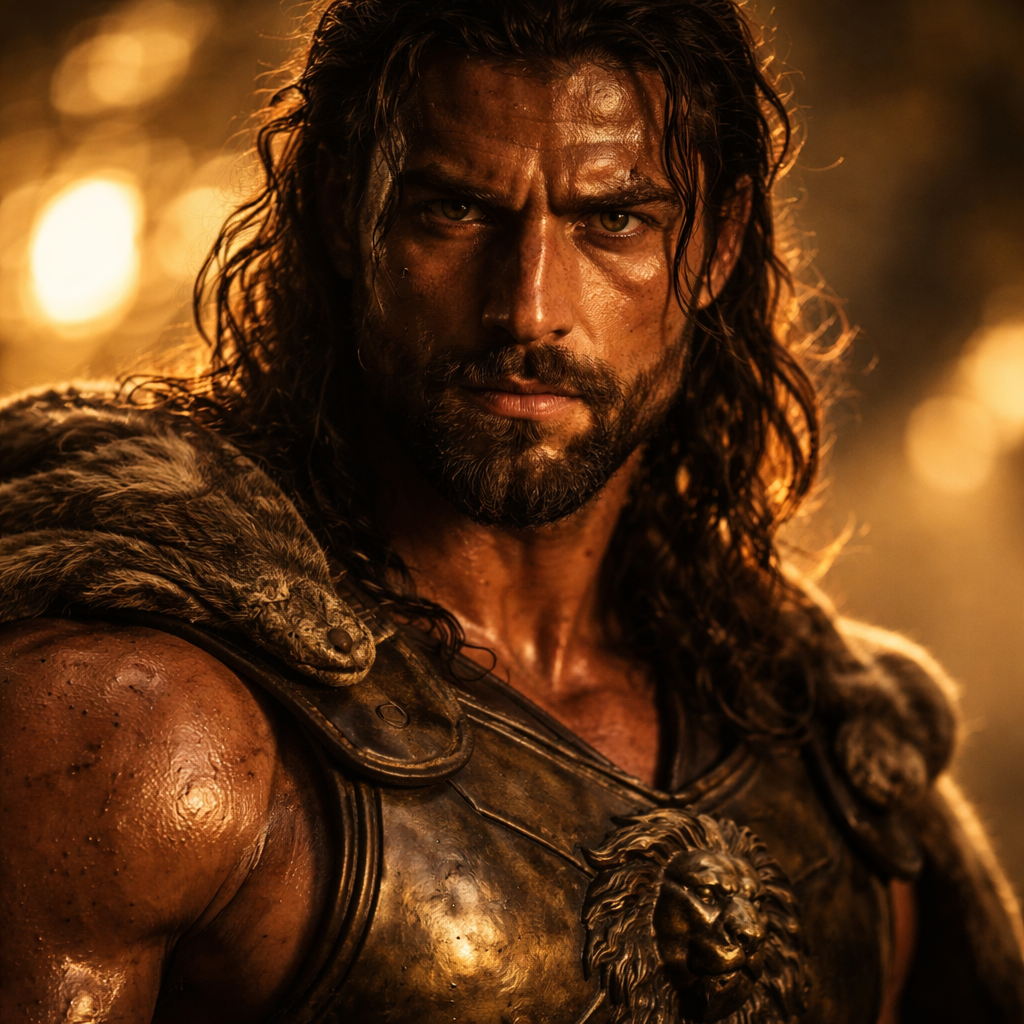
Ray Fernandez, known to millions of wrestling fans as Hercules Hernandez, died on March 6, 2004, at age 47, from heart disease linked to years of anabolic steroid use. His death added another name to a growing list of professional wrestlers from the 1980s and 1990s who died young, raising uncomfortable questions about an industry that rewarded enormous physiques while ignoring the chemical costs of building them. Fernandez was born on August 8, 1957, in Tampa, Florida. He was a natural athlete who played football at Hillsborough Community College before discovering professional wrestling in the late 1970s. His imposing physique — he stood six feet one and weighed over 270 pounds of solid muscle — made him a natural fit for an industry entering its most appearance-obsessed era. He debuted in professional wrestling around 1978 and worked regional circuits in the American South before catching the attention of the World Wrestling Federation. In 1985, he was repackaged as Hercules, often billed as "The Son of Zeus," and paired with manager Bobby "The Brain" Heenan. His gimmick featured a chain he wore to the ring, and he became one of the federation's most recognizable mid-card performers throughout the late 1980s. Hercules competed against many of the era's biggest names, including Hulk Hogan, Randy Savage, and the Ultimate Warrior. He briefly teamed with Paul Roma as "Power and Glory" in 1990-1991 before moving to World Championship Wrestling. He retired from active competition in the mid-1990s after injuries accumulated from nearly two decades of performing. The physical toll of professional wrestling in this era was staggering. Wrestlers performed over 200 matches per year, traveled constantly, and were expected to maintain massive physiques that many could achieve only through steroids and human growth hormone. Painkillers were widely used to manage chronic injuries. The combination proved lethal for a disproportionate number of performers from the 1980s WWF roster. By the time of Fernandez's death, dozens of wrestlers from his generation had died before age 50, prompting Congressional hearings and eventually the WWE's Wellness Policy, introduced in 2006. Hercules Hernandez's career and early death embodied the human cost of an entertainment industry that treated its performers' bodies as disposable spectacle.
For twelve years after the assassination of President Kennedy, only a handful of people had seen the Zapruder film in motion. Millions had viewed individual frames published in Life magazine, but the 26-second home movie that captured the murder from start to finish had been locked in a vault. On March 6, 1975, Robert Groden and Dick Gregory showed the film to a national television audience on ABC's Good Night America, and the public reaction helped reopen the investigation into Kennedy's death. Abraham Zapruder, a Dallas dressmaker, had filmed the presidential motorcade from a concrete pergola in Dealey Plaza on November 22, 1963, using a Bell and Howell 8mm camera. His footage captured the sequence of shots, including the fatal head wound, in gruesome detail. Life magazine purchased the film for $150,000 the weekend of the assassination and published selected frames in its November 29 issue. The magazine retained exclusive rights and, aside from a brief screening for the Warren Commission, kept the moving images from public view. Groden, a photographic technician who had worked with the film as part of his research into the assassination, obtained a copy and enhanced it using optical printing techniques. He spent years studying individual frames and became convinced that the film contradicted the Warren Commission's single-bullet theory. When he appeared with Dick Gregory on Geraldo Rivera's show, the broadcast reached millions of viewers who were seeing the actual shooting for the first time. The public reaction was visceral. Viewers who had accepted the Warren Commission's conclusions were confronted with footage that appeared to show Kennedy's head snapping backward and to the left after the fatal shot — a motion that many interpreted as evidence of a second gunman firing from the front. Medical experts would later explain the movement as a neuromuscular reaction, but in 1975, the visual impact was devastating to official credibility. The broadcast contributed to political pressure that led Congress to establish the House Select Committee on Assassinations in 1976, which concluded in 1979 that Kennedy was "probably assassinated as a result of a conspiracy." The Zapruder film remains the most analyzed piece of amateur footage in history and the defining visual document of the Kennedy assassination.
They climbed through the toilet chute. That's how Philip II's soldiers breached Richard the Lionheart's supposedly impregnable fortress in March 1204. The castle perched above the Seine had cost Richard a fortune—he'd called Château Gaillard his "saucy year-old daughter"—but King John couldn't hold it. After six months of siege, a few French troops squeezed through the latrine shaft, opened the gates from inside, and Normandy fell to France. England wouldn't reclaim its Norman lands for centuries. The Plantagenet empire collapsed because someone forgot to fortify the bathroom.
The rebels didn't have an army, so they bought one. When Prussian cities rose against the Teutonic Knights in 1454, pledging allegiance to the Polish Crown on March 6, delegates of the Prussian Confederation offered King Casimir IV of Poland sovereignty over their lands in exchange for military protection against the Order. The Teutonic Knights had ruled Prussia as a theocratic state since the thirteenth century, but by the mid-fifteenth century their governance had deteriorated into economic exploitation and political repression. Prussian merchants and nobles formed the Confederation in 1440 to resist the Order's demands. When negotiations failed, they revolted and turned to Poland. The resulting Thirteen Years' War (1454-1466) was one of the longest and most expensive conflicts of the medieval period. Neither side could achieve decisive victory. The war devolved into a grinding contest of sieges, mercenary armies, and financial exhaustion. The Prussian Confederation funded Polish military operations through taxation, while the Teutonic Knights hired German mercenaries they couldn't always pay. Unpaid mercenaries switched sides repeatedly, selling captured castles to the highest bidder. The war ended with the Second Peace of Thorn in 1466, which split Prussia in two: Royal Prussia became a province of the Polish Crown, while the remaining Teutonic lands became a Polish fief. The settlement permanently ended the Teutonic Order's power as an independent state and established Polish-Lithuanian dominance over the Baltic region for the next three centuries.
He built a castle in the middle of nowhere to prove Sweden owned it. Count Per Brahe founded Kajaani 200 miles south of the Arctic Circle in 1651, planting a fortress town where Finnish hunters and Sami reindeer herders had roamed for centuries. The Swedish governor-general named it Cajanaburg after the rapids—Kajaani means "echo" in Finnish—and staffed it with soldiers, not settlers. Within decades, Russia attacked it six times. The castle walls couldn't stop what Brahe feared most: three centuries later, Finland wasn't Swedish anymore. Sometimes a fortress just marks where you'll lose.
Thomas Jefferson called the Missouri Compromise "a fire bell in the night" that woke him with terror — and he wasn't even in office anymore. The compromise, signed into law by President James Monroe on March 6, 1820, admitted Missouri as a slave state and Maine as a free state simultaneously, preserving the balance between slave and free states in the Senate at twelve each. More importantly, it drew a line across the Louisiana Purchase territory at the 36 30' parallel: slavery would be prohibited in all new states north of the line (except Missouri itself). The compromise was designed to resolve the crisis that erupted when Missouri's application for statehood as a slave state threatened to tip the Senate balance in favor of the South. Northern representatives, led by New York's James Tallmadge, demanded that Missouri adopt a plan for gradual emancipation as a condition of admission. Southern senators threatened secession. For months, Congress was paralyzed by what everyone recognized was the fundamental question of American politics: whether the United States would be a free nation or a slaveholding one. Henry Clay brokered the compromise through a combination of political skill and parliamentary maneuvering. Jefferson, watching from Monticello at seventy-seven, saw clearly what the compromise revealed: the union could only hold together as long as both sides agreed not to resolve the slavery question definitively. The 36 30' line didn't eliminate the tension — it postponed it. The Kansas-Nebraska Act of 1854 effectively repealed the compromise. The Supreme Court's Dred Scott decision in 1857 ruled it unconstitutional. The Civil War that followed was the fire that the bell had warned of.
Mexican forces under General Antonio Lopez de Santa Anna overwhelmed the 187 Texan defenders of the Alamo after a thirteen-day siege, killing every combatant inside the mission walls. The battle on March 6, 1836, lasted roughly ninety minutes, from the predawn assault to the final room-by-room fighting in the chapel and barracks. Santa Anna had chosen annihilation over negotiation, and the decision cost him the war. The Alamo, a former Franciscan mission in San Antonio de Bexar, had been converted into a makeshift fort by Texan rebels who had captured it from Mexican forces in December 1835. William Barret Travis commanded the regular soldiers; James Bowie led the volunteers. Neither had more than 200 men, and their artillery consisted of roughly twenty cannons of various calibers mounted on the walls. Santa Anna arrived with an army that grew to several thousand during the siege. Travis's pleas for reinforcement went largely unanswered. The provisional government of the Republic of Texas was still organizing at Washington-on-the-Brazos, and Sam Houston's army was not in position to relieve the garrison. Thirty-two volunteers from Gonzales rode through Mexican lines on March 1, the last reinforcements to arrive. They knew they were joining a death trap. Santa Anna ordered the final assault at 5:30 AM on March 6. Four columns of Mexican infantry advanced from different directions. The defenders repulsed the first two waves with devastating cannon and rifle fire, but the sheer weight of numbers carried the third assault over the north wall. Once the perimeter was breached, the fighting moved indoors. Bowie, too ill to stand, was killed in his bed. Crockett's death is disputed — some accounts say he was captured and executed, others that he died fighting. Mexican casualties were severe. Estimates range from 300 to more than 600 killed and wounded, though exact figures are debated. Santa Anna ordered the Texan dead burned rather than buried. The fall of the Alamo achieved the opposite of Santa Anna's intent. Rather than terrifying the Texan rebellion into submission, it unified resistance around a single, furious rallying cry that Sam Houston's army carried into battle at San Jacinto six weeks later.
Mendeleev had been playing chemical solitaire for days. He wrote each known element's properties on individual cards and shuffled them across his desk, arranging and rearranging them by atomic weight, trying to find the pattern he sensed was there. On March 6, 1869, he presented the first periodic table to the Russian Chemical Society, and the arrangement was not just a catalog but a prediction machine. Mendeleev organized 63 known elements into rows and columns based on recurring patterns in their chemical properties. Where the pattern demanded an element that hadn't been discovered, he left a gap and predicted the missing element's properties — its atomic weight, density, melting point, and chemical behavior — with extraordinary precision. He predicted the existence and properties of gallium (discovered 1875), scandium (discovered 1879), and germanium (discovered 1886). Each discovery matched his predictions almost exactly. The periodic table was Mendeleev's greatest contribution to science, but its creation involved a scientific controversy: the German chemist Lothar Meyer developed a very similar arrangement independently and nearly simultaneously. Meyer's table emphasized physical properties while Mendeleev's emphasized chemical relationships, and Mendeleev's willingness to make falsifiable predictions about undiscovered elements gave his version greater scientific utility and public impact. The periodic table remains the organizing framework of chemistry, expanded from Mendeleev's 63 elements to 118 as of 2023. Every chemistry classroom in the world displays a descendant of the arrangement Mendeleev constructed from handwritten cards on his desk. The pattern he found — that chemical properties repeat periodically when elements are arranged by increasing atomic weight — turned out to reflect the quantum mechanical structure of the atom, a reality Mendeleev intuited decades before quantum mechanics existed.
Bruce named it after his expedition's sponsors—the Coats thread-making family from Paisley—because he couldn't get British government funding. While Scott and Shackleton grabbed headlines with their failed South Pole attempts, Bruce quietly mapped 150 miles of previously unknown coastline from the Scotia, a converted Norwegian whaler reinforced with oak planking. His team established the first meteorological station in Antarctica at Laurie Island, which Argentina still operates today. The discovery of Coats Land proved Antarctica wasn't just a collection of islands but a genuine continent. The Scottish expedition cost £36,000—all raised privately because the Royal Geographical Society refused to back two Antarctic missions simultaneously.
Two Italian dirigibles floated 6,000 feet above Turkish troops at Janzur, and Captain Carlo Piazza pushed four grenades over the side. The first aerial bombardment in history. The Turks couldn't shoot back—their rifles didn't have the range, and nobody had imagined they'd need anti-aircraft weapons. Within three years, Zeppelins would rain fire on London. Within thirty, entire cities would vanish under bomber fleets. But that February morning in 1912, four hand-thrown grenades killed maybe two soldiers. Piazza thought he was just trying a new reconnaissance trick. He'd invented the military doctrine that would define the twentieth century's most horrific wars.
Erwin Rommel threw three panzer divisions at the British Eighth Army at Medenine on March 6, 1943, in his last offensive in Africa, and the attack failed so completely that he flew to Hitler's headquarters three days later to argue personally for evacuating all Axis forces from Tunisia. Hitler refused. Rommel never returned to Africa, and the quarter-million German and Italian troops he tried to save surrendered two months later. Rommel had been fighting in North Africa since February 1941, when he arrived in Libya with a small German force meant to prop up Italy's collapsing campaign. His Afrika Korps won spectacular victories against the British through 1941 and 1942, earning Rommel the nickname "The Desert Fox" and a reputation as the war's most gifted tactical commander. But the Battle of El Alamein in October-November 1942 shattered his offensive capability, and the Anglo-American landings in French North Africa in November trapped Axis forces in an ever-shrinking Tunisian pocket. The attack at Medenine was conceived as a spoiling operation to slow the British advance from the south while German forces regrouped after their recent success at the Kasserine Pass against American troops. Rommel assembled the 10th, 15th, and 21st Panzer Divisions with roughly 160 tanks and planned a converging attack on British positions south of the Mareth Line, a system of French-built fortifications near the Tunisian-Libyan border. British intelligence, aided by Ultra decrypts of German communications, knew the attack was coming. General Bernard Montgomery deployed over 400 anti-tank guns in carefully prepared positions and held his armor in reserve. When the German tanks advanced on the morning of March 6, they drove into concentrated anti-tank fire. Rommel lost 55 tanks in a single day without breaching the British line. Not a single British tank was committed to the defense. Rommel recognized immediately that the North African campaign was lost. He flew to see Hitler on March 9, arguing for evacuation, but was instead placed on medical leave. He never commanded in Africa again. Medenine was Rommel's final African battle and one of the clearest demonstrations that defensive anti-tank warfare had fundamentally changed the balance of armored combat.
An entire Italian battalion—600 soldiers with artillery and machine guns—surrendered to Greek shepherds armed with hunting rifles and whatever they'd stolen from supply depots. The Battle of Fardykambos wasn't supposed to work. ELAS resistance fighters had no military training, no uniforms, no real ammunition reserves. But they encircled the Italians for three days in the mountains near Grevena, and something cracked. The garrison commander, facing farmers who refused to quit, chose captivity over carnage. Two weeks later, Grevena became one of the first Greek towns to taste freedom, proving that occupation depends less on firepower than on the occupier's willingness to use it.
Fun Facts
Zodiac Sign
Pisces
Feb 19 -- Mar 20
Water sign. Compassionate, intuitive, and artistic.
Birthstone
Aquamarine
Pale blue
Symbolizes courage, serenity, and clear communication.
Next Birthday
--
days until March 6
Quote of the Day
“If people knew how hard I had to work to gain my mastery, it would not seem so wonderful at all.”
Share Your Birthday
Create a beautiful birthday card with events and famous birthdays for March 6.
Create Birthday CardExplore Nearby Dates
Popular Dates
Explore more about March 6 in history. See the full date page for all events, browse March, or look up another birthday. Play history games or talk to historical figures.