Today In History
March 5 in History
Your birthday shares the stage with stories that shaped the world. Born on this day: Zhou Enlai, Daniel Kahneman, and Henry II of England.

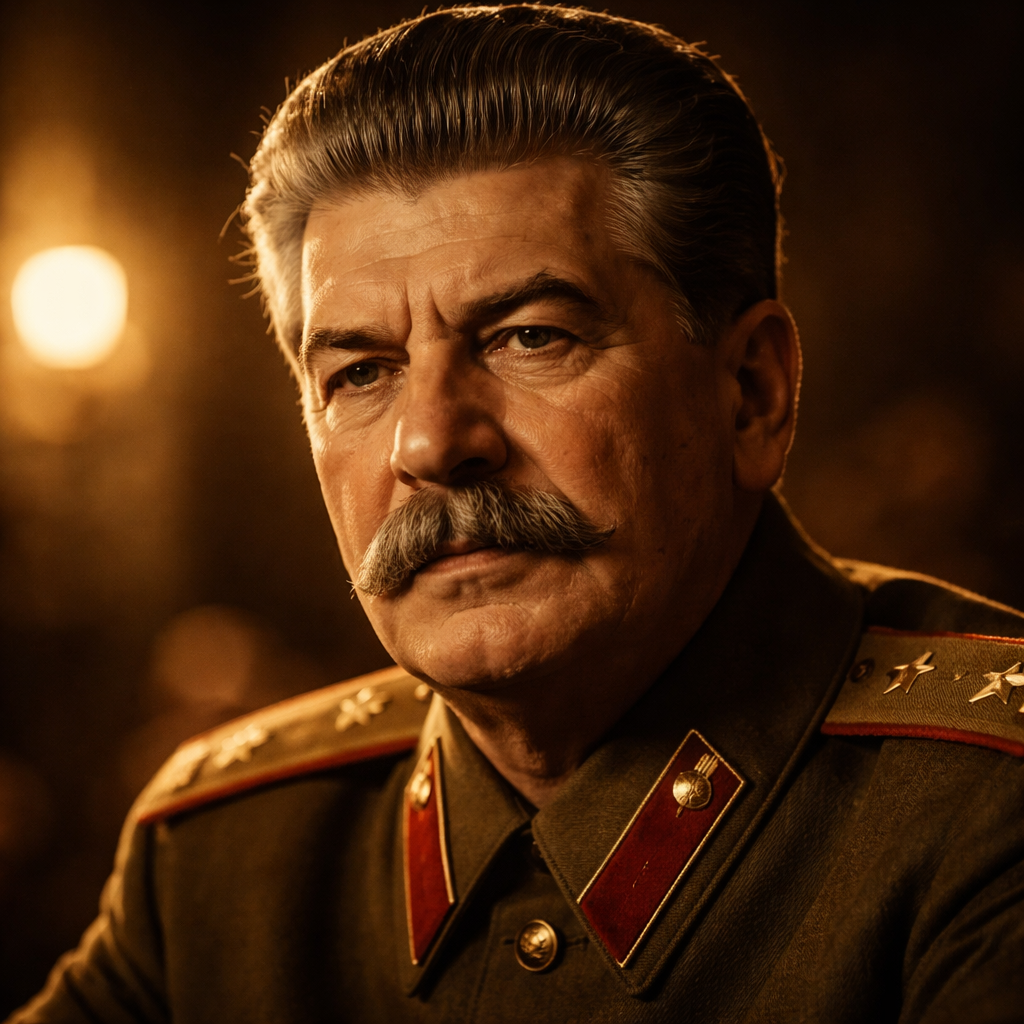
Stalin Dies: Soviet Strongman's Grip Finally Breaks
Joseph Stalin's inner circle found him lying on the floor of his dacha outside Moscow, soaked in his own urine, unable to speak. It was the morning of March 2, 1953. His guards had not checked on him for hours because he had given standing orders never to be disturbed while sleeping. His closest associates — Beria, Khrushchev, Malenkov, Molotov — arrived and debated what to do. Doctors were not summoned for nearly twelve hours, partly from bureaucratic paralysis and partly because several of the best physicians in Moscow were already imprisoned in Stalin's latest purge. He died on March 5, 1953, at age 74. Stalin had ruled the Soviet Union for nearly three decades, longer than any Russian leader since Peter the Great. Born Ioseb Jughashvili in Gori, Georgia, in 1878, he joined Lenin's Bolsheviks as a young revolutionary, organizing bank robberies to fund the party. After Lenin's death in 1924, he outmaneuvered rivals including Trotsky, Zinoviev, and Bukharin through a combination of bureaucratic manipulation, shifting alliances, and eventually physical elimination. His forced collectivization of agriculture, launched in 1929, caused a famine that killed an estimated 5 to 7 million people in Ukraine, Kazakhstan, and southern Russia. The Great Purge of 1936-1938 executed roughly 750,000 Soviet citizens and sent over a million more to the Gulag labor camps. He signed a non-aggression pact with Hitler in 1939, expressed genuine shock when Germany invaded in 1941, and then led the Soviet Union through a war that cost 27 million Soviet lives. The power struggle that followed his death played out over three years. Beria, the secret police chief who had terrorized the country, was arrested and executed within months. Khrushchev eventually consolidated power and delivered his "Secret Speech" in 1956, denouncing Stalin's cult of personality and political repressions. Stalin's death ended one of the most violent peacetime dictatorships in human history and opened a brief window of reform that reshaped the Soviet Union and the Cold War.
Famous Birthdays
1898–1976
1934–2024
1133–1189
Antoine Laumet de La Mothe
d. 1730
Felipe González
b. 1942
James Tobin
1918–2002
Joel Osteen
b. 1963
John Frusciante
b. 1970
Soong May-ling
1898–2003
William Beveridge
b. 1879
Bertrand Cantat
b. 1964
David II of Scotland
b. 1324
Historical Events
Five colonists lay dead or dying in the snow outside the Custom House on King Street in Boston on the night of March 5, 1770, and within days, Paul Revere had produced an engraving of the scene so inflammatory, so distorted, and so widely distributed that it helped turn a local riot into a continental cause for revolution. The Boston Massacre, as it became known, killed five men and wounded six others in a confused confrontation that lasted only minutes. Tensions between Boston's civilian population and the British garrison had been building since 4,000 troops arrived in October 1768 to enforce the Townshend Acts and protect customs officials. Soldiers competed with locals for part-time jobs, fought in taverns, and represented a visible symbol of parliamentary taxation without colonial representation. On March 2, three days before the massacre, a brawl at John Gray's ropewalk between soldiers and workers left both sides looking for revenge. The evening of March 5 began with scattered confrontations across the city. A lone British sentry, Private Hugh White, was posted outside the Custom House when a crowd gathered and began taunting him. Captain Thomas Preston led a squad of eight soldiers to relieve White. The crowd pressed closer, throwing snowballs, ice chunks, and oyster shells. Someone — accounts differ on whether it was Preston or a voice from the crowd — shouted something that sounded like "Fire!" The soldiers discharged their muskets into the crowd. Crispus Attucks, a man of African and Wampanoag descent who worked as a sailor and ropemaker, was killed instantly. Samuel Gray, James Caldwell, Samuel Maverick, and Patrick Carr also died, Carr lingering for nine days. Six others were wounded. John Adams, who would become the second president, defended the soldiers at trial, arguing they had acted in self-defense. Six were acquitted; two were convicted of manslaughter and branded on their thumbs. The massacre became the revolution's first martyrs and proof, in colonial propaganda, that standing armies in peacetime were instruments of tyranny.
Adolf Hitler's Nazi Party won 43.9 percent of the vote in the Reichstag elections of March 5, 1933 — their best result ever, yet still short of a majority. The fact that the Nazis could not win an outright democratic mandate even after five weeks of holding power, controlling the police, and terrorizing the opposition made what followed all the more chilling: Hitler simply bypassed democracy entirely, and within eighteen days Germany was a dictatorship. Hitler had been appointed Chancellor on January 30, 1933, heading a coalition government with the conservative German National People's Party. He immediately called new elections, aiming for a two-thirds parliamentary majority that would allow him to pass an Enabling Act transferring legislative power from the Reichstag to his cabinet. The campaign was conducted under conditions of systematic intimidation. The Reichstag fire on February 27, six days before the election, provided the pretext for suspending civil liberties. The Reichstag Fire Decree, issued the following day, abolished freedom of speech, press, and assembly, authorized indefinite detention without trial, and allowed the central government to override state authorities. Communist Party offices were raided, leaders arrested, and their press shut down. Social Democrats faced similar harassment. SA brownshirts attacked opposition rallies and polling stations. Even under these conditions, the Nazis won only 288 of 647 seats. Their coalition partner, the DNVP, contributed another 52, giving the government a bare working majority but not the two-thirds needed for constitutional amendments. Hitler achieved that threshold on March 23 by barring Communist deputies from the Reichstag and pressuring the Catholic Centre Party to support the Enabling Act. Only the Social Democrats voted against it. The March 5 election was the last multi-party election held in Germany until 1946 in the western zones and 1990 for reunified Germany. It demonstrated that Hitler could not have achieved power through democratic means alone. Democracy in Germany did not collapse from popular enthusiasm — it was dismantled by men who used democratic institutions to destroy democratic institutions.
Joseph Stalin's inner circle found him lying on the floor of his dacha outside Moscow, soaked in his own urine, unable to speak. It was the morning of March 2, 1953. His guards had not checked on him for hours because he had given standing orders never to be disturbed while sleeping. His closest associates — Beria, Khrushchev, Malenkov, Molotov — arrived and debated what to do. Doctors were not summoned for nearly twelve hours, partly from bureaucratic paralysis and partly because several of the best physicians in Moscow were already imprisoned in Stalin's latest purge. He died on March 5, 1953, at age 74. Stalin had ruled the Soviet Union for nearly three decades, longer than any Russian leader since Peter the Great. Born Ioseb Jughashvili in Gori, Georgia, in 1878, he joined Lenin's Bolsheviks as a young revolutionary, organizing bank robberies to fund the party. After Lenin's death in 1924, he outmaneuvered rivals including Trotsky, Zinoviev, and Bukharin through a combination of bureaucratic manipulation, shifting alliances, and eventually physical elimination. His forced collectivization of agriculture, launched in 1929, caused a famine that killed an estimated 5 to 7 million people in Ukraine, Kazakhstan, and southern Russia. The Great Purge of 1936-1938 executed roughly 750,000 Soviet citizens and sent over a million more to the Gulag labor camps. He signed a non-aggression pact with Hitler in 1939, expressed genuine shock when Germany invaded in 1941, and then led the Soviet Union through a war that cost 27 million Soviet lives. The power struggle that followed his death played out over three years. Beria, the secret police chief who had terrorized the country, was arrested and executed within months. Khrushchev eventually consolidated power and delivered his "Secret Speech" in 1956, denouncing Stalin's cult of personality and political repressions. Stalin's death ended one of the most violent peacetime dictatorships in human history and opened a brief window of reform that reshaped the Soviet Union and the Cold War.
Winston Churchill traveled to a small Presbyterian college in Fulton, Missouri, on March 5, 1946, at President Truman's personal invitation, and delivered the speech that gave the Cold War its most enduring metaphor. "From Stettin in the Baltic to Trieste in the Adriatic," Churchill declared, "an iron curtain has descended across the Continent." The phrase had been used before, but Churchill's Westminster College address made it the defining image of the post-war division of Europe. Churchill was out of power when he spoke. British voters had ejected him from Downing Street in July 1945, just weeks after victory in Europe, replacing him with Clement Attlee's Labour government. Churchill remained a Member of Parliament and Leader of the Opposition, but he was a private citizen on an extended American tour when Truman arranged the Westminster College appearance. Truman attended the speech and sat on the platform, a signal that while the Truman administration would not formally endorse the address, the president found its message congenial. The speech, officially titled "The Sinews of Peace," went far beyond the iron curtain metaphor. Churchill argued that the Soviet Union did not want war but desired "the fruits of war and the indefinite expansion of their power and doctrines." He called for a permanent Anglo-American military alliance, joint use of naval and air force bases, and continued sharing of atomic secrets — proposals that foreshadowed NATO, established three years later. The Soviet reaction was fierce. Stalin compared Churchill to Hitler in a Pravda interview, accusing him of warmongering and racial supremacy. American public opinion was divided: many liberals condemned the speech as provocative, while conservatives embraced it as a necessary warning. The Wall Street Journal criticized Churchill for trying to drag America into British imperial conflicts. Within two years, the Truman Doctrine, the Marshall Plan, and the Berlin Blockade had vindicated Churchill's analysis. The iron curtain would not lift for forty-three years. Churchill's Fulton address remains the earliest major public statement framing the post-war world as a bipolar confrontation between Western democracy and Soviet communism.
Spanish colonial authorities had been hunting Roberto Cofresí for five years, and what finally ended his career was not a fleet action or a clever trap but a combined Spanish-American operation off the coast of Puerto Rico. Cofresí, one of the last pirates to operate successfully in the Caribbean, was captured on March 5, 1825, after his ship was overtaken and he was wounded in the fighting. His execution four weeks later marked the effective end of Caribbean piracy as a viable enterprise. Cofresí was born around 1791 in Cabo Rojo, on Puerto Rico's southwestern tip. The region's poverty, combined with the chaos of Latin American independence wars that disrupted colonial trade routes, created an environment where piracy remained a rational economic choice for men with seamanship skills and few legitimate opportunities. Cofresí assembled a small crew and operated a fast vessel from the Mona Passage, the strait between Puerto Rico and Hispaniola through which much of the Caribbean's commercial shipping passed. His targets were primarily merchant vessels carrying goods between Caribbean ports, and he was effective enough that insurance rates for shipping in the region increased measurably during his active years. Unlike the pirate captains of the golden age a century earlier, Cofresí operated in waters increasingly patrolled by American, British, and Spanish naval forces. His survival depended on local support: coastal communities in southwestern Puerto Rico provided shelter, supplies, and intelligence in exchange for shares of captured goods. The campaign against Cofresí intensified after his raids began affecting American commercial interests. The USS Grampus, a naval schooner assigned to anti-piracy duties in the Caribbean, joined Spanish naval forces in pursuing him. The combined force engaged Cofresí's vessel in a running battle, during which he was wounded and his crew overwhelmed. Cofresí was transported to San Juan, tried by a Spanish military court, and executed by firing squad on March 29, 1825. He was approximately 34 years old. His capture coincided with the broader extinction of Caribbean piracy, as the major naval powers established permanent patrol stations and independent Latin American nations began enforcing maritime law in their coastal waters.
Robert Stephenson solved an engineering problem everyone said was impossible: how to carry a railway train across the Menai Strait without using arches that would block the Admiralty's shipping lanes or suspension chains that couldn't support the weight of a locomotive. His answer was the Britannia Bridge, opened on March 5, 1850, which used massive rectangular iron tubes large enough for trains to pass through, suspended 100 feet above the water. Nothing like it had ever been built. The need was commercial. The Chester and Holyhead Railway connected London to the port of Holyhead on Anglesey, from which mail packets sailed to Ireland. But Anglesey was separated from the Welsh mainland by the Menai Strait, a turbulent tidal channel roughly 400 meters wide. Thomas Telford's road suspension bridge, completed in 1826, already crossed the strait but could not carry railway traffic. The Admiralty demanded that any new bridge maintain a minimum 100-foot clearance for tall-masted ships. Stephenson, son of railway pioneer George Stephenson, consulted the mathematician Eaton Hodgkinson and the engineer William Fairbairn. They conducted extensive tests on iron plate structures and determined that a rectangular tube, built from riveted wrought iron plates, could support the weight of a loaded train over the required span. The design was unprecedented: two main spans of 460 feet each, with two smaller approach spans, all consisting of continuous rectangular tubes through which trains would travel as if through a tunnel. The tubes were assembled on shore and floated into position on pontoons during carefully timed tidal operations. Hydraulic presses lifted the 1,800-ton tubes into place on the bridge's limestone towers, a process watched by thousands of spectators. The central Britannia Tower, standing on a rock in the middle of the strait, rose 230 feet and became a landmark visible for miles. The bridge carried rail traffic for 120 years until a devastating fire in 1970, started by boys exploring the tubes with torches, melted the iron structure beyond repair. The rebuilt bridge, completed in 1972, used steel arches and added a road deck above the rail line. Stephenson's tubular bridge concept influenced a generation of engineers and proved that wrought iron could span distances previously thought impossible without stone arches.
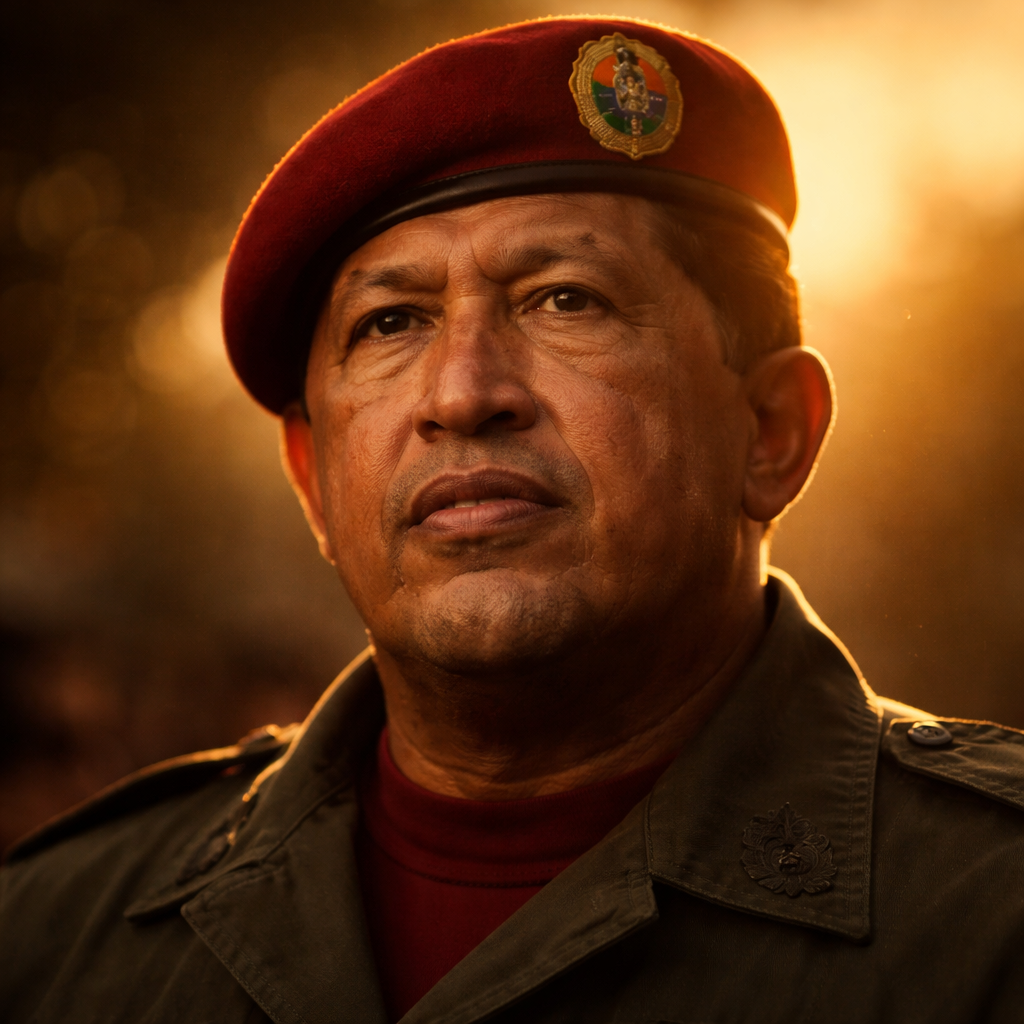
Hugo Chavez won the Venezuelan presidency in 1998 by telling voters the political class had stolen their country's oil wealth, and he spent the next fourteen years redistributing that wealth through social programs that slashed poverty by half while hollowing out the institutions that might have sustained the gains after he was gone. He died of cancer on March 5, 2013, at age 58, leaving behind a deeply polarized nation, a cult of personality, and an economy almost entirely dependent on oil prices staying high. They did not. Chavez was born on July 28, 1954, in Sabaneta, Barinas state, to a family of modest means. He joined the Venezuelan army, rose to lieutenant colonel, and led a failed coup against President Carlos Andres Perez in February 1992. The coup collapsed within hours, but Chavez's televised surrender, in which he took personal responsibility and said "por ahora" (for now), made him a folk hero. He was pardoned in 1994 and won the presidency four years later with 56 percent of the vote. His Bolivarian Revolution, named for independence hero Simon Bolivar, rewrote the constitution, nationalized key industries including the oil sector, and launched a network of social programs called Misiones. Mission Barrio Adentro brought Cuban doctors to poor neighborhoods; Mission Robinson taught literacy to 1.5 million adults; Mission Mercal provided subsidized food. By the World Bank's measures, poverty fell from 50 percent to 27 percent between 1998 and 2011. The gains came at enormous cost. Chavez gutted the state oil company PDVSA after a 2002 strike, replacing 18,000 experienced workers with political loyalists. Oil production began a decline it never reversed. He packed the Supreme Court, shut down opposition media, and rewrote electoral rules to favor his party. Annual inflation rose steadily, and by the time of his death, the economy depended almost entirely on oil revenue, which accounted for 96 percent of export earnings. Chavez was diagnosed with cancer in June 2011, traveled to Cuba for treatment, and was reelected in October 2012 despite his deteriorating health. He died five months into his new term. The Venezuela Chavez left behind descended into the Western Hemisphere's worst economic and humanitarian crisis within three years of his death, as oil prices collapsed and his successor, Nicolas Maduro, proved unable to govern without his predecessor's charisma.
Julian the Apostate brought 90,000 soldiers and a library when he marched from Antioch into Persia in March 363 AD. The last pagan Roman emperor was attempting what Trajan had achieved 250 years earlier: the conquest of the Sasanian Empire. Julian's army was the largest Roman force assembled since the height of the empire, equipped with siege engines, river boats, and supplies for a sustained campaign into Mesopotamia. Julian was a brilliant general and an intellectual who wrote philosophical treatises, restored pagan temples, and attempted to reverse Constantine's Christianization of the empire. His Persian campaign began well — the army advanced rapidly down the Euphrates, defeating Persian forces and capturing the fortress of Pirisabora. But Julian made a fatal decision: instead of besieging the Sasanian capital Ctesiphon, which he reached but judged too strongly defended, he burned his river boats and marched northward into the Persian interior, hoping to link up with a secondary Roman force. The Persians adopted scorched-earth tactics, burning crops and poisoning wells. Julian's army was harassed by cavalry raids and reduced by heat, hunger, and disease. On June 26, 363, Julian was struck by a spear during a skirmish. He died that night. The army elected Jovian as emperor, and Jovian immediately negotiated a humiliating peace that surrendered five provinces and the strategic fortress of Nisibis — territory Rome had held for generations. Julian's death ended the last serious attempt to restore paganism in the Roman Empire and the last major Roman offensive against Persia. Christianity's dominance became permanent.
Naser Khosrow was forty years old, hungover, and disgusted with himself when he decided to abandon his comfortable government career and walk across the Middle East. The Persian scholar, poet, and philosopher began his seven-year journey on March 5, 1046, from the city of Merv in present-day Turkmenistan. He would travel over 12,000 miles through Persia, the Caucasus, Syria, Palestine, Egypt, Arabia, and the Indian Ocean, recording everything he saw with the eye of a trained bureaucrat and the sensibility of a poet. His account, the Safarnama (Book of Travels), is one of the most detailed and reliable descriptions of the medieval Islamic world ever written. He described the markets of Cairo, the architecture of Jerusalem, the hajj in Mecca, and the physical geography of every region he crossed. In Egypt, he was converted to Ismaili Shi'ism by the Fatimid caliphate's missionary network. The conversion transformed his life. He returned to Central Asia as an Ismaili missionary and spent the rest of his life promoting the faith, writing philosophical works, and composing poetry that ranks among the finest in Persian literature. His proselytizing made him enemies: Sunni opponents forced him into exile in the Pamir Mountains of present-day Tajikistan, where he spent his final years in a remote valley, writing and teaching. The Safarnama survived because his students preserved it, and it remains an invaluable historical source. Khosrow's journey began as a personal crisis — a bureaucrat who realized he'd wasted his life — and produced one of the great travel narratives of the medieval world.
The Vatican waited 73 years to ban Copernicus's book. Why? Because nobody thought it was serious. When *On the Revolutions of the Heavenly Spheres* appeared in 1543, scholars treated it like an interesting math trick—a useful tool for calculating planetary positions, not actual reality. The Church even owned copies in its libraries. But then Galileo showed up with his telescope in 1609, found evidence the math was *true*, and suddenly Rome panicked. On March 5, 1616, they finally added Copernicus to the Index of Forbidden Books, trying to stuff the sun-centered universe back into the box. The damage was done. You can't unring a bell that's been ringing for seven decades.
Victor's 5,000 French troops controlled the high ground at Barrosa, perfectly positioned to crush the relief force heading to Cádiz. But Spanish commander La Peña refused to attack, leaving British General Thomas Graham with just 2,400 men to assault uphill against twice their number. Graham attacked anyway. His outnumbered redcoats stormed the ridge, captured two French eagles—the first ever taken by British forces in the Napoleonic Wars—and sent Victor fleeing. Cádiz was saved. The Spanish commander who'd refused to fight took credit for the victory.
Andrew Johnson missed conviction by a single vote when the Senate voted on his impeachment on March 5, 1868. Seven Republican senators broke ranks to save a president their own party had impeached, and Kansas Senator Edmund Ross cast the deciding vote that preserved Johnson's presidency. The vote was 35-19 for conviction — one vote short of the two-thirds majority required by the Constitution. Johnson had been impeached by the House of Representatives for violating the Tenure of Office Act by dismissing Secretary of War Edwin Stanton without Senate approval. The charge was technically about a cabinet firing, but the real conflict was over Reconstruction. Johnson, a Tennessee Democrat who had been added to Lincoln's ticket as a unity gesture, had spent his presidency vetoing civil rights legislation, opposing the Fourteenth Amendment, and attempting to restore former Confederate states to the Union with minimal conditions. The Radical Republicans who controlled Congress viewed him as an obstacle to justice for four million formerly enslaved people. The impeachment trial consumed the nation for months. Enormous political pressure was applied to wavering senators. Ross received death threats, bribes, and promises of political advancement. He voted not guilty, later writing that he could not convict a president on what he considered a constitutionally dubious charge regardless of his personal views on Johnson's policies. The acquittal preserved the principle that impeachment should require genuine "high crimes and misdemeanors" rather than political disagreement. Ross and the six other Republicans who voted against conviction all lost their political careers. Johnson served out his term and returned to Tennessee. The presidency survived, but Reconstruction was severely damaged.
Six hundred Moro men, women, and children climbed into an extinct volcano crater on Jolo Island, refusing to surrender their weapons to American colonial forces. Major General Leonard Wood—yes, the Wood of Fort Leonard Wood—ordered a three-day assault with mountain guns and infantry against the crater's steep walls. His troops killed nearly everyone inside. Wood called it a "brilliant feat of arms." Back in Washington, Mark Twain wrote a scathing satire suggesting they should redesign the American flag with "the white stripes painted black and the stars replaced by the skull and cross-bones." The "battle" wasn't combat—it was a massacre that revealed what empire actually looked like when you stripped away the rhetoric about civilization and progress.
The pilot couldn't see through the fog, so Capitano Carlo Piazza leaned out of his open-air cockpit at 600 feet and sketched the Turkish positions below him. On March 4, 1912, Italian forces became the first military in history to use airships in combat during the Italo-Turkish War over Libya. The Italians had already made history in October 1911 by dropping bombs from a heavier-than-air aircraft, but the airship operations represented a different kind of innovation: sustained aerial reconnaissance over enemy territory. Italian airships flew over Turkish and Arab positions in Libya at altitudes that put them within rifle range, mapping defensive lines and troop concentrations that ground scouts couldn't reach. The intelligence gathered from these flights directly influenced Italian tactical planning. The Turks fired at the airships with rifles and light artillery, occasionally hitting them, but the hydrogen-filled envelopes proved surprisingly resilient to small-arms fire. The psychological impact on Turkish forces, who had never seen powered flight in a military context, was reportedly significant. Italy's use of airships and aircraft in Libya was watched closely by military observers from every European power. The lessons learned — that air power could provide reconnaissance, artillery spotting, and limited bombing capability — influenced military aviation doctrine in every country that would fight in World War I two years later. The Italian campaign in Libya served as a laboratory for aerial warfare. The technologies were primitive, the capabilities were limited, but the principle was established: whoever controlled the air above the battlefield had an advantage that no amount of ground-based intelligence could match.
Gandhi walked into the Viceroy's palace wearing a loincloth and carrying a wooden staff. Lord Irwin—the most powerful man in India—served him tea on fine china. They'd been enemies for a year, ever since Gandhi led 80,000 Indians on a 240-mile march to the sea to make illegal salt. Now Irwin agreed to let the poorest Indians gather salt freely, release thousands of prisoners, and invited Gandhi to London as Britain's equal negotiating partner. Churchill was furious, calling it "nauseating" to see a "half-naked fakir" treated like a diplomat. But here's the thing: Gandhi didn't win independence that day—he won something bigger. He proved you could force an empire to bargain without ever throwing a punch.
Fun Facts
Zodiac Sign
Pisces
Feb 19 -- Mar 20
Water sign. Compassionate, intuitive, and artistic.
Birthstone
Aquamarine
Pale blue
Symbolizes courage, serenity, and clear communication.
Next Birthday
--
days until March 5
Quote of the Day
“Those who do not move, do not notice their chains.”
Share Your Birthday
Create a beautiful birthday card with events and famous birthdays for March 5.
Create Birthday CardExplore Nearby Dates
Popular Dates
Explore more about March 5 in history. See the full date page for all events, browse March, or look up another birthday. Play history games or talk to historical figures.