Bayer Synthesizes Aspirin: The World's First Wonder Drug
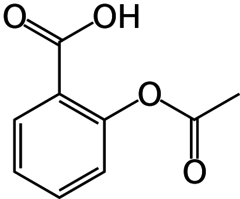
Bayer registered the trademark "Aspirin" on March 6, 1899, for a pill that would become the most widely consumed medication in human history. The drug — acetylsalicylic acid — had been synthesized by Bayer chemist Felix Hoffmann in August 1897, but the name and the trademark turned a chemical compound into a household word that has sold roughly 100 billion tablets since its introduction. The active principle behind aspirin had been known for millennia. Ancient Egyptians, Greeks, and Native Americans used willow bark and meadowsweet to treat pain and fever. In 1763, the Reverend Edward Stone of Oxfordshire conducted the first clinical study of willow bark extract on fifty patients with fever. By 1829, French pharmacist Henri Leroux had isolated the active compound, salicin, and Italian chemist Raffaele Piria converted it to salicylic acid in 1838. The problem was that salicylic acid devastated the stomach. Patients who took it for chronic conditions like rheumatism suffered severe gastric bleeding and nausea. Hoffmann, whose own father suffered from rheumatic pain, searched for a less irritating derivative. He acetylated salicylic acid, producing acetylsalicylic acid (ASA), which proved far gentler on the stomach while retaining full analgesic and anti-inflammatory properties. The compound had actually been synthesized decades earlier by French chemist Charles Frederic Gerhardt in 1853, but Gerhardt had not recognized its medical potential and never pursued it. Bayer's head of pharmacology, Heinrich Dreser, initially resisted marketing ASA — he was more excited about another drug Hoffmann had synthesized the same year: diacetylmorphine, which Bayer sold under the brand name Heroin. Dreser eventually relented, and Bayer launched Aspirin commercially on March 6, 1899, in powder form, with tablets following in 1900. The drug's versatility proved extraordinary. Beyond pain relief and fever reduction, researchers in the 1970s discovered that aspirin inhibits platelet aggregation, making low-dose aspirin effective for preventing heart attacks and strokes. Current global consumption exceeds 40,000 tonnes annually. Bayer lost its Aspirin trademark in many countries as war reparations under the Treaty of Versailles in 1919, making "aspirin" a generic term everywhere except Germany, Canada, and a few other nations.
March 6, 1899
127 years ago
Key Figures & Places

What Else Happened on March 6
Augustus merged the Roman state with Roman religion on a single day in 12 BC when he assumed the title of Pontifex Maximus, making himself both the political ru…
Seven years in a dungeon, and the Caliph still thought they'd break. The 42 Byzantine officers captured when Amorium fell in 838 weren't tortured — they were gi…
Nikephoros Phokas shattered the Emirate of Crete by capturing its capital, Chandax, after a grueling ten-month siege. This victory dismantled the base for Medit…
They climbed through the toilet chute. That's how Philip II's soldiers breached Richard the Lionheart's supposedly impregnable fortress in March 1204. The castl…
The French king agreed to pay England 50,000 livres just to clarify what "homage" actually meant. Charles IV and Edward II had been locked in a bizarre diplomat…
Tommaso Parentucelli ascended the papal throne as Nicholas V, ending the long-standing schism that had fractured the Catholic Church for decades. His election s…
Talk to History
Have a conversation with historical figures who witnessed this era. Ask questions, explore perspectives, and bring history to life.