Today In History logo TIH

Today In History

April 9 in History

Your birthday shares the stage with stories that shaped the world. Born on this day: Hugh Hefner, Isambard Kingdom Brunel, and Jørn Utzon.

Lee Surrenders at Appomattox: The Civil War Ends
1865Event

Lee Surrenders at Appomattox: The Civil War Ends

Robert E. Lee rode to the McLean house in Appomattox Court House, Virginia, on April 9, 1865, wearing a crisp gray dress uniform with a jeweled sword at his side. Ulysses Grant arrived mud-splattered in a private's coat with lieutenant general's stars pinned to the shoulders. The contrast in appearance captured something essential about the two men and the two causes they represented. Lee had run out of options. His Army of Northern Virginia, starving and reduced to fewer than 28,000 effective troops, was surrounded after a week-long retreat from Petersburg and Richmond. The surrender terms Grant offered were remarkably generous and reflected Lincoln's desire for reconciliation rather than punishment. Confederate soldiers would be paroled and allowed to go home. Officers could keep their sidearms, horses, and personal baggage. Enlisted men who owned their own horses, as many cavalry and artillery troops did, could keep them for spring planting. Grant also ordered his commissary to send food to Lee's starving troops. When Union soldiers began firing celebratory artillery, Grant ordered them to stop, saying, "The war is over. The rebels are our countrymen again." The meeting lasted approximately 90 minutes. Lee signed the surrender document, shook Grant's hand, and rode back to his lines. As he approached, his soldiers crowded around him, many weeping. Lee told them to go home, plant their crops, and obey the law. His General Order No. 9, issued the following day, praised the "unsurpassing courage and fortitude" of his troops and told them to return to their lives "with the satisfaction that proceeds from the consciousness of duty faithfully performed." The Appomattox surrender did not technically end the Civil War. Confederate forces remained in the field under Joseph Johnston in North Carolina, Richard Taylor in Alabama, and Kirby Smith in the Trans-Mississippi. But Lee's Army of Northern Virginia was the Confederacy's most formidable fighting force, and its surrender made continued resistance futile. Johnston surrendered to William Sherman on April 26, Taylor on May 4, and Smith on June 2. Five days after Appomattox, Abraham Lincoln was shot at Ford's Theatre, and the generous terms of surrender were endangered by a grief-stricken nation's desire for vengeance.

Famous Birthdays

Hugh Hefner
Hugh Hefner

1926–2017

Jørn Utzon
Jørn Utzon

1918–2008

Gerard Way

Gerard Way

b. 1977

Léon Blum

Léon Blum

d. 1950

Seve Ballesteros

Seve Ballesteros

1957–2011

Tamerlane (Timur)

Tamerlane (Timur)

b. 1336

Tomohisa Yamashita

Tomohisa Yamashita

b. 1985

Brandon deWilde

Brandon deWilde

d. 1972

Jean-Marie Balestre

Jean-Marie Balestre

d. 2008

Jesse McCartney

Jesse McCartney

b. 1987

Mark Kelly

Mark Kelly

b. 1961

Historical Events

Robert E. Lee rode to the McLean house in Appomattox Court House, Virginia, on April 9, 1865, wearing a crisp gray dress uniform with a jeweled sword at his side. Ulysses Grant arrived mud-splattered in a private's coat with lieutenant general's stars pinned to the shoulders. The contrast in appearance captured something essential about the two men and the two causes they represented. Lee had run out of options. His Army of Northern Virginia, starving and reduced to fewer than 28,000 effective troops, was surrounded after a week-long retreat from Petersburg and Richmond.

The surrender terms Grant offered were remarkably generous and reflected Lincoln's desire for reconciliation rather than punishment. Confederate soldiers would be paroled and allowed to go home. Officers could keep their sidearms, horses, and personal baggage. Enlisted men who owned their own horses, as many cavalry and artillery troops did, could keep them for spring planting. Grant also ordered his commissary to send food to Lee's starving troops. When Union soldiers began firing celebratory artillery, Grant ordered them to stop, saying, "The war is over. The rebels are our countrymen again."

The meeting lasted approximately 90 minutes. Lee signed the surrender document, shook Grant's hand, and rode back to his lines. As he approached, his soldiers crowded around him, many weeping. Lee told them to go home, plant their crops, and obey the law. His General Order No. 9, issued the following day, praised the "unsurpassing courage and fortitude" of his troops and told them to return to their lives "with the satisfaction that proceeds from the consciousness of duty faithfully performed."

The Appomattox surrender did not technically end the Civil War. Confederate forces remained in the field under Joseph Johnston in North Carolina, Richard Taylor in Alabama, and Kirby Smith in the Trans-Mississippi. But Lee's Army of Northern Virginia was the Confederacy's most formidable fighting force, and its surrender made continued resistance futile. Johnston surrendered to William Sherman on April 26, Taylor on May 4, and Smith on June 2.

Five days after Appomattox, Abraham Lincoln was shot at Ford's Theatre, and the generous terms of surrender were endangered by a grief-stricken nation's desire for vengeance.
1865

Robert E. Lee rode to the McLean house in Appomattox Court House, Virginia, on April 9, 1865, wearing a crisp gray dress uniform with a jeweled sword at his side. Ulysses Grant arrived mud-splattered in a private's coat with lieutenant general's stars pinned to the shoulders. The contrast in appearance captured something essential about the two men and the two causes they represented. Lee had run out of options. His Army of Northern Virginia, starving and reduced to fewer than 28,000 effective troops, was surrounded after a week-long retreat from Petersburg and Richmond. The surrender terms Grant offered were remarkably generous and reflected Lincoln's desire for reconciliation rather than punishment. Confederate soldiers would be paroled and allowed to go home. Officers could keep their sidearms, horses, and personal baggage. Enlisted men who owned their own horses, as many cavalry and artillery troops did, could keep them for spring planting. Grant also ordered his commissary to send food to Lee's starving troops. When Union soldiers began firing celebratory artillery, Grant ordered them to stop, saying, "The war is over. The rebels are our countrymen again." The meeting lasted approximately 90 minutes. Lee signed the surrender document, shook Grant's hand, and rode back to his lines. As he approached, his soldiers crowded around him, many weeping. Lee told them to go home, plant their crops, and obey the law. His General Order No. 9, issued the following day, praised the "unsurpassing courage and fortitude" of his troops and told them to return to their lives "with the satisfaction that proceeds from the consciousness of duty faithfully performed." The Appomattox surrender did not technically end the Civil War. Confederate forces remained in the field under Joseph Johnston in North Carolina, Richard Taylor in Alabama, and Kirby Smith in the Trans-Mississippi. But Lee's Army of Northern Virginia was the Confederacy's most formidable fighting force, and its surrender made continued resistance futile. Johnston surrendered to William Sherman on April 26, Taylor on May 4, and Smith on June 2. Five days after Appomattox, Abraham Lincoln was shot at Ford's Theatre, and the generous terms of surrender were endangered by a grief-stricken nation's desire for vengeance.

The surrender of approximately 76,000 American and Filipino troops on the Bataan Peninsula on April 9, 1942, was the largest capitulation in American military history. General Edward King Jr. surrendered the Bataan garrison to Japanese General Masaharu Homma after three months of fighting without adequate food, medicine, or ammunition. What followed was a forced march of 66 miles to Camp O'Donnell that killed between 6,000 and 18,000 prisoners through execution, starvation, disease, and exhaustion. The Bataan Death March became one of the defining war crimes of the Pacific theater.

The defense of Bataan had been heroic and futile. General Douglas MacArthur's War Plan Orange called for a fighting retreat to the Bataan Peninsula and the fortified island of Corregidor, where American and Filipino forces would hold out until reinforcements arrived from Hawaii. The reinforcements never came. After Pearl Harbor, the Pacific Fleet was crippled, and the war's early months produced an unbroken string of Japanese victories across Southeast Asia. President Roosevelt ordered MacArthur evacuated to Australia in March 1942, leaving General Jonathan Wainwright in overall command and King directing the Bataan garrison.

The troops who surrendered were already in desperate condition. Rations had been cut to one-third of normal by January and further reduced as supplies dwindled. Malaria, dysentery, and beriberi were epidemic. Many soldiers could barely walk before the march began. Japanese forces, who had expected a garrison of 25,000 and instead received three times that number, had made no logistical preparations for feeding or transporting the prisoners.

The march itself was conducted with systematic cruelty. Japanese guards bayoneted prisoners who fell behind or stopped to drink water. Groups of prisoners were executed arbitrarily. Filipino civilians who attempted to give food or water to the marchers were beaten or killed. The sun was brutal, temperatures exceeded 100 degrees Fahrenheit, and the prisoners had no shade, no water, and no rest stops for stretches of 12 to 18 hours. Many who survived the march died within weeks at Camp O'Donnell, where conditions were equally lethal.

General Homma was tried for war crimes by a U.S. military commission in Manila after the war and executed by firing squad on April 3, 1946.
1942

The surrender of approximately 76,000 American and Filipino troops on the Bataan Peninsula on April 9, 1942, was the largest capitulation in American military history. General Edward King Jr. surrendered the Bataan garrison to Japanese General Masaharu Homma after three months of fighting without adequate food, medicine, or ammunition. What followed was a forced march of 66 miles to Camp O'Donnell that killed between 6,000 and 18,000 prisoners through execution, starvation, disease, and exhaustion. The Bataan Death March became one of the defining war crimes of the Pacific theater. The defense of Bataan had been heroic and futile. General Douglas MacArthur's War Plan Orange called for a fighting retreat to the Bataan Peninsula and the fortified island of Corregidor, where American and Filipino forces would hold out until reinforcements arrived from Hawaii. The reinforcements never came. After Pearl Harbor, the Pacific Fleet was crippled, and the war's early months produced an unbroken string of Japanese victories across Southeast Asia. President Roosevelt ordered MacArthur evacuated to Australia in March 1942, leaving General Jonathan Wainwright in overall command and King directing the Bataan garrison. The troops who surrendered were already in desperate condition. Rations had been cut to one-third of normal by January and further reduced as supplies dwindled. Malaria, dysentery, and beriberi were epidemic. Many soldiers could barely walk before the march began. Japanese forces, who had expected a garrison of 25,000 and instead received three times that number, had made no logistical preparations for feeding or transporting the prisoners. The march itself was conducted with systematic cruelty. Japanese guards bayoneted prisoners who fell behind or stopped to drink water. Groups of prisoners were executed arbitrarily. Filipino civilians who attempted to give food or water to the marchers were beaten or killed. The sun was brutal, temperatures exceeded 100 degrees Fahrenheit, and the prisoners had no shade, no water, and no rest stops for stretches of 12 to 18 hours. Many who survived the march died within weeks at Camp O'Donnell, where conditions were equally lethal. General Homma was tried for war crimes by a U.S. military commission in Manila after the war and executed by firing squad on April 3, 1946.

NASA introduced America's first astronauts to the press on April 9, 1959, and the seven men who walked into the ballroom at Dolley Madison House in Washington, D.C., were instantly transformed from anonymous military test pilots into the most famous people in the country. Scott Carpenter, Gordon Cooper, John Glenn, Gus Grissom, Wally Schirra, Alan Shepard, and Deke Slayton were selected from 508 candidates who had been subjected to a brutal screening process involving centrifuges, isolation chambers, psychiatric evaluations, and invasive medical examinations that several later described as dehumanizing.

The selection criteria reflected the program's engineering constraints rather than any romantic vision of space exploration. Project Mercury's capsule was tiny, so astronauts had to be under 5 feet 11 inches and weigh less than 180 pounds. They needed at least 1,500 hours of flight time in jet aircraft and an engineering-related bachelor's degree. The test pilot requirement effectively limited the pool to military aviators, and all seven selected had flown combat missions in Korea or served as test pilots at facilities like Edwards Air Force Base and the Naval Air Test Center at Patuxent River.

The press conference was pandemonium. Reporters gave the seven a standing ovation before a single question was asked, a response that shocked NASA officials who had expected skepticism about the program's feasibility. The astronauts were articulate, modest, and telegenic. John Glenn, whose clean-cut earnestness and facility with cameras made him the most quotable, dominated the proceedings. Life magazine paid $500,000 for exclusive access to the astronauts' personal stories, ensuring sympathetic coverage and creating the mythology of the astronaut-hero that shaped American culture for a generation.

The reality of Project Mercury was less glamorous than the publicity suggested. The astronauts fought continuously with NASA engineers over the degree of control they would have inside the capsule. Engineers wanted an automated vehicle; the astronauts demanded manual controls and a window. The compromise produced a spacecraft that could be operated either automatically or manually, giving the astronauts the ability to take control in an emergency.

Shepard flew first, on May 5, 1961, a 15-minute suborbital flight that made him the second person in space after Yuri Gagarin's orbital flight three weeks earlier.
1959

NASA introduced America's first astronauts to the press on April 9, 1959, and the seven men who walked into the ballroom at Dolley Madison House in Washington, D.C., were instantly transformed from anonymous military test pilots into the most famous people in the country. Scott Carpenter, Gordon Cooper, John Glenn, Gus Grissom, Wally Schirra, Alan Shepard, and Deke Slayton were selected from 508 candidates who had been subjected to a brutal screening process involving centrifuges, isolation chambers, psychiatric evaluations, and invasive medical examinations that several later described as dehumanizing. The selection criteria reflected the program's engineering constraints rather than any romantic vision of space exploration. Project Mercury's capsule was tiny, so astronauts had to be under 5 feet 11 inches and weigh less than 180 pounds. They needed at least 1,500 hours of flight time in jet aircraft and an engineering-related bachelor's degree. The test pilot requirement effectively limited the pool to military aviators, and all seven selected had flown combat missions in Korea or served as test pilots at facilities like Edwards Air Force Base and the Naval Air Test Center at Patuxent River. The press conference was pandemonium. Reporters gave the seven a standing ovation before a single question was asked, a response that shocked NASA officials who had expected skepticism about the program's feasibility. The astronauts were articulate, modest, and telegenic. John Glenn, whose clean-cut earnestness and facility with cameras made him the most quotable, dominated the proceedings. Life magazine paid $500,000 for exclusive access to the astronauts' personal stories, ensuring sympathetic coverage and creating the mythology of the astronaut-hero that shaped American culture for a generation. The reality of Project Mercury was less glamorous than the publicity suggested. The astronauts fought continuously with NASA engineers over the degree of control they would have inside the capsule. Engineers wanted an automated vehicle; the astronauts demanded manual controls and a window. The compromise produced a spacecraft that could be operated either automatically or manually, giving the astronauts the ability to take control in an emergency. Shepard flew first, on May 5, 1961, a 15-minute suborbital flight that made him the second person in space after Yuri Gagarin's orbital flight three weeks earlier.

A federal jury in Miami convicted former Panamanian dictator Manuel Noriega on eight counts of drug trafficking, racketeering, and money laundering on April 9, 1992, concluding the most extraordinary criminal prosecution of a foreign head of state in American legal history. Noriega was sentenced to 40 years in federal prison, later reduced to 30. The trial exposed a relationship between Noriega and the United States intelligence community that was far more entangled than either government wanted to acknowledge.

Noriega had been a CIA asset since the late 1960s, receiving payments that eventually reached $200,000 per year. He provided intelligence on Cuban and Nicaraguan activities in Central America, allowed the CIA to establish listening posts in Panama, and facilitated American support for the Contras fighting the Sandinista government in Nicaragua. In exchange, the United States tolerated his consolidation of power in Panama following the suspicious death of Omar Torrijos in a 1981 plane crash, his manipulation of elections, and mounting evidence of his involvement in drug trafficking.

The relationship soured in the mid-1980s as Noriega's drug connections became impossible to ignore. He had been facilitating cocaine shipments for Colombia's Medellin cartel, allowing drug flights through Panamanian airspace, and laundering cartel money through Panamanian banks. A 1988 federal grand jury in Miami indicted him on drug charges, the first time a sitting head of state had been indicted by a U.S. court. Noriega responded by annulling a 1989 election he had lost and declaring himself "Maximum Leader of National Liberation."

President George H.W. Bush ordered Operation Just Cause on December 20, 1989, sending 27,684 American troops into Panama to remove Noriega from power. The operation killed an estimated 200 to 300 Panamanian civilians and 23 American soldiers. Noriega took refuge in the Vatican embassy, where American forces famously blasted rock music at the building around the clock. He surrendered on January 3, 1990, and was flown to Miami for trial.

Noriega served 17 years in U.S. federal prison, was then extradited to France for money laundering, sentenced to seven years, and finally returned to Panama in 2011, where he died in custody in 2017.
1992

A federal jury in Miami convicted former Panamanian dictator Manuel Noriega on eight counts of drug trafficking, racketeering, and money laundering on April 9, 1992, concluding the most extraordinary criminal prosecution of a foreign head of state in American legal history. Noriega was sentenced to 40 years in federal prison, later reduced to 30. The trial exposed a relationship between Noriega and the United States intelligence community that was far more entangled than either government wanted to acknowledge. Noriega had been a CIA asset since the late 1960s, receiving payments that eventually reached $200,000 per year. He provided intelligence on Cuban and Nicaraguan activities in Central America, allowed the CIA to establish listening posts in Panama, and facilitated American support for the Contras fighting the Sandinista government in Nicaragua. In exchange, the United States tolerated his consolidation of power in Panama following the suspicious death of Omar Torrijos in a 1981 plane crash, his manipulation of elections, and mounting evidence of his involvement in drug trafficking. The relationship soured in the mid-1980s as Noriega's drug connections became impossible to ignore. He had been facilitating cocaine shipments for Colombia's Medellin cartel, allowing drug flights through Panamanian airspace, and laundering cartel money through Panamanian banks. A 1988 federal grand jury in Miami indicted him on drug charges, the first time a sitting head of state had been indicted by a U.S. court. Noriega responded by annulling a 1989 election he had lost and declaring himself "Maximum Leader of National Liberation." President George H.W. Bush ordered Operation Just Cause on December 20, 1989, sending 27,684 American troops into Panama to remove Noriega from power. The operation killed an estimated 200 to 300 Panamanian civilians and 23 American soldiers. Noriega took refuge in the Vatican embassy, where American forces famously blasted rock music at the building around the clock. He surrendered on January 3, 1990, and was flown to Miami for trial. Noriega served 17 years in U.S. federal prison, was then extradited to France for money laundering, sentenced to seven years, and finally returned to Panama in 2011, where he died in custody in 2017.

Warner Brothers released House of Wax in April 1953 as the first major studio feature film shot in the Natural Vision 3-D process, and audiences lined up around the block to watch Vincent Price terrorize them from what seemed like the other side of the screen. The film was also one of the first to use stereophonic sound, immersing viewers in a sensory experience that no television set could replicate. Warner Brothers was fighting for survival against the small screen, and 3-D was one of several weapons the studios deployed in the early 1950s to lure audiences back to theaters.

The 3-D craze of the 1950s was driven by an existential crisis in the American film industry. Television had cut movie attendance from 90 million weekly in 1948 to 46 million by 1953, and studios were desperate for gimmicks that would differentiate theatrical exhibition from home viewing. Bwana Devil, a low-budget independent production, had demonstrated the commercial potential of 3-D in late 1952, grossing $5 million on a tiny budget. Warner Brothers saw the numbers and fast-tracked House of Wax, remaking their 1933 film Mystery of the Wax Museum with the new technology.

Vincent Price starred as Professor Henry Jarrod, a wax sculptor whose partner destroys his museum for the insurance money, leaving Jarrod disfigured and deranged. He rebuilds his exhibit using the corpses of murdered victims, coated in wax. The role established Price as the preeminent horror actor of his generation, a position he would hold for three decades. Director Andre de Toth, who was blind in one eye and could not actually see the 3-D effects he was creating, nevertheless crafted set pieces specifically designed to exploit the format: a barker with a paddle ball, wax figures reaching toward the audience, and a climactic chase through the museum.

The film grossed $23 million worldwide, making it the most commercially successful 3-D film ever produced and one of the biggest hits of 1953. The success triggered a wave of 3-D productions from every major studio. By 1954, however, audiences had grown tired of the format's limitations: the polarized glasses were uncomfortable, the dual-projector system produced alignment problems, and many films used the technology as a cheap gimmick rather than a storytelling tool.

The 3-D boom collapsed as quickly as it had arrived, but it returned in waves: the 1980s, and again with Avatar in 2009.
1953

Warner Brothers released House of Wax in April 1953 as the first major studio feature film shot in the Natural Vision 3-D process, and audiences lined up around the block to watch Vincent Price terrorize them from what seemed like the other side of the screen. The film was also one of the first to use stereophonic sound, immersing viewers in a sensory experience that no television set could replicate. Warner Brothers was fighting for survival against the small screen, and 3-D was one of several weapons the studios deployed in the early 1950s to lure audiences back to theaters. The 3-D craze of the 1950s was driven by an existential crisis in the American film industry. Television had cut movie attendance from 90 million weekly in 1948 to 46 million by 1953, and studios were desperate for gimmicks that would differentiate theatrical exhibition from home viewing. Bwana Devil, a low-budget independent production, had demonstrated the commercial potential of 3-D in late 1952, grossing $5 million on a tiny budget. Warner Brothers saw the numbers and fast-tracked House of Wax, remaking their 1933 film Mystery of the Wax Museum with the new technology. Vincent Price starred as Professor Henry Jarrod, a wax sculptor whose partner destroys his museum for the insurance money, leaving Jarrod disfigured and deranged. He rebuilds his exhibit using the corpses of murdered victims, coated in wax. The role established Price as the preeminent horror actor of his generation, a position he would hold for three decades. Director Andre de Toth, who was blind in one eye and could not actually see the 3-D effects he was creating, nevertheless crafted set pieces specifically designed to exploit the format: a barker with a paddle ball, wax figures reaching toward the audience, and a climactic chase through the museum. The film grossed $23 million worldwide, making it the most commercially successful 3-D film ever produced and one of the biggest hits of 1953. The success triggered a wave of 3-D productions from every major studio. By 1954, however, audiences had grown tired of the format's limitations: the polarized glasses were uncomfortable, the dual-projector system produced alignment problems, and many films used the technology as a cheap gimmick rather than a storytelling tool. The 3-D boom collapsed as quickly as it had arrived, but it returned in waves: the 1980s, and again with Avatar in 2009.

475

Emperor Basiliscus issued the Enkyklikon on April 9, 475 AD, a circular letter to the bishops of the Byzantine Empire demanding their acceptance of the Monophysite position that Christ had only one nature. The theological dispute may sound arcane to modern ears, but it was the defining political crisis of the fifth-century Eastern Roman Empire, one that pitted emperors against patriarchs, cities against cities, and the state's need for religious unity against the impossibility of commanding belief. Basiliscus had seized the throne from Emperor Zeno in a palace coup in January 475, backed by a coalition that included his wife Aelia Zenonis and powerful Monophysite bishops who saw an opportunity to reverse the Council of Chalcedon's 451 declaration that Christ possessed two natures, divine and human. The Enkyklikon rejected Chalcedon explicitly and demanded that bishops sign the document or face removal from their sees. The response was explosive. Patriarch Acacius of Constantinople refused to sign and organized public demonstrations against the emperor. Daniel the Stylite, a monk who had lived atop a pillar for decades and commanded enormous public reverence, descended from his column and led a procession through Constantinople's streets condemning the decree. Two patriarchs were deposed, monks rioted, and the ecclesiastical establishment of the capital turned against the emperor. Basiliscus was forced to issue a retraction, the Anti-Enkyklikon, within months. His political base never recovered. Zeno returned from exile in August 476 and retook the throne. Basiliscus and his family were captured and exiled to Cappadocia, where they were reportedly sealed in a cistern and left to die of exposure and starvation. The entire episode demonstrated that religious policy in the Byzantine Empire was not merely spiritual. It was the most volatile tool of state power.

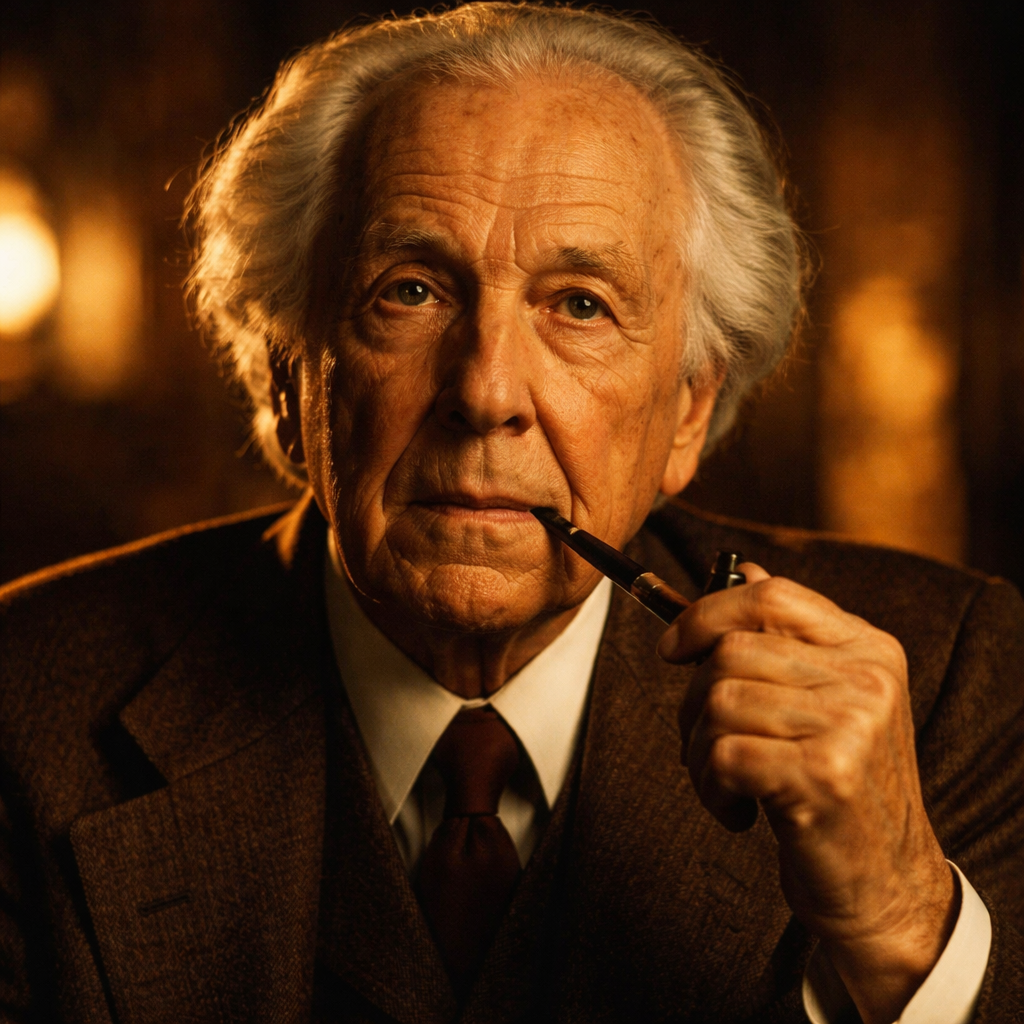
Frank Lloyd Wright died on April 9, 1959, at age 91 in Phoenix, Arizona, leaving behind 532 completed structures, an architectural philosophy that reshaped how Americans thought about domestic space, and a personal life of scandal, tragedy, and ego that matched the scale of his buildings. He had been working until the end, supervising construction of the Solomon R. Guggenheim Museum in New York, which opened six months after his death and immediately divided critics between those who called it a masterpiece and those who called it a washing machine.

Wright had been designing buildings for 70 years, starting as a draftsman in Louis Sullivan's Chicago office in 1888. His Prairie houses of the early 1900s, with their horizontal lines, open floor plans, and integration with the landscape, represented the first truly American domestic architecture. Before Wright, American homes were built in styles imported from Europe: Colonial, Victorian, Tudor, Italianate. Wright argued that American buildings should reflect the American landscape, particularly the vast horizontal expanse of the Midwest. The Robie House in Chicago, completed in 1910, remains the masterwork of this period.

His personal life destroyed his career for years. In 1909, Wright abandoned his wife and six children to travel to Europe with Mamah Borthwick Cheney, the wife of a client. The scandal was enormous. In 1914, a servant at Wright's Taliesin estate in Wisconsin set fire to the living quarters and murdered seven people with a hatchet, including Borthwick and her two children. Wright rebuilt Taliesin, which burned again in 1925 from an electrical fire. He rebuilt it a second time.

The Fallingwater commission in 1935 revived Wright's career spectacularly. Edgar Kaufmann Sr. expected a house with a view of the waterfall on his Pennsylvania property. Wright designed a house cantilevered directly over the waterfall, with reinforced concrete terraces extending into space in a gesture so audacious that engineers questioned whether the structure would stand. Kaufmann's construction manager secretly added extra steel reinforcement. The house became the most photographed private residence in the world.

Wright designed over 1,000 structures during his career; 532 were completed, and approximately 400 survive today, including eight designated UNESCO World Heritage Sites.
1959

Frank Lloyd Wright died on April 9, 1959, at age 91 in Phoenix, Arizona, leaving behind 532 completed structures, an architectural philosophy that reshaped how Americans thought about domestic space, and a personal life of scandal, tragedy, and ego that matched the scale of his buildings. He had been working until the end, supervising construction of the Solomon R. Guggenheim Museum in New York, which opened six months after his death and immediately divided critics between those who called it a masterpiece and those who called it a washing machine. Wright had been designing buildings for 70 years, starting as a draftsman in Louis Sullivan's Chicago office in 1888. His Prairie houses of the early 1900s, with their horizontal lines, open floor plans, and integration with the landscape, represented the first truly American domestic architecture. Before Wright, American homes were built in styles imported from Europe: Colonial, Victorian, Tudor, Italianate. Wright argued that American buildings should reflect the American landscape, particularly the vast horizontal expanse of the Midwest. The Robie House in Chicago, completed in 1910, remains the masterwork of this period. His personal life destroyed his career for years. In 1909, Wright abandoned his wife and six children to travel to Europe with Mamah Borthwick Cheney, the wife of a client. The scandal was enormous. In 1914, a servant at Wright's Taliesin estate in Wisconsin set fire to the living quarters and murdered seven people with a hatchet, including Borthwick and her two children. Wright rebuilt Taliesin, which burned again in 1925 from an electrical fire. He rebuilt it a second time. The Fallingwater commission in 1935 revived Wright's career spectacularly. Edgar Kaufmann Sr. expected a house with a view of the waterfall on his Pennsylvania property. Wright designed a house cantilevered directly over the waterfall, with reinforced concrete terraces extending into space in a gesture so audacious that engineers questioned whether the structure would stand. Kaufmann's construction manager secretly added extra steel reinforcement. The house became the most photographed private residence in the world. Wright designed over 1,000 structures during his career; 532 were completed, and approximately 400 survive today, including eight designated UNESCO World Heritage Sites.

193

Sixteen legions marched out of Illyricum, not to defend the frontier, but to burn down the old guard. While Commodus lay dead in Rome, Severus's soldiers realized their loyalty belonged only to the man who could pay them first. The human cost was immediate: thousands died in the streets as his army stormed the city gates. He didn't just take a throne; he proved that an emperor now rose and fell by the sword alone. You'll tell your friends tonight that the next time you see a coin, it's probably stamped with the face of a man who learned that Rome belongs to whoever holds the legions.

537

1,600 cavalrymen arrived, mostly Huns and Slavs with bows that could punch through Gothic armor. Belisarius didn't wait for supplies to fill his bellies; he struck the enemy camps while they slept. The Gothic king Vitiges found himself stuck in a bloody stalemate, forced to watch his own lines crumble under arrows from strangers who knew the land better than their masters. You'll hear about this at dinner tonight: even when outmatched, sometimes the right people show up exactly when you need them most.

1288

Stakes were literally underwater in 1288 when Tran forces drove sharp bamboo stakes into the riverbed of Bach Dang. The Yuan fleet, packed with war elephants and desperate men, crashed against them as the tide turned. Thousands drowned while Emperor Tran Nhan Tong watched from the high banks, refusing to negotiate even once. That day proved a smaller nation could outmaneuver an empire by knowing its own waters best. It wasn't just a battle; it was a masterclass in patience that still echoes through the Red River today.

1388

Sixteen Austrian knights charged down the valley, only to find Swiss spears waiting in the fog. At Näfels, 1,600 Confederates smashed through 25,000 Habsburgs. Men died screaming in the mud while their leaders' plans crumbled instantly. That slaughter didn't just save a town; it proved that stubborn farmers could outlast an empire's finest cavalry forever. It wasn't about winning a war, but realizing they were already free.

1511

Şahkulu, a man claiming divine right, gathered thousands of displaced Shiite Muslims in Anatolia to strike back at their Ottoman overlords. The rebellion erupted with brutal force, burning villages and killing hundreds of soldiers who were just trying to keep order. Sultan Selim I responded with terrifying speed, crushing the uprising and executing Şahkulu himself. It wasn't just a fight; it was a bloody lesson in loyalty that deepened the divide between Ottomans and Shiites for centuries. You'll tell your friends tonight that this bloodshed didn't just end a revolt; it drew a line on a map that still splits identities today.

1585

A fleet of seven ships, carrying over 100 souls including two women and a child, dropped anchor on Roanoke Island in August. They brought more than supplies; they carried the heavy weight of Sir Walter Raleigh's desperate gamble to secure English territory against Spain. But the colony was already doomed by bad timing and hostile relations with local Indigenous peoples. Within months, disease and supply shortages forced a hasty retreat back to England, leaving behind a settlement that vanished into legend. The first English attempt at colonization didn't just fail; it planted a ghost story that still haunts us today.

1609

Eighty years of blood finally paused when Spanish and Dutch envoys met in Antwerp's cold halls. Philip III didn't get his kingdom back, but he got twelve quiet years where Amsterdam's ships sailed free while soldiers watched their own graves gather dust. That truce let the rebels build a merchant empire on stolen time. Now you can visit the very spot where they decided peace was cheaper than war.

1682

He stood knee-deep in muck, claiming a river for a king he'd never meet. La Salle dragged his men through swamps and disease, losing three hundred souls to the heat before they even saw the water's end. They planted a cross on muddy banks and named it Louisiana, a stretch of dirt that would become a nation. Today, you're eating gumbo in New Orleans because he gambled his life on a river nobody else wanted.

Fun Facts

Zodiac Sign

Aries

Mar 21 -- Apr 19

Fire sign. Courageous, energetic, and confident.

Birthstone

Diamond

Clear

Symbolizes eternal love, strength, and invincibility.

Next Birthday

--

days until April 9

Quote of the Day

“Nature is a temple in which living columns sometimes emit confused words. Man approaches it through forests of symbols, which observe him with familiar glances.”

Share Your Birthday

Create a beautiful birthday card with events and famous birthdays for April 9.

Create Birthday Card

Explore Nearby Dates

Popular Dates

Explore more about April 9 in history. See the full date page for all events, browse April, or look up another birthday. Play history games or talk to historical figures.