Today In History logo TIH

Today In History

April 8 in History

Your birthday shares the stage with stories that shaped the world. Born on this day: Kofi Annan, Betty Ford, and Izzy Stradlin.

Gautama Finds Enlightenment: Buddhism's Path to Liberation
563Event

Gautama Finds Enlightenment: Buddhism's Path to Liberation

Siddhartha Gautama sat beneath a Bodhi tree in Bodh Gaya, in what is now northeastern India, and refused to move until he understood the nature of suffering. According to Buddhist tradition, he meditated through the night, confronting and overcoming temptation, fear, and the accumulated delusions of human existence. By dawn, he had achieved enlightenment, comprehending the cycle of birth, death, and rebirth and the path to liberation from it. He was approximately 35 years old. The date is traditionally celebrated on the full moon of Vesak, which falls in April or May depending on the calendar system. Gautama was born a prince of the Shakya clan in Lumbini, near the border of modern Nepal and India, around the fifth century BC. His father, King Suddhodana, reportedly sheltered him from all knowledge of suffering, confining him to palace grounds where he experienced only luxury and pleasure. The story of the "Four Sights," in which Gautama first encountered an old man, a sick man, a corpse, and a wandering ascetic, represents his discovery that wealth offered no protection from aging, illness, and death. At 29, he abandoned his wife, infant son, and royal inheritance to seek spiritual understanding. For six years, Gautama practiced extreme asceticism, reducing his food intake until his spine was visible through his abdomen and his body was skeletal. He eventually rejected this path as counterproductive, accepting a bowl of rice milk from a village girl and sitting down to meditate at Bodh Gaya. This "Middle Way" between indulgence and self-mortification became a foundational principle of Buddhism. The austerity practitioners he had been traveling with abandoned him in disgust. The teachings that followed his enlightenment centered on the Four Noble Truths: suffering exists, suffering arises from attachment and craving, suffering can end, and the Eightfold Path leads to that ending. Gautama spent the remaining 45 years of his life teaching and establishing a community of monks and nuns, the sangha, which preserved and transmitted his teachings through oral tradition. He died around age 80 at Kushinagar, telling his followers to rely on the teachings rather than any authority figure. Buddhism spread from India to Central and Southeast Asia, China, Korea, Japan, and eventually the West, with an estimated 500 million adherents today.

Famous Birthdays

Kofi Annan
Kofi Annan

1938–2018

Betty Ford

Betty Ford

1918–2011

Izzy Stradlin

Izzy Stradlin

b. 1962

John Hicks

John Hicks

1904–1989

Mary Pickford

Mary Pickford

d. 1979

Robert Kiyosaki

Robert Kiyosaki

b. 1947

Robin Wright

Robin Wright

b. 1966

Ian Smith

Ian Smith

d. 2007

John Schneider

John Schneider

b. 1960

Kisho Kurokawa

Kisho Kurokawa

1934–2007

Paul Gray

Paul Gray

1972–2010

Richard Hatch

Richard Hatch

1961–2017

Historical Events

Siddhartha Gautama sat beneath a Bodhi tree in Bodh Gaya, in what is now northeastern India, and refused to move until he understood the nature of suffering. According to Buddhist tradition, he meditated through the night, confronting and overcoming temptation, fear, and the accumulated delusions of human existence. By dawn, he had achieved enlightenment, comprehending the cycle of birth, death, and rebirth and the path to liberation from it. He was approximately 35 years old. The date is traditionally celebrated on the full moon of Vesak, which falls in April or May depending on the calendar system.

Gautama was born a prince of the Shakya clan in Lumbini, near the border of modern Nepal and India, around the fifth century BC. His father, King Suddhodana, reportedly sheltered him from all knowledge of suffering, confining him to palace grounds where he experienced only luxury and pleasure. The story of the "Four Sights," in which Gautama first encountered an old man, a sick man, a corpse, and a wandering ascetic, represents his discovery that wealth offered no protection from aging, illness, and death. At 29, he abandoned his wife, infant son, and royal inheritance to seek spiritual understanding.

For six years, Gautama practiced extreme asceticism, reducing his food intake until his spine was visible through his abdomen and his body was skeletal. He eventually rejected this path as counterproductive, accepting a bowl of rice milk from a village girl and sitting down to meditate at Bodh Gaya. This "Middle Way" between indulgence and self-mortification became a foundational principle of Buddhism. The austerity practitioners he had been traveling with abandoned him in disgust.

The teachings that followed his enlightenment centered on the Four Noble Truths: suffering exists, suffering arises from attachment and craving, suffering can end, and the Eightfold Path leads to that ending. Gautama spent the remaining 45 years of his life teaching and establishing a community of monks and nuns, the sangha, which preserved and transmitted his teachings through oral tradition. He died around age 80 at Kushinagar, telling his followers to rely on the teachings rather than any authority figure.

Buddhism spread from India to Central and Southeast Asia, China, Korea, Japan, and eventually the West, with an estimated 500 million adherents today.
563

Siddhartha Gautama sat beneath a Bodhi tree in Bodh Gaya, in what is now northeastern India, and refused to move until he understood the nature of suffering. According to Buddhist tradition, he meditated through the night, confronting and overcoming temptation, fear, and the accumulated delusions of human existence. By dawn, he had achieved enlightenment, comprehending the cycle of birth, death, and rebirth and the path to liberation from it. He was approximately 35 years old. The date is traditionally celebrated on the full moon of Vesak, which falls in April or May depending on the calendar system. Gautama was born a prince of the Shakya clan in Lumbini, near the border of modern Nepal and India, around the fifth century BC. His father, King Suddhodana, reportedly sheltered him from all knowledge of suffering, confining him to palace grounds where he experienced only luxury and pleasure. The story of the "Four Sights," in which Gautama first encountered an old man, a sick man, a corpse, and a wandering ascetic, represents his discovery that wealth offered no protection from aging, illness, and death. At 29, he abandoned his wife, infant son, and royal inheritance to seek spiritual understanding. For six years, Gautama practiced extreme asceticism, reducing his food intake until his spine was visible through his abdomen and his body was skeletal. He eventually rejected this path as counterproductive, accepting a bowl of rice milk from a village girl and sitting down to meditate at Bodh Gaya. This "Middle Way" between indulgence and self-mortification became a foundational principle of Buddhism. The austerity practitioners he had been traveling with abandoned him in disgust. The teachings that followed his enlightenment centered on the Four Noble Truths: suffering exists, suffering arises from attachment and craving, suffering can end, and the Eightfold Path leads to that ending. Gautama spent the remaining 45 years of his life teaching and establishing a community of monks and nuns, the sangha, which preserved and transmitted his teachings through oral tradition. He died around age 80 at Kushinagar, telling his followers to rely on the teachings rather than any authority figure. Buddhism spread from India to Central and Southeast Asia, China, Korea, Japan, and eventually the West, with an estimated 500 million adherents today.

Heike Kamerlingh Onnes watched electrical resistance vanish completely in a mercury wire cooled to 4.2 Kelvin on April 8, 1911, in his laboratory at the University of Leiden. The result was so unexpected that Onnes initially suspected an equipment malfunction. He repeated the experiment, obtained the same result, and realized he had discovered something that classical physics could not explain: a state of matter in which electrical current flows without any resistance at all. He called it "supraconductivity," later shortened to superconductivity.

Onnes was uniquely positioned to make this discovery because he had spent years developing the world's most advanced cryogenic laboratory. In 1908, he had become the first person to liquefy helium, reaching temperatures within a few degrees of absolute zero. This capability, which no other laboratory in the world could replicate at the time, allowed him to test how materials behaved at temperatures where quantum mechanical effects dominated. His decision to measure mercury's resistance at liquid helium temperatures was systematic rather than inspired; he was simply working through a list of elements.

The implications were profound but the explanation was elusive. Normal electrical conductors lose resistance gradually as they cool, but even at absolute zero, impurities and lattice defects prevent resistance from reaching exactly zero. Superconductors behave differently: resistance drops abruptly to zero at a specific critical temperature, and current flowing through a superconducting loop can persist indefinitely. The Meissner effect, discovered in 1933, showed that superconductors also completely expel magnetic fields, demonstrating that superconductivity was a distinct quantum state rather than simply an extreme case of good conductivity.

A theoretical explanation did not arrive until 1957, when John Bardeen, Leon Cooper, and John Robert Schrieffer published BCS theory, showing that electrons in a superconductor form paired states (Cooper pairs) that move through the crystal lattice without scattering. The theory won the 1972 Nobel Prize, one of the few cases where the explanation of a phenomenon won a separate Nobel from its discovery.

The 1986 discovery of high-temperature superconductors, ceramic materials that superconduct above 90 Kelvin, opened possibilities for practical applications that Onnes could not have imagined.
1911

Heike Kamerlingh Onnes watched electrical resistance vanish completely in a mercury wire cooled to 4.2 Kelvin on April 8, 1911, in his laboratory at the University of Leiden. The result was so unexpected that Onnes initially suspected an equipment malfunction. He repeated the experiment, obtained the same result, and realized he had discovered something that classical physics could not explain: a state of matter in which electrical current flows without any resistance at all. He called it "supraconductivity," later shortened to superconductivity. Onnes was uniquely positioned to make this discovery because he had spent years developing the world's most advanced cryogenic laboratory. In 1908, he had become the first person to liquefy helium, reaching temperatures within a few degrees of absolute zero. This capability, which no other laboratory in the world could replicate at the time, allowed him to test how materials behaved at temperatures where quantum mechanical effects dominated. His decision to measure mercury's resistance at liquid helium temperatures was systematic rather than inspired; he was simply working through a list of elements. The implications were profound but the explanation was elusive. Normal electrical conductors lose resistance gradually as they cool, but even at absolute zero, impurities and lattice defects prevent resistance from reaching exactly zero. Superconductors behave differently: resistance drops abruptly to zero at a specific critical temperature, and current flowing through a superconducting loop can persist indefinitely. The Meissner effect, discovered in 1933, showed that superconductors also completely expel magnetic fields, demonstrating that superconductivity was a distinct quantum state rather than simply an extreme case of good conductivity. A theoretical explanation did not arrive until 1957, when John Bardeen, Leon Cooper, and John Robert Schrieffer published BCS theory, showing that electrons in a superconductor form paired states (Cooper pairs) that move through the crystal lattice without scattering. The theory won the 1972 Nobel Prize, one of the few cases where the explanation of a phenomenon won a separate Nobel from its discovery. The 1986 discovery of high-temperature superconductors, ceramic materials that superconduct above 90 Kelvin, opened possibilities for practical applications that Onnes could not have imagined.

Juan Ponce de Leon formally claimed the land he called "La Florida" for the Spanish Crown on April 8, 1513, planting a cross and reading the Requerimiento, a legal document informing any indigenous peoples present that their lands now belonged to Spain and that resistance would be met with enslavement and war. The ceremony was a legal fiction performed for an audience that could not understand it, in a language they had never heard, asserting sovereignty over a territory the Spanish had not explored and could not yet occupy.

Ponce de Leon had first sighted the Florida coast on March 27 and made landfall near present-day St. Augustine on April 2. He named the territory "La Florida" for Pascua Florida, the Spanish Easter celebration, which coincided with his arrival. The expedition then sailed south along the Atlantic coast, rounding the Florida Keys and proceeding up the Gulf coast. Along the way, Ponce de Leon's sailors encountered the Gulf Stream, the powerful Atlantic current that would later become the highway for Spanish treasure fleets returning to Europe.

The expedition was not a voyage of exploration in the romantic sense. Ponce de Leon sailed under a royal patent that granted him the right to discover, settle, and govern new territories at his own expense, in exchange for a percentage of any wealth extracted. He was a veteran conquistador who had accompanied Columbus on his second voyage, conquered Puerto Rico, and enriched himself through gold mining and the encomienda system of forced indigenous labor. Florida was a business proposition.

The indigenous peoples of Florida were neither passive nor welcoming. The Calusa, who controlled the southwestern coast, were a powerful maritime society with a complex chiefdom, large permanent settlements, and extensive trade networks. When Ponce de Leon returned to Florida in 1521 with 200 colonists and 50 horses to establish a permanent settlement near Charlotte Harbor, Calusa warriors attacked the landing party. Ponce de Leon was struck in the thigh by an arrow. The colonists retreated to Cuba, where the wound became infected and killed him.

Spain would not establish a permanent settlement in Florida until Pedro Menendez de Aviles founded St. Augustine in 1565, making it the oldest continuously occupied European city in the United States.
1513

Juan Ponce de Leon formally claimed the land he called "La Florida" for the Spanish Crown on April 8, 1513, planting a cross and reading the Requerimiento, a legal document informing any indigenous peoples present that their lands now belonged to Spain and that resistance would be met with enslavement and war. The ceremony was a legal fiction performed for an audience that could not understand it, in a language they had never heard, asserting sovereignty over a territory the Spanish had not explored and could not yet occupy. Ponce de Leon had first sighted the Florida coast on March 27 and made landfall near present-day St. Augustine on April 2. He named the territory "La Florida" for Pascua Florida, the Spanish Easter celebration, which coincided with his arrival. The expedition then sailed south along the Atlantic coast, rounding the Florida Keys and proceeding up the Gulf coast. Along the way, Ponce de Leon's sailors encountered the Gulf Stream, the powerful Atlantic current that would later become the highway for Spanish treasure fleets returning to Europe. The expedition was not a voyage of exploration in the romantic sense. Ponce de Leon sailed under a royal patent that granted him the right to discover, settle, and govern new territories at his own expense, in exchange for a percentage of any wealth extracted. He was a veteran conquistador who had accompanied Columbus on his second voyage, conquered Puerto Rico, and enriched himself through gold mining and the encomienda system of forced indigenous labor. Florida was a business proposition. The indigenous peoples of Florida were neither passive nor welcoming. The Calusa, who controlled the southwestern coast, were a powerful maritime society with a complex chiefdom, large permanent settlements, and extensive trade networks. When Ponce de Leon returned to Florida in 1521 with 200 colonists and 50 horses to establish a permanent settlement near Charlotte Harbor, Calusa warriors attacked the landing party. Ponce de Leon was struck in the thigh by an arrow. The colonists retreated to Cuba, where the wound became infected and killed him. Spain would not establish a permanent settlement in Florida until Pedro Menendez de Aviles founded St. Augustine in 1565, making it the oldest continuously occupied European city in the United States.

A Greek farmer named Yorgos Kentrotas was digging in his field on the Aegean island of Melos in April 1820 when his shovel struck marble. He unearthed the upper half of a female statue of extraordinary beauty, then found the lower half nearby. French naval officer Olivier Voutier, who happened to be exploring ancient ruins on the island, recognized the find's significance immediately and alerted the French ambassador to the Ottoman Empire. What followed was a diplomatic scramble between France and the Ottoman authorities that nearly resulted in the statue being lost entirely.

The Venus de Milo, as the statue became known, dates to approximately 130-100 BC, placing it in the Hellenistic period rather than the classical era that produced the Parthenon sculptures. The sculptor is believed to be Alexandros of Antioch, based on a fragmentary inscription found near the statue that was subsequently lost. The figure is slightly larger than life-size, standing approximately 6 feet 8 inches tall, and depicts Aphrodite (or possibly Amphitrite, the sea goddess) in a pose of casual, almost languid grace. Her missing arms have generated centuries of speculation; they were apparently already detached when Kentrotas found her.

France acquired the statue through a combination of diplomatic pressure and cash payment to Ottoman officials, and the Marquis de Riviere presented it to King Louis XVIII in 1821. The timing was politically useful. France had been forced to return the Medici Venus to Italy after Napoleon's defeat, and the nation's cultural prestige demanded a replacement masterpiece. The Venus de Milo was immediately installed in the Louvre, where curators promoted it as a work rivaling or surpassing anything in Italian collections.

The statue's fame grew steadily through the nineteenth century, aided by plaster casts distributed to museums and academies worldwide. Artists, critics, and philosophers debated its meaning, proportions, and the position of the missing arms. Some scholars proposed she had held a shield, an apple, or a mirror. Others suggested she was part of a sculptural group. The mystery of the arms paradoxically enhanced her appeal; the incompleteness invited imagination.

The Venus de Milo remains in the Louvre, where she draws approximately 8 million visitors annually, second only to the Mona Lisa.
1820

A Greek farmer named Yorgos Kentrotas was digging in his field on the Aegean island of Melos in April 1820 when his shovel struck marble. He unearthed the upper half of a female statue of extraordinary beauty, then found the lower half nearby. French naval officer Olivier Voutier, who happened to be exploring ancient ruins on the island, recognized the find's significance immediately and alerted the French ambassador to the Ottoman Empire. What followed was a diplomatic scramble between France and the Ottoman authorities that nearly resulted in the statue being lost entirely. The Venus de Milo, as the statue became known, dates to approximately 130-100 BC, placing it in the Hellenistic period rather than the classical era that produced the Parthenon sculptures. The sculptor is believed to be Alexandros of Antioch, based on a fragmentary inscription found near the statue that was subsequently lost. The figure is slightly larger than life-size, standing approximately 6 feet 8 inches tall, and depicts Aphrodite (or possibly Amphitrite, the sea goddess) in a pose of casual, almost languid grace. Her missing arms have generated centuries of speculation; they were apparently already detached when Kentrotas found her. France acquired the statue through a combination of diplomatic pressure and cash payment to Ottoman officials, and the Marquis de Riviere presented it to King Louis XVIII in 1821. The timing was politically useful. France had been forced to return the Medici Venus to Italy after Napoleon's defeat, and the nation's cultural prestige demanded a replacement masterpiece. The Venus de Milo was immediately installed in the Louvre, where curators promoted it as a work rivaling or surpassing anything in Italian collections. The statue's fame grew steadily through the nineteenth century, aided by plaster casts distributed to museums and academies worldwide. Artists, critics, and philosophers debated its meaning, proportions, and the position of the missing arms. Some scholars proposed she had held a shield, an apple, or a mirror. Others suggested she was part of a sculptural group. The mystery of the arms paradoxically enhanced her appeal; the incompleteness invited imagination. The Venus de Milo remains in the Louvre, where she draws approximately 8 million visitors annually, second only to the Mona Lisa.

Frank Robinson walked into the Cleveland Indians dugout on April 8, 1975, as the first Black manager in Major League Baseball history. He was also the designated hitter for the game, and when he stepped to the plate in his first at-bat, he hit a home run over the left field wall at Cleveland Municipal Stadium. The crowd of 56,715 gave him a standing ovation. Robinson tipped his cap and trotted around the bases, and for one moment the symbolism and the substance of the achievement were perfectly aligned.

The appointment came 28 years after Jackie Robinson broke the playing color barrier with the Brooklyn Dodgers. During those intervening decades, Black players had become the backbone of Major League Baseball: Willie Mays, Hank Aaron, Roberto Clemente, Bob Gibson, and dozens of others had won MVP awards, batting titles, and World Series rings. Yet no Black man had been allowed to manage a major league team. The assumption, rarely stated openly but universally understood, was that white players would not accept a Black authority figure and that white fans would not tolerate one.

Robinson had the credentials to silence any objection based on competence. He was the only player in baseball history to win the Most Valuable Player award in both leagues: the National League with Cincinnati in 1961 and the American League with Baltimore in 1966, when he won the Triple Crown. He had played in five World Series, hit 586 career home runs, and was universally respected for his intelligence, competitiveness, and willingness to fight for his place. Pitchers threw at his head throughout his career; he crowded the plate and dared them to do it again.

The managerial breakthrough was not accompanied by structural change. Robinson managed the Indians for less than two full seasons before being fired. He later managed the San Francisco Giants, the Baltimore Orioles, and the Montreal Expos/Washington Nationals, compiling a career record of 1,065 wins and 1,176 losses. He never won a pennant as a manager and privately expressed frustration that he was given struggling teams with limited resources.

By 2025, only six Black managers were managing simultaneously in Major League Baseball, a number that continues to prompt questions about whether Robinson's breakthrough opened a door or merely cracked one.
1975

Frank Robinson walked into the Cleveland Indians dugout on April 8, 1975, as the first Black manager in Major League Baseball history. He was also the designated hitter for the game, and when he stepped to the plate in his first at-bat, he hit a home run over the left field wall at Cleveland Municipal Stadium. The crowd of 56,715 gave him a standing ovation. Robinson tipped his cap and trotted around the bases, and for one moment the symbolism and the substance of the achievement were perfectly aligned. The appointment came 28 years after Jackie Robinson broke the playing color barrier with the Brooklyn Dodgers. During those intervening decades, Black players had become the backbone of Major League Baseball: Willie Mays, Hank Aaron, Roberto Clemente, Bob Gibson, and dozens of others had won MVP awards, batting titles, and World Series rings. Yet no Black man had been allowed to manage a major league team. The assumption, rarely stated openly but universally understood, was that white players would not accept a Black authority figure and that white fans would not tolerate one. Robinson had the credentials to silence any objection based on competence. He was the only player in baseball history to win the Most Valuable Player award in both leagues: the National League with Cincinnati in 1961 and the American League with Baltimore in 1966, when he won the Triple Crown. He had played in five World Series, hit 586 career home runs, and was universally respected for his intelligence, competitiveness, and willingness to fight for his place. Pitchers threw at his head throughout his career; he crowded the plate and dared them to do it again. The managerial breakthrough was not accompanied by structural change. Robinson managed the Indians for less than two full seasons before being fired. He later managed the San Francisco Giants, the Baltimore Orioles, and the Montreal Expos/Washington Nationals, compiling a career record of 1,065 wins and 1,176 losses. He never won a pennant as a manager and privately expressed frustration that he was given struggling teams with limited resources. By 2025, only six Black managers were managing simultaneously in Major League Baseball, a number that continues to prompt questions about whether Robinson's breakthrough opened a door or merely cracked one.

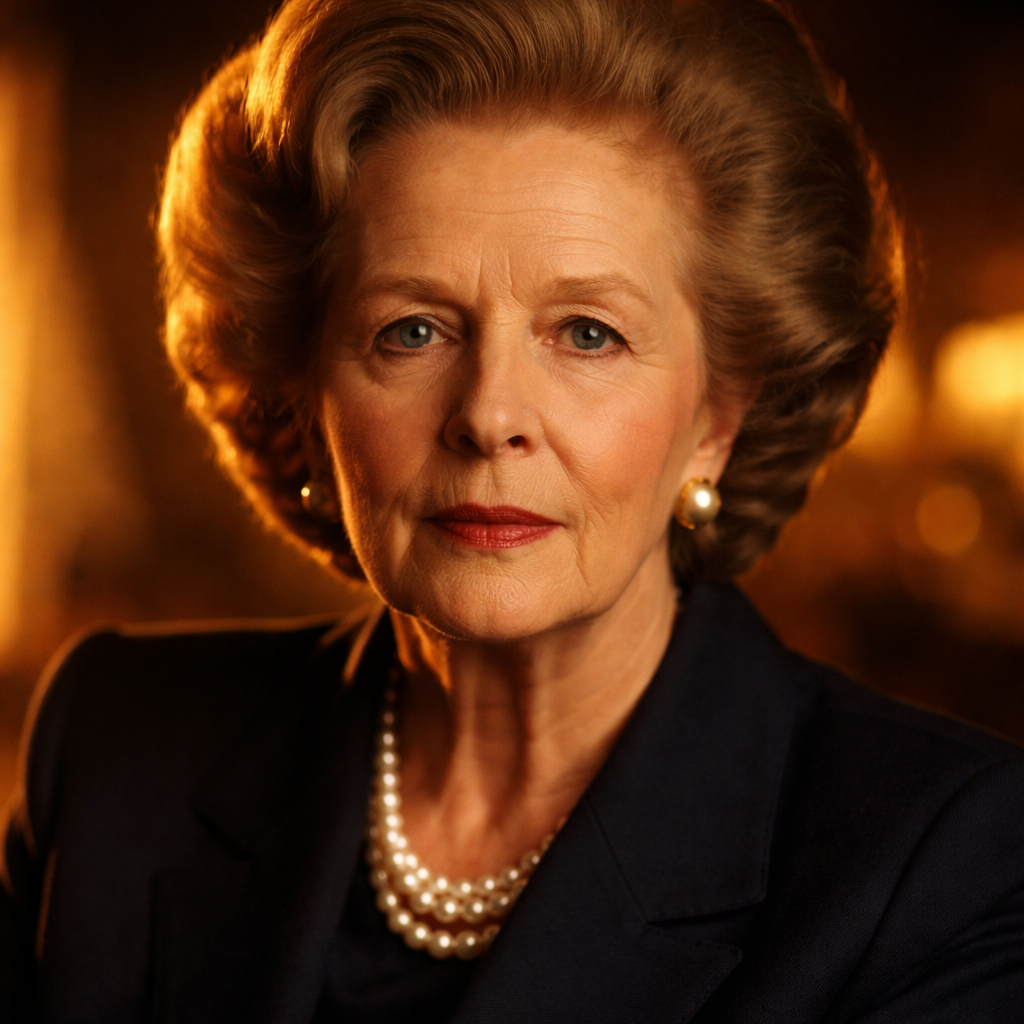
Margaret Thatcher died on April 8, 2013, at the Ritz Hotel in London after a series of strokes, and Britain immediately split into two countries: one that mourned a great leader and one that celebrated the passing of a destroyer. The division was genuine, visceral, and a final testament to a political career that had been built on confrontation rather than consensus. "Ding Dong! The Witch Is Dead" from The Wizard of Oz climbed to number two on the UK singles chart. Parliament was recalled for tributes. Both reactions were sincere.

Thatcher arrived at 10 Downing Street in 1979 quoting St. Francis of Assisi about harmony and hope, then spent eleven years waging the most transformative and divisive premiership in modern British history. She broke the power of the trade unions, most dramatically in the 1984-85 miners' strike, when she deployed police forces against mining communities in battles that scarred entire regions for generations. She privatized British Telecom, British Gas, British Airways, British Steel, and the water and electricity utilities, creating shareholder capitalism on a mass scale while devastating communities that had depended on nationalized industries for employment.

Her economic philosophy, labeled Thatcherism, combined monetarist economics, deregulation, reduced taxation, and hostility to the welfare state. Unemployment peaked above 3 million during her first term, and entire industrial cities in northern England, Scotland, and Wales were hollowed out. Her supporters argued that the pain was necessary to modernize a sclerotic economy; her opponents saw deliberate class warfare against working people. The poll tax, a flat-rate local government charge that hit poor households disproportionately, triggered riots in 1990 and contributed to her removal by her own party.

On the world stage, Thatcher was formidable. She won the Falklands War, forged a partnership with Ronald Reagan that helped end the Cold War, and was among the first Western leaders to identify Mikhail Gorbachev as someone she could "do business with." Her opposition to European integration anticipated debates that would dominate British politics for decades and ultimately produce Brexit.

Her funeral at St. Paul's Cathedral drew 2,300 invited guests. Along the procession route, some mourners stood in respectful silence while others turned their backs.
2013

Margaret Thatcher died on April 8, 2013, at the Ritz Hotel in London after a series of strokes, and Britain immediately split into two countries: one that mourned a great leader and one that celebrated the passing of a destroyer. The division was genuine, visceral, and a final testament to a political career that had been built on confrontation rather than consensus. "Ding Dong! The Witch Is Dead" from The Wizard of Oz climbed to number two on the UK singles chart. Parliament was recalled for tributes. Both reactions were sincere. Thatcher arrived at 10 Downing Street in 1979 quoting St. Francis of Assisi about harmony and hope, then spent eleven years waging the most transformative and divisive premiership in modern British history. She broke the power of the trade unions, most dramatically in the 1984-85 miners' strike, when she deployed police forces against mining communities in battles that scarred entire regions for generations. She privatized British Telecom, British Gas, British Airways, British Steel, and the water and electricity utilities, creating shareholder capitalism on a mass scale while devastating communities that had depended on nationalized industries for employment. Her economic philosophy, labeled Thatcherism, combined monetarist economics, deregulation, reduced taxation, and hostility to the welfare state. Unemployment peaked above 3 million during her first term, and entire industrial cities in northern England, Scotland, and Wales were hollowed out. Her supporters argued that the pain was necessary to modernize a sclerotic economy; her opponents saw deliberate class warfare against working people. The poll tax, a flat-rate local government charge that hit poor households disproportionately, triggered riots in 1990 and contributed to her removal by her own party. On the world stage, Thatcher was formidable. She won the Falklands War, forged a partnership with Ronald Reagan that helped end the Cold War, and was among the first Western leaders to identify Mikhail Gorbachev as someone she could "do business with." Her opposition to European integration anticipated debates that would dominate British politics for decades and ultimately produce Brexit. Her funeral at St. Paul's Cathedral drew 2,300 invited guests. Along the procession route, some mourners stood in respectful silence while others turned their backs.

217

He didn't die in battle. Caracalla fell to a lone guard named Martialis, who stabbed him near Carrhae while the emperor was answering nature's call. The Praetorians killed their master just to install their own boss, Macrinus, into power. It cost Rome its stability, turning the throne into a prize for the men with swords. Now you know why emperors stopped walking alone.

632

A six-year-old boy named Chilperic died alongside his father in the quiet town of Blaye. King Charibert II and his infant son were cut down, likely by order of their own half-brother Dagobert I. That single act left Dagobert holding Aquitaine and Gascony, making him the most powerful Merovingian ruler in the West. Family feuds didn't just kill kings; they ate the kingdom alive from the inside out. Now you know why a family dinner can feel like a battlefield.

1139

An excommunication that lasted seven years for a man who already said he agreed with the Pope. Roger II of Sicily backed Anacletus II against Innocent II, then switched sides while keeping his crown. The Church responded by cutting him off, forcing Norman lords to choose between their king and their souls. Families split. Lands burned. It wasn't just politics; it was a war for who held the keys to heaven. Now you know why medieval kings feared the papal bull more than any sword.

1250

A French king, kneeling in the mud of Fariskur, begged for mercy while his men lay dead around him. It was 1250, and Louis IX had lost everything except his life to the Ayyubid forces led by Turanshah. The ransom demanded was a fortune that nearly bankrupted France, forcing the crown to sell royal jewels just to buy back its monarch. Yet this defeat didn't end the dream of Jerusalem; it birthed a strange peace where enemies respected each other's honor far more than they ever did in victory. That king returned home not as a conqueror, but as a man who learned that losing your crown is harder than losing your kingdom.

1808

Pope Pius VII didn't just bless a meeting; he sliced the American church into five distinct pieces in one fell swoop. Baltimore, once the solitary heartbeat of Catholicism here, suddenly lost its monopoly to new hubs in New York, Philadelphia, Boston, and Bardstown. This wasn't bureaucracy; it was survival for thousands of weary immigrants who needed priests closer than a horse ride could offer. Now, every Catholic parish from Maine to Kentucky traces its roots back to that single administrative decision. It turns out the American church grew not by expanding outward, but by breaking apart to let everyone breathe.

1812

A single decree moved Finland's heartbeat from a burning city to a frozen shore. When Turku's grand cathedral turned to ash in 1827, Czar Alexander I had already quietly chosen Helsinki as the new seat of power three years prior. He didn't wait for the flames; he saw the Baltic winds and knew the old capital was too exposed. Thousands of workers scrambled to build a port from scratch while families watched their homes vanish into smoke. That decision didn't just save an administration; it built a city where none stood before. Helsinki became the spine of a nation, proving that sometimes you have to burn down the past to forge a future.

1832

Three hundred men in blue marched out of St. Louis, their boots heavy with mud and fear. They weren't chasing warriors; they were chasing ghosts of a treaty signed decades ago. Black Hawk's band was starving, not fighting. By the time the 6th Infantry found them at Bad Axe River, only silence remained where voices used to be. That day didn't end a war; it erased a people's hope for land. Now, when you say "westward expansion," remember the names lost in that river mud.

1864

A single misstep by a Union general turned a march into a massacre. Outnumbered, Confederate troops led by General Taylor crushed the advancing army at Mansfield. Over 1,000 men died or were captured in that Louisiana heat. The Red River Campaign collapsed immediately after. Soldiers who thought they'd be home for dinner now faced capture or death. That single day didn't just end a campaign; it proved that arrogance was deadlier than any rifle.

1886

Gladstone dropped a bill that split his own party before breakfast. Two hundred Liberal MPs walked out, leaving him to fight alone for an Ireland where Dublin would finally choose its own laws. The human cost? A decade of bitter feuds and shattered friendships across the British Isles. You'll hear about this at dinner when someone asks why Britain never fully united with its neighbor. It wasn't just politics; it was a family argument that never really ended.

Fun Facts

Zodiac Sign

Aries

Mar 21 -- Apr 19

Fire sign. Courageous, energetic, and confident.

Birthstone

Diamond

Clear

Symbolizes eternal love, strength, and invincibility.

Next Birthday

--

days until April 8

Quote of the Day

“There are two mistakes one can make along the road to truth -- not going all the way, and not starting.”

Share Your Birthday

Create a beautiful birthday card with events and famous birthdays for April 8.

Create Birthday Card

Explore Nearby Dates

Popular Dates

Explore more about April 8 in history. See the full date page for all events, browse April, or look up another birthday. Play history games or talk to historical figures.