

Historical Figure
Pablo Neruda
1904–1973
Chilean poet, diplomat, and politician (1904–1973)
Talk to Pablo Neruda
Have a conversation with this historical figure through AI
Biography
Pablo Neruda was a Chilean poet-diplomat and politician who won the 1971 Nobel Prize in Literature. Neruda became known as a poet when he was 13 years old and wrote in a variety of styles, including surrealist poems, historical epics, political manifestos, a prose autobiography, and passionate love poems such as the ones in his collection Twenty Love Poems and a Song of Despair (1924).
Timeline
The story of Pablo Neruda, told in moments.
Born Neftali Ricardo Reyes Basoalto in Parral, Chile. His mother, a schoolteacher, dies of tuberculosis one month after his birth. His father, a railway worker, forbids him from writing poetry.
Adopts the pen name Pablo Neruda at 16, partly to hide his writing from his father. Takes it from Czech poet Jan Neruda. He'll legally change his name to it in 1946.
Publishes Veinte poemas de amor y una cancion desesperada (Twenty Love Poems and a Song of Despair). He's 19. The book sells over a million copies during his lifetime. Decades later it remains the best-selling poetry book in the Spanish language.
Denounces Chilean President Videla on the Senate floor and is charged with treason. He goes into hiding, then crosses the Andes on horseback through a mountain pass to escape to Argentina. He's smuggled out by friends.
Wins the Nobel Prize in Literature. The citation calls him "a poetry that with the action of an elemental force brings alive a continent's destiny and dreams." He's serving as Chile's ambassador to France at the time.
Dies in a Santiago clinic twelve days after Pinochet's military coup overthrows Salvador Allende. Official cause: prostate cancer. His driver later testifies he was injected with an unknown substance. His Santiago home has been ransacked by soldiers. Thousands attend his funeral in open defiance of the junta.
In Their Own Words (18)
One pillar holding up consolationsAnd don’t bother telling me anythingAnd so? The pale metalloid heals you?I have a terrible fear of being an animal.And what if after so many words,The anger that breaks a man down into boys.
From Espana, aparta de mi este caliz, Masa, Neruda and Vallejo: selected poems, By Robert Bly, John Knoepfle, James Arlington Wright, Pablo Neruda, César Vallejo, copyright 1971, Beacon Press. Translations by Robert Bly, John Knoepfle, and James Wright. ., 1971
It is time, love, to break off that sombre rose,shut up the stars and bury the ash in the earth;and, in the rising of the light, wake with those who awokeor go on in the dream, reaching the other shore of the sea which has no other shore.
La Barcarola Termina (The Watersong Ends) (1967), trans. Anthony Kerrigan in Selected Poems by Pablo Neruda [Houghton Mifflin, 1990, ] (p. 500)., 1967
There in Rangoon I realized that the godswere enemies, just like God,of the poor human being.Gods in alabaster extendedlike white whales,gods gilded like spikes,serpent gods entwiningthe crime of being born,naked and elegant buddhassmiling at the cocktail partyof empty eternitylike Christ on his horrible cross,all of them capable of anything,of imposing on us their heaven,all with torture or pistolto purchase piety or burn our blood,fierce gods made by mento conceal their cowardice,and there it was all like that,the whole earth reeking of heaven,and heavenly merchandise.
Religión en el Este (Religion in the East) from Memorial of Isla Negra [Memorial de Isla Negra] (1964), trans. by Anthony Kerrigan in Selected Poems by Pablo Neruda [Houghton Mifflin, 1990, ] (p. 463)., 1964
And something started in my soul,fever or forgotten wings,and I made my own way,decipheringthat fire,and I wrote the first faint line,faint, without substance, purenonsense,pure wisdomof someone who knows nothing,and I suddenly sawthe heavensunfastenedand open.
Poesía (Poetry) from Memorial de Isla Negra (Memorial of Isla Negra) (1964), Selected Poems by Pablo Neruda [Houghton Mifflin, 1990, ] (p. 457)., 1964
Mi amor se nutre de tu amor, amada
My love feeds on your love, beloved, 1958
Artifacts (15)
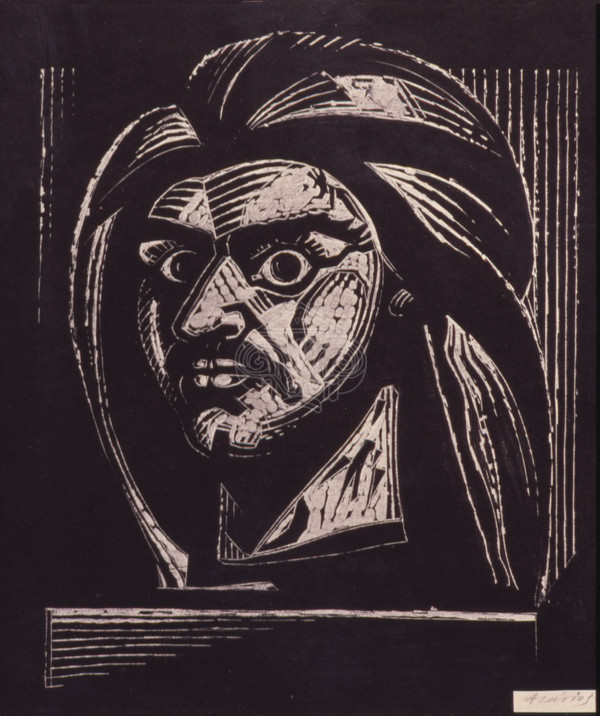
Camilo José Cela with Pablo Neruda
https://hispana.mcu.es/lod/oai:bvpb.mcu.es:573649#ent3

More from the Early 20th Century


Explore what happened on the days that shaped Pablo Neruda's life. Today In History connects historical figures with the events, births, and deaths that defined their era. Browse all historical figures or explore today's events.