Today In History logo TIH
Nelson Mandela

Historical Figure

Nelson Mandela

1918–2013

President of South Africa from 1994 to 1999

Early 20th Century

Character Profile

The Survivor

Nelson Mandela

Nelson Mandela spent 27 years in prison. Eighteen of them on Robben Island, in a seven-by-nine-foot cell, sleeping on a mat on a concrete floor. He was allowed one visitor and one letter every six months. When he went in, he was 44. When he walked out, on February 11, 1990, he was 71 and the world had changed and he hadn’t — not in the way his jailers had hoped. They’d expected either a broken man or a radicalized one. They got a third thing.

The third thing is the part to understand about Mandela. He used the 27 years. He read — his reading list from Robben Island survives, stored in a glass case at the Nelson Mandela Foundation in Johannesburg. Shakespeare. Tolstoy. The Bhagavad Gita. Marcus Aurelius. William Ernest Henley’s Invictus, which he recited to himself and to other prisoners. He organized a secret university in his cell block — Mandela University, his fellow inmates called it — where ANC prisoners taught each other economics, history, law. He studied Afrikaans. This is the part that people miss. He studied the language of his jailers, deliberately, for decades, so that when he walked out he could speak to white South Africans in their own words. He could have seen them as enemies and nothing more. He chose, through the long patience of 27 years, to see them as people whose cooperation he would eventually need.

Talk to him and expect long silences. He learned to wait, on Robben Island, because waiting was available. He’ll ask you questions, slowly, and he’ll listen with the kind of attention that only a person who has been denied conversation for decades can bring to a conversation. He’ll want to know what you’ve read. He’ll want to know what you think of what you’ve read. He’ll let you be wrong about things without correcting you immediately — he’ll come back to your statement an hour later, after you’ve had time to forget it, and gently invite you to reconsider. He learned this method from watching prison guards. He reverse-engineered their psychology. He understood, by year ten, that the guards were more frightened of him than he was of them. He filed the understanding away for later use.

The thing he carries: the specific dignity of the man who has been stripped of everything and has decided which things he’ll rebuild and which things he’ll let go. He let go of hatred — he wrote about this in Long Walk to Freedom, and it was a decision, not a disposition. “As I walked out the door toward the gate that would lead to my freedom, I knew if I didn’t leave my bitterness and hatred behind, I’d still be in prison.” He rebuilt forgiveness as a political tool. The Truth and Reconciliation Commission was not an act of saintliness — it was a strategy, designed by a man who understood, from twenty-seven years of study, that punishment and reconciliation were incompatible at national scale and that he had to choose one.

Ask him about your problems and he won’t minimize them. He’ll ask what you’ve chosen to carry into the next phase, and what you’ve chosen to leave. He’ll be interested in the choice, not the ordeal.


Three questions to start with:

  • The decision to study Afrikaans on Robben Island. When did you first realize you were going to need it?
  • F.W. de Klerk — the man whose government jailed you. How did you decide to negotiate with him rather than wait him out?
  • You walked out in 1990 and your wife Winnie met you at the gate. By 1996 the marriage was over. What did 27 years do to that relationship that the 27 years of separation couldn’t undo?

Hear Their Voice

Original recordings and AI voice

Original Speech

"Address to the United States" — 1990

AI Voice Clone

Generated by Today in History

Talk to Nelson Mandela

Have a conversation with this historical figure through AI

Biography

Nelson Rolihlahla Mandela was a South African anti-apartheid activist and statesman who was the first president of South Africa from 1994 to 1999. He was the country's first Black head of state and the first elected in a fully representative democratic election. His administration focused on dismantling the legacy of apartheid by fostering racial reconciliation, a national peace accord and eventual multiracial democracy. Ideologically an African nationalist and socialist, he served as the president of the African National Congress (ANC) party from 1991 to 1997.

Read more on Wikipedia

Timeline

The story of Nelson Mandela, told in moments.

1918 Birth

Born Rolihlahla Mandela in Mvezo, a village in the Transkei region of South Africa. His father is a chief of the Thembu people. His teacher gives him the English name "Nelson" on his first day of school, a common practice in South Africa at the time.

1944 Life

Co-founds the African National Congress Youth League. He is 26, studying law, and growing impatient with the ANC's cautious approach. He'll later describe himself during this period as an "angry young man."

1962 Event

Arrested on a road near Howick, KwaZulu-Natal, after 17 months on the run. The CIA reportedly tips off South African security forces about his location. He has been traveling the country in disguise, sometimes as a chauffeur, sometimes as a gardener. The press calls him "the Black Pimpernel."

1964 Event

Sentenced to life imprisonment at the Rivonia Trial. The prosecution asks for death. In his statement from the dock, Mandela says: "I have cherished the ideal of a democratic and free society in which all persons live together in harmony and with equal opportunities. It is an ideal which I hope to live for and to achieve. But if needs be, it is an ideal for which I am prepared to die." The judge gives life instead.

1985 Event

Rejects President Botha's offer of conditional release. The condition: renounce violence. His daughter Zindzi reads his response at a rally in Soweto. "I cannot and will not give any undertaking at a time when I and you, the people, are not free. Your freedom and mine cannot be separated." He stays in prison for five more years.

1990 Event

Walks out of Victor Verster Prison holding Winnie's hand. He has been in prison for 27 years. He is 71. The event is broadcast live worldwide. He hasn't been photographed in over 20 years. Most people alive have never seen his face.

1994 Event

Inaugurated as South Africa's first Black president after the ANC wins the country's first democratic election with 62% of the vote. Lines at polling stations stretch for miles. Many voters wait for hours. For millions of Black South Africans, it is the first time they have cast a ballot.

1995 Event

Walks onto the field at the Rugby World Cup final wearing a Springbok jersey, the symbol of white Afrikaner sport. South Africa has just beaten New Zealand. He presents the trophy to Francois Pienaar. The crowd, overwhelmingly white, chants "Nelson! Nelson!" It is 18 months since the end of apartheid.

1999 Event

Steps down after one term as president. South Africa's constitution allows two terms. He takes one. "I have done my duty to my people and to South Africa," he tells parliament. He is 80. In a continent where leaders cling to power for decades, he walks away.

2013 Death

Dies at his home in Johannesburg at 95. He had been in declining health for years, suffering from recurring lung infections dating back to his time on Robben Island. His memorial service at FNB Stadium draws 91 heads of state and government. The stadium holds 95,000. It fills.

In Their Own Words (20)

Education is the most powerful weapon we can use to change the world and is a powerful part of that world changing arsenal.

"Lighting your way to a better future : Speech delivered by Mr N R Mandela at launch of Mindset Network," July 16, 2003 at db.nelsonmandela.org. ; Cited in: Nelson Mandela, ‎S. K. Hatang, ‎Sahm Venter (2012) Notes to the Future: Words of Wisdom. p. 101., 2012

Experience is the best legacy men could possess and never desert in life.

Quoted in: Kabir, Hajara Muhammad (2010). Northern women development. [Nigeria]. ISBN 978-978-906-469-4. OCLC 890820657., 2010

Those who conduct themselves with morality, integrity and consistency need not fear the forces of inhumanity and cruelty.

Nelson Mandela on integrity, At the British Red Cross Humanity Lecture, Queen Elizabeth Conference Centre, London, England (10 July 2003). Source: From Nelson Mandela By Himself: The Authorised Book of Quotations © 2010 by Nelson R. Mandela and The Nelson Mandela Foundation, 2003

We tried in our simple way to lead our life in a manner that may make a difference to those of others.

Nelson Mandela on freedom fighters, Upon Receiving the Roosevelt Freedom Award (8 June 2002). Source: From Nelson Mandela By Himself: The Authorised Book of Quotations © 2010 by Nelson R. Mandela and The Nelson Mandela Foundation, 2002

What counts in life is not the mere fact that we have lived. It is what difference we have made to the lives of others that will determine the significance of the life we lead.

Nelson Mandela on life, 90th Birthday celebration of Walter Sisulu, Walter Sisulu Hall, Randburg, Johannesburg, South Africa (18 May 2002). Source: From Nelson Mandela By Himself: The Authorised Book of Quotations © 2010 by Nelson R. Mandela and The Nelson Mandela Foundation, 2002

Artifacts (15)

Mandela

Ernest Barrias

1855
getty View

Nelson Mandela

Ohlsson, Ib (née 1935) draftsman

Still image
europeana View

Nelson Mandela

Otzen, Per Marquard (f.1944) bladtegner

Still image
europeana View

Nelson Mandela

Otzen, Per Marquard (f.1944) bladtegner

Still image
europeana View

Nelson Mandela

Otzen, Per Marquard (f.1944) bladtegner

Still image
europeana View

Nelson Mandela

One €urocards Amsterdam Netherlands

europeana View

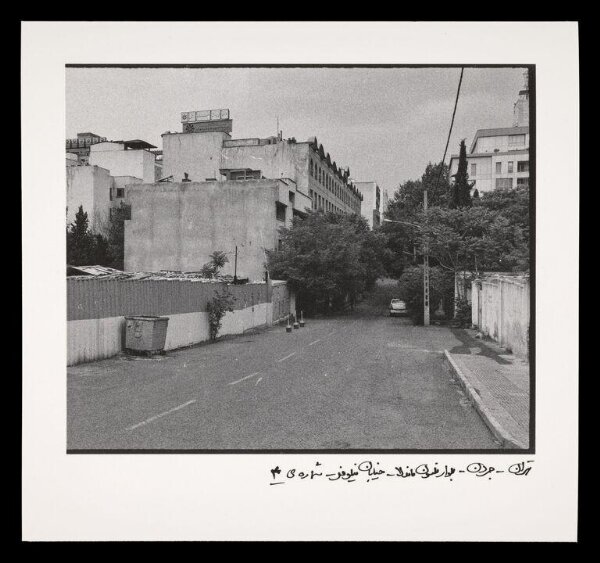
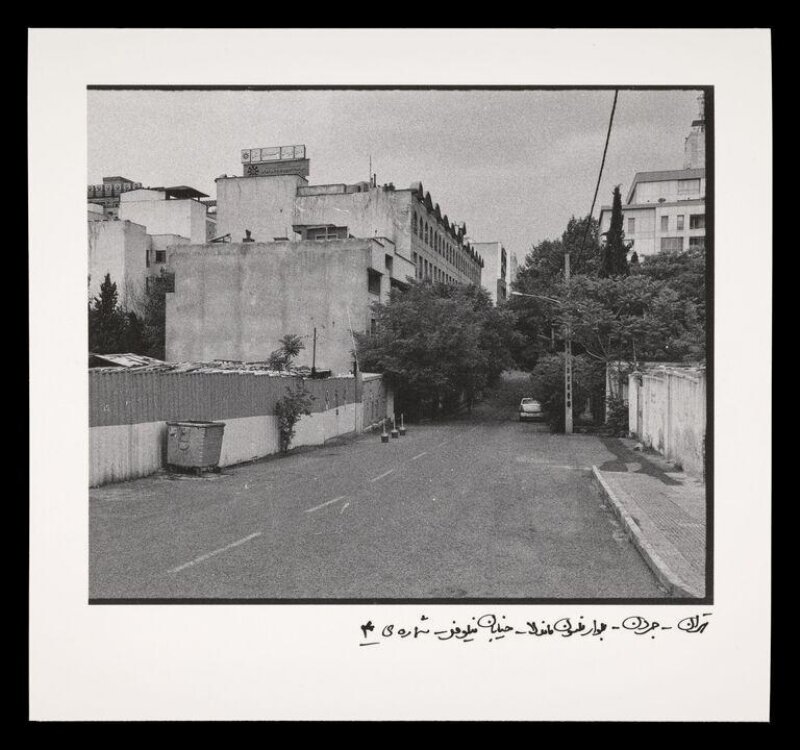
#4, Niloufar St., Nelson Mandela Blvd., Jordan, Tehran

Mohammad Ghazali

vam View

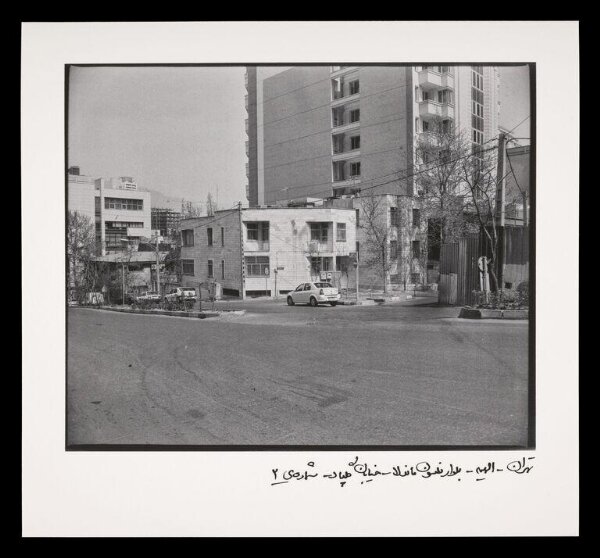
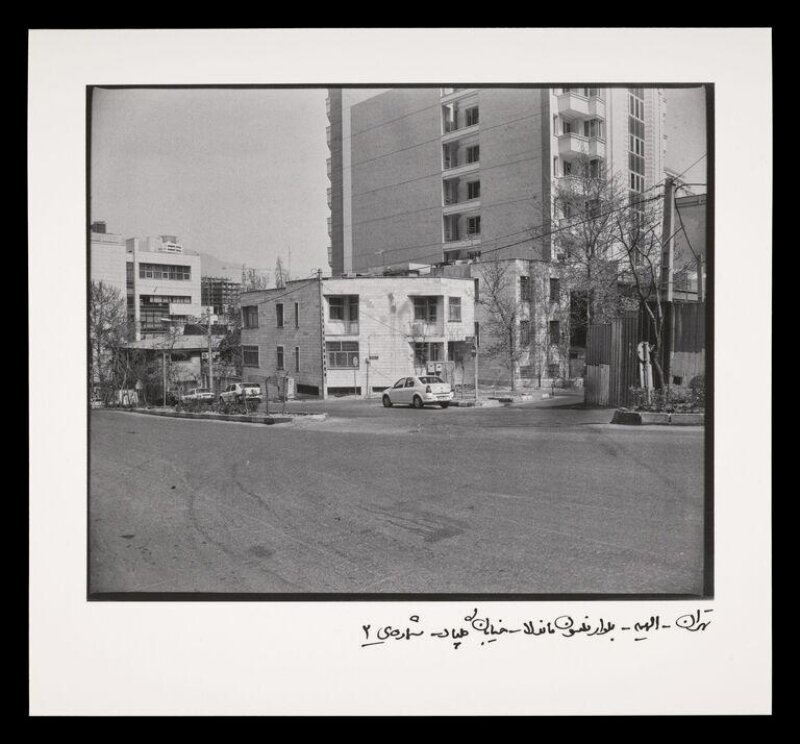
#2, Golpad St., Nelson Mandela Blvd., Elahiye, Tehran, 2009-2019

Mohammad Ghazali

vam View

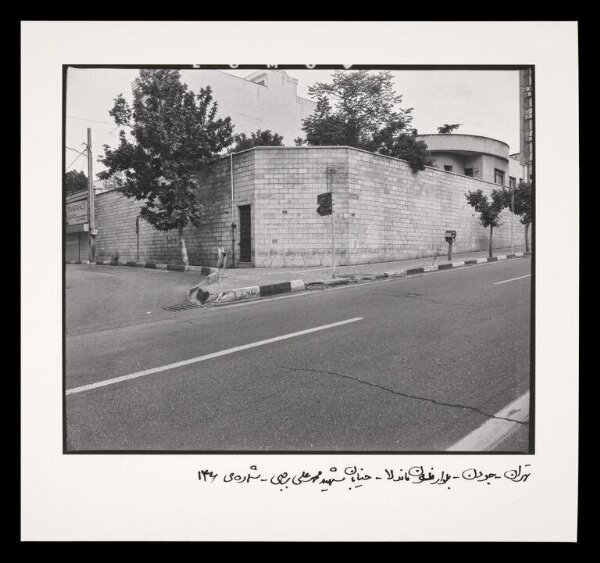
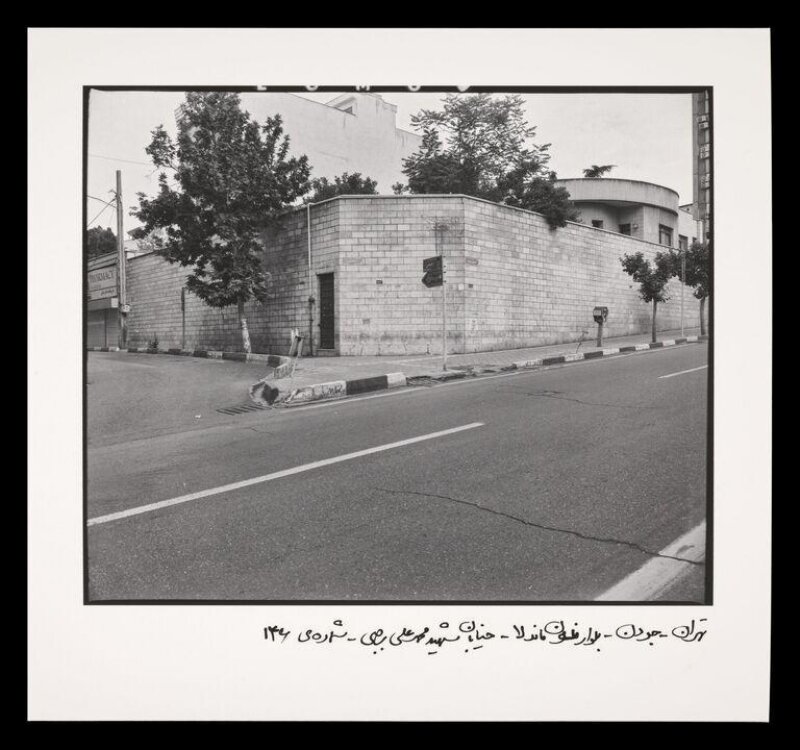
#146, Shahid Mohammad Ali Rajabi St., Nelson Mandela Blvd, Jordan, Tehran

Mohammad Ghazali

vam View

#4, Niloufar St., Nelson Mandela Blvd., Jordan, Tehran

Mohammad Ghazali

#2, Golpad St., Nelson Mandela Blvd., Elahiye, Tehran, 2009-2019

Mohammad Ghazali

#146, Shahid Mohammad Ali Rajabi St., Nelson Mandela Blvd, Jordan, Tehran

Mohammad Ghazali

Nelson Mandela's statement from the dock at the Rivonia Trial

I am the First Accused. I hold a Bachelor's Degree in Arts and practised as an attorney in Johannesburg for a number of years in partnership with Oliver Tambo. I am a convicted prisoner serving five...

1961
Speeches Read Talk

No Easy Walk to Freedom

This collection of Nelson Mandela's articles, speeches, letters from underground, and transcripts from the trials in which he was accused vividly illustrates his magnetic attraction as Africa's...

1973

Nelson Mandela Speaks: Forging a Democratic, Nonracial South Africa

Collects speeches, letters, and interviews with Nelson Mandela since his February 1990 release from prison

1993

More from the Early 20th Century

Explore what happened on the days that shaped Nelson Mandela's life. Today In History connects historical figures with the events, births, and deaths that defined their era. Browse all historical figures or explore today's events.