

Historical Figure
Millard Fillmore
1800–1874
President of the United States from 1850 to 1853
Talk to Millard Fillmore
Have a conversation with this historical figure through AI
Biography
Millard Fillmore was the 13th president of the United States, serving from 1850 to 1853. He was the last president to be a member of the Whig Party while in the White House, and the last to be neither a Democrat nor a Republican. A former member of the U.S. House of Representatives, Fillmore was elected vice president in 1848, and succeeded to the presidency when Zachary Taylor died in 1850. Fillmore was instrumental in passing the Compromise of 1850, which led to a brief truce in the battle over the expansion of slavery.
Timeline
The story of Millard Fillmore, told in moments.
Elected Vice President on the Whig ticket under Zachary Taylor. He's a compromise candidate from New York. Nobody expects him to matter. Taylor is healthy and plans to serve a full term.
Becomes president when Taylor dies of acute gastroenteritis after eating cherries and milk at a Fourth of July celebration. Fillmore signs the Compromise of 1850, including the Fugitive Slave Act. Abolitionists never forgive him. Slaveholders find him useful temporarily.
Runs for president on the Know-Nothing ticket, an anti-immigration, anti-Catholic party. He wins Maryland. Only Maryland. The man from a log cabin in rural New York ends his career as the candidate of nativism.
Dies in Buffalo, New York, at 74. He'd founded the University of Buffalo and the Buffalo Historical Society. Competent at local philanthropy. Forgettable at national leadership. The answer to trivia questions about obscure presidents.
In Their Own Words (4)
May God save the country, for it is evident that the people will not.
Letter to Henry Clay (11 November 1844), as quoted in Presidential Wit from Washington to Johnson (1966) edited by Bill Adler, 1966
The whole country is full of enterprise. Our common schools are diffusing intelligence among the people and our industry is fast accumulating the comforts and luxuries of life. This is in part owing to our peculiar position, to our fertile soil and comparatively sparse population; but much of it is also owing to the popular institutions under which we live, to the freedom which every man feels to engage in any useful pursuit according to his taste or inclination, and to the entire confidence that his person and property will be protected by the laws. But whatever may be the cause of this unparalleled growth in population, intelligence, and wealth, one thing is clear — that the Government must keep pace with the progress of the people. It must participate in their spirit of enterprise, and while it exacts obedience to the laws and restrains all unauthorized invasions of the rights of neighboring states, it should foster and protect home industry and lend its powerful strength to the improvement of such means of intercommunication as are necessary to promote our internal commerce and strengthen the ties which bind us together as a people. It is not strange, however much it may be regretted, that such an exuberance of enterprise should cause some individuals to mistake change for progress and the invasion of the rights of others for national prowess and glory. The former are constantly agitating for some change in the organic law, or urging new and untried theories of human rights. The latter are ever ready to engage in any wild crusade against a neighboring people, regardless of the justice of the enterprise and without looking at the fatal consequences to ourselves and to the cause of popular government. Such expeditions, however, are often stimulated by mercenary individuals, who expect to share the plunder or profit of the enterprise without exposing themselves to danger, and are led on by some irresponsible foreigner, who abuses the hospitality of our own Government by seducing the young and ignorant to join in his scheme of personal ambition or revenge under the false and delusive pretense of extending the area of freedom. These reprehensible aggressions but retard the true progress of our nation and tarnish its fair fame. They should therefore receive the indignant frowns of every good citizen who sincerely loves his country and takes a pride in its prosperity and honor.
1852
An honorable defeat is better than a dishonorable victory.
Speech (13 September 1844), Buffalo, New York, quoted in the Buffalo Commercial Advertiser (14 September 1844). Fillmore won the Whig nomination for governor of New York, and in his acceptance speech he hoped his supporters would not resort to dirty tricks. The newspaper summary was: "He entreated them to enter the contest with zeal and enthusiasm; but as they valued the sacredness of their cause, and the stability of their principles, to resort to no unfair means: that an honorable defeat was better than a dishonorable victory." He ended up losing the election to Silas Wright., 1844
God knows that I detest slavery, but it is an existing evil, for which we are not responsible, and we must endure it, and give it such protection as is guaranteed by the constitution, till we can get rid of it without destroying the last hope of free government in the world.
Artifacts (15)


Zachary Taylor, People's Candidate for President
Nathaniel Currier
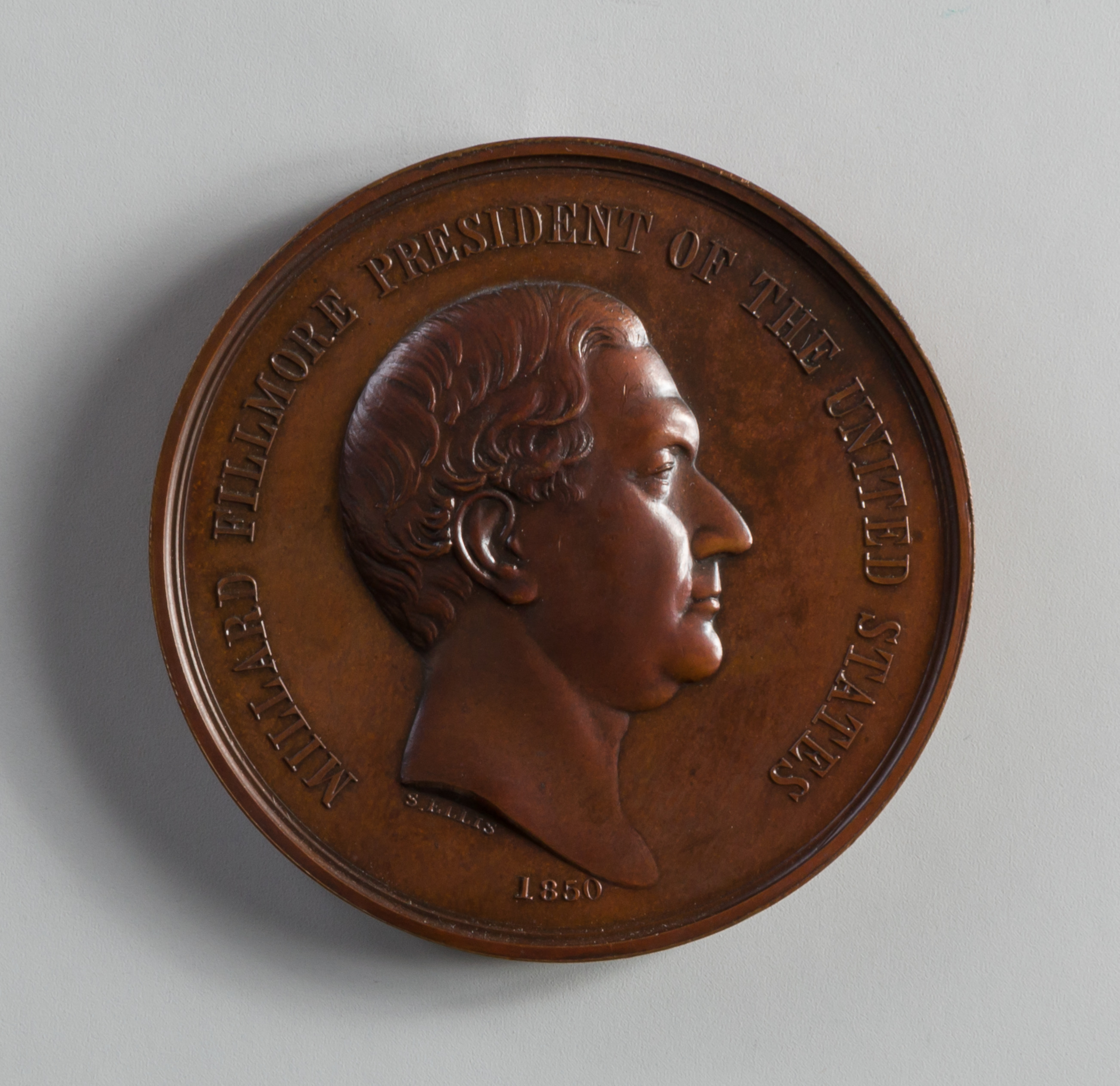
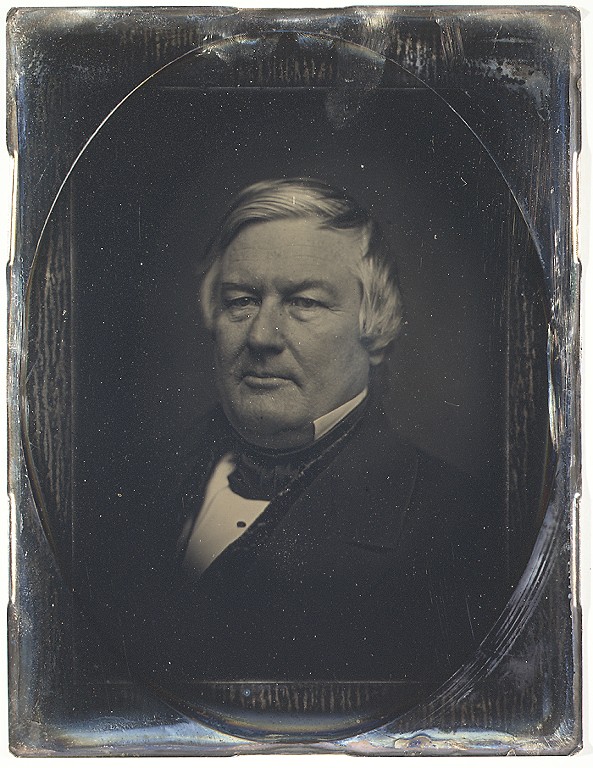
Millard Fillmore
Albert Sands Southworth|Josiah Johnson Hawes|Southworth and Hawes

Millard Fillmore
Southworth & Hawes, active 1843 - 1862

Millard Fillmore
Mathew Brady Studio, active 1844 - 1894

Millard Fillmore
Meade Brothers Studio, active c. 1840 - c. 1869


Millard Fillmore
Mathew Brady Studio, active 1844 - 1894

Millard Fillmore
Mathew Brady Studio, active 1844 - 1894

Millard Fillmore
Mathew Brady Studio, active 1844 - 1894

Millard Fillmore
Mathew Brady Studio, active 1844 - 1894
More from the Victorian Era


Explore what happened on the days that shaped Millard Fillmore's life. Today In History connects historical figures with the events, births, and deaths that defined their era. Browse all historical figures or explore today's events.