

Prussia Crushes Austria: Germany Redrawn at Koniggratz
Prussian needle guns decided the Battle of Koniggratz in a single afternoon, destroying the Austrian Empire s claim to leadership of the German-speaking world. On July 3, 1866, roughly 220,000 Prussian soldiers attacked 215,000 Austrians near the Bohemian fortress town of Koniggratz in what remains one of the largest single-day battles in European history. By evening, Austria s army was shattered and the map of Central Europe was about to be redrawn. The Austro-Prussian War had erupted over the administration of Schleswig-Holstein, but the real stakes were far larger. Otto von Bismarck, Prussia s Minister President, had deliberately engineered the conflict to expel Austria from German affairs and establish Prussian dominance over a unified Germany. He had secured Italian alliance to force Austria to fight on two fronts and calculated that no other European power would intervene. Technology made the difference at Koniggratz. Prussian infantry carried the Dreyse needle gun, a breech-loading rifle that could fire five rounds per minute while the soldier lay prone. Austrian troops used muzzle-loading Lorenz rifles that required standing to reload, managing two rounds per minute at best. Austrian artillery was superior, but infantry firepower determined the outcome once lines closed. The battle nearly went wrong for Prussia. The First Army s frontal attack stalled against fierce Austrian resistance, and casualties mounted through the morning. Victory depended on the Second Army arriving from the northeast in time — a coordination challenge across sixty miles of rough terrain with no radio communication. Crown Prince Frederick William s columns appeared around noon, striking the Austrian right flank and turning a contested fight into a rout. Austria sued for peace within weeks. The Treaty of Prague dissolved the German Confederation, excluded Austria from German politics permanently, and established Prussian dominance over northern Germany. Bismarck s deliberate restraint in victory — demanding no Austrian territory — kept the door open for future alliance. Four years later, that alliance framework supported the creation of the German Empire.
July 3, 1866
160 years ago
Key Figures & Places

Austria
Wikipedia
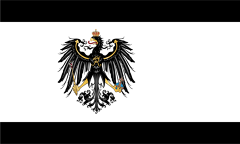
Prussia
Wikipedia
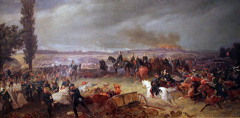
Austro-Prussian War
Wikipedia
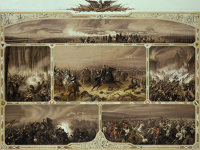
Battle of Königgratz
Wikipedia

Austro-Prussian War
Wikipedia
Battle of Königgrätz
Wikipedia

Prussia
Wikipedia

Austrian Empire
Wikipedia

Helmuth von Moltke the Elder
Wikipedia

Solution petite-allemande
Wikipedia

Johann Gottfried Piefke
Wikipedia
Königgrätzer Marsch
Wikipedia

Geschichte Österreichs
Wikipedia

War of the Bavarian Succession
Wikipedia
Unification allemande
Wikipedia

Austria
Wikipedia
What Else Happened on July 3
Constantine I crushed the forces of his co-emperor Licinius at the Battle of Adrianople, forcing his rival to retreat behind the walls of Byzantium. This decisi…

French nobles elected Hugh Capet king on July 3, 987, choosing a man they expected to be weak, controllable, and temporary. The Carolingian dynasty that had rul…
Eight years old. That's how young William was when his father died on pilgrimage and left him a duchy crawling with assassins. Three of his guardians were murde…
Mamluk forces captured King Louis IX of France at the Battle of Fariskur on April 6, 1250, delivering a humiliating blow to the Seventh Crusade and forcing Fran…
Diego de Almagro departed Cuzco with hundreds of Spanish soldiers and thousands of indigenous allies, aiming to claim the lands south of the Inca Empire for the…

Samuel de Champlain selected a spot where the St. Lawrence River narrowed to less than a mile and began constructing a fortified trading post on July 3, 1608. T…
Talk to History
Have a conversation with historical figures who witnessed this era. Ask questions, explore perspectives, and bring history to life.