

Hugh Capet Crowned King of France: The Capetian Dynasty Begins
Hugh Capet's coronation in 987 established the Capetian dynasty, which maintained an unbroken line of rule over France for eight centuries until the French Revolution toppled the monarchy in 1792. This shift from the Carolingians to a new royal house solidified the foundations of the modern French state and centralized power around the Paris region.
July 3, 987
1039 years ago
Key Figures & Places

France
Wikipedia
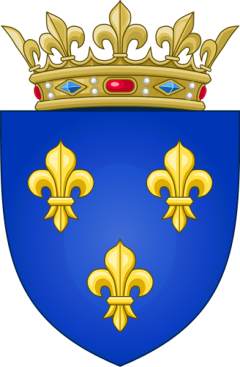
King of France
Wikipedia
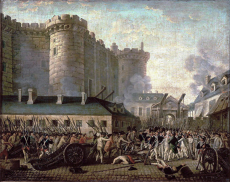
French Revolution
Wikipedia
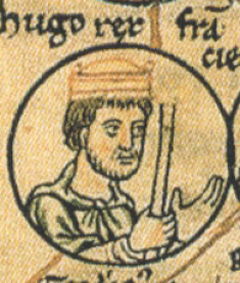
Hugh Capet of France
Wikipedia
Capetian dynasty
Wikipedia

1792
Wikipedia

Hugh Capet
Wikipedia
Capetian dynasty
Wikipedia
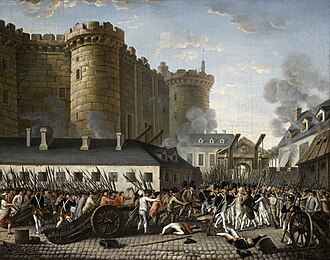
French Revolution
Wikipedia

1792
Wikipedia

Francia
Wikipedia
July 1
Wikipedia

History of France
Wikipedia

Carolingian
Wikipedia

West Francia
Wikipedia

France
Wikipedia

Samuel de Champlain
Wikipedia

Quebec
Wikipedia

Muslims
Wikipedia

Louis IX of France
Wikipedia

Battle of Mansurah (1250)
Wikipedia

Seventh Crusade
Wikipedia
What Else Happened on July 3
Constantine I crushed the forces of his co-emperor Licinius at the Battle of Adrianople, forcing his rival to retreat behind the walls of Byzantium. This decisi…
In der Schlacht am Mons Seleucus besiegt der oströmische Herrscher Constantius II. den weströmischen Usurpator Magnentius.
ouverture du deuxième concile d'Orange.
Eight years old. That's how young William was when his father died on pilgrimage and left him a duchy crawling with assassins. Three of his guardians were murde…
Dominikus, der Gründer des Dominikanerordens, wird durch Papst Gregor IX. heiliggesprochen.

Mamluk forces captured King Louis IX of France at the Battle of Fariskur, delivering a humiliating blow to the Seventh Crusade and forcing France's monarch to r…
Talk to History
Have a conversation with historical figures who witnessed this era. Ask questions, explore perspectives, and bring history to life.