Washington Leads Continental Army: Unifying the Colonies Against Britain
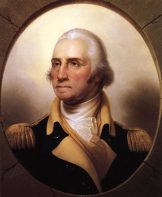
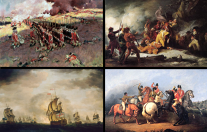
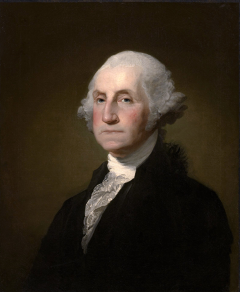
George Washington assumed command of the Continental Army at Cambridge, Massachusetts, on July 3, 1775, taking charge of a force that barely qualified as an army. The Continental Congress had created the position and appointed Washington two weeks earlier, selecting him partly for his military experience in the French and Indian War, partly because he was a Virginian whose appointment would bind the Southern colonies to a conflict that had so far been fought entirely in New England, and partly because he showed up to Congress wearing his old military uniform, signaling his availability without having to ask. What Washington found at Cambridge was not encouraging: roughly 14,000 men organized into militia companies from different colonies, with no unified command structure, inconsistent supplies, limited ammunition, and enlistments that would expire within months. Many soldiers had simply brought their own weapons from home. Washington spent the next months imposing discipline, organizing the rabble into something resembling a professional force, and confronting the fundamental problem that would plague the Continental Army throughout the war: Congress could authorize the army but could not reliably fund it, supply it, or force the states to provide the troops they promised. Washington held this disintegrating institution together through eight years of war, crossing the Delaware, surviving Valley Forge, and accepting the British surrender at Yorktown. When the Treaty of Paris ended the war in 1783, most of the Continental Army was disbanded. The First and Second Regiments survived and became the nucleus of the United States Army.
July 3, 1775
251 years ago
What Else Happened on July 3
Constantine I crushed the forces of his co-emperor Licinius at the Battle of Adrianople, forcing his rival to retreat behind the walls of Byzantium. This decisi…
French nobles elected Hugh Capet king on July 3, 987, choosing a man they expected to be weak, controllable, and temporary. The Carolingian dynasty that had rul…
Eight years old. That's how young William was when his father died on pilgrimage and left him a duchy crawling with assassins. Three of his guardians were murde…
Mamluk forces captured King Louis IX of France at the Battle of Fariskur on April 6, 1250, delivering a humiliating blow to the Seventh Crusade and forcing Fran…
Diego de Almagro departed Cuzco with hundreds of Spanish soldiers and thousands of indigenous allies, aiming to claim the lands south of the Inca Empire for the…
Samuel de Champlain selected a spot where the St. Lawrence River narrowed to less than a mile and began constructing a fortified trading post on July 3, 1608. T…
Talk to History
Have a conversation with historical figures who witnessed this era. Ask questions, explore perspectives, and bring history to life.