Today In History
March 11 in History
Your birthday shares the stage with stories that shaped the world. Born on this day: Rupert Murdoch, Joel Madden, and Antonin Scalia.

Japan Earthquake Triggers Tsunami and Nuclear Meltdown
Waves forty meters high slammed into the northeastern coast of Japan on the afternoon of March 11, 2011, sweeping away entire neighborhoods in minutes. The 9.0-magnitude earthquake that triggered the tsunami struck 70 kilometers east of the Oshika Peninsula at 2:46 PM local time, making it the most powerful earthquake ever recorded in Japan and the fourth most powerful worldwide since modern seismology began. The seafloor shifted by as much as 50 meters along a rupture zone stretching 500 kilometers. The Tohoku region bore the full force of the catastrophe. Coastal cities like Rikuzentakata were erased almost completely. Sendai airport flooded under three meters of water as debris-choked waves raced inland at speeds approaching 700 kilometers per hour across open ocean. Japan had invested billions in seawalls and early warning systems, but the sheer scale of the tsunami overwhelmed defenses designed for waves half that size. At the Fukushima Daiichi nuclear power plant, the tsunami breached seawalls and knocked out backup diesel generators that cooled the reactors. Three reactor cores melted down over the following days, releasing radioactive material into the atmosphere and forcing the evacuation of 154,000 residents within a 20-kilometer radius. The disaster was classified Level 7 on the International Nuclear Event Scale, matching Chernobyl as the only other event to reach that severity. The final toll reached 19,759 dead, over 6,000 injured, and 2,553 missing. Economic damage exceeded $235 billion, making it the costliest natural disaster in recorded history. Japan shut down all 54 of its nuclear reactors for safety reviews, fundamentally reshaping the country's energy policy. Germany accelerated its own nuclear phaseout in direct response, and nations worldwide reassessed the risks of building reactors in seismically active zones. The disaster exposed a painful truth: even the world's most earthquake-prepared nation could be overwhelmed when nature exceeded the parameters engineers had designed for.
Famous Birthdays
b. 1931
b. 1979
Antonin Scalia
d. 2016
Harold Wilson
1916–1995
Qasem Soleimani
1957–2020
Ástor Piazzolla
b. 1921
Abdul Razak Hussein
1922–1976
Flaco Jiménez
b. 1939
Henry Tate
b. 1819
LeToya Luckett
b. 1981
Lisa Loeb
b. 1968
Paul Wall
b. 1981
Historical Events
Fifty billion dollars in war supplies flowed from American factories to Allied nations under a single piece of legislation that Franklin Roosevelt sold to a skeptical public as nothing more than lending a garden hose to a neighbor whose house was on fire. Roosevelt signed the Lend-Lease Act on March 11, 1941, nine months before Pearl Harbor, effectively ending two decades of American isolationism without firing a single shot. The political groundwork had been laid carefully. Britain was running out of money to buy American weapons, and Churchill had written Roosevelt a blunt letter in December 1940 warning that the British Empire could not sustain the war effort without American industrial support. Roosevelt bypassed the politically toxic idea of loans by framing the policy as a temporary lending arrangement, telling reporters the program was no different than lending a neighbor your garden hose during a fire. Congress passed the act 60-31 in the Senate and 317-71 in the House after two months of fierce debate. The legislation gave the president unprecedented authority to transfer defense materials to any nation whose security he deemed vital to American interests. Britain received $31.4 billion, the Soviet Union $11.3 billion, France $3.2 billion, and China $1.6 billion. In total, $50.1 billion worth of supplies shipped overseas, roughly equivalent to $656 billion today, representing 17 percent of total U.S. war expenditures. The program transformed the American economy into what Roosevelt called the "arsenal of democracy." Factories retooled overnight, unemployment plummeted, and the industrial base that would later overwhelm the Axis powers was already running at full capacity before American soldiers entered combat. Reverse Lend-Lease sent $7.8 billion in services back to the United States, mostly British-provided base access. Lend-Lease demolished the fiction of American neutrality and committed the nation to Allied victory long before the first American combat casualty fell in Europe.
Waves forty meters high slammed into the northeastern coast of Japan on the afternoon of March 11, 2011, sweeping away entire neighborhoods in minutes. The 9.0-magnitude earthquake that triggered the tsunami struck 70 kilometers east of the Oshika Peninsula at 2:46 PM local time, making it the most powerful earthquake ever recorded in Japan and the fourth most powerful worldwide since modern seismology began. The seafloor shifted by as much as 50 meters along a rupture zone stretching 500 kilometers. The Tohoku region bore the full force of the catastrophe. Coastal cities like Rikuzentakata were erased almost completely. Sendai airport flooded under three meters of water as debris-choked waves raced inland at speeds approaching 700 kilometers per hour across open ocean. Japan had invested billions in seawalls and early warning systems, but the sheer scale of the tsunami overwhelmed defenses designed for waves half that size. At the Fukushima Daiichi nuclear power plant, the tsunami breached seawalls and knocked out backup diesel generators that cooled the reactors. Three reactor cores melted down over the following days, releasing radioactive material into the atmosphere and forcing the evacuation of 154,000 residents within a 20-kilometer radius. The disaster was classified Level 7 on the International Nuclear Event Scale, matching Chernobyl as the only other event to reach that severity. The final toll reached 19,759 dead, over 6,000 injured, and 2,553 missing. Economic damage exceeded $235 billion, making it the costliest natural disaster in recorded history. Japan shut down all 54 of its nuclear reactors for safety reviews, fundamentally reshaping the country's energy policy. Germany accelerated its own nuclear phaseout in direct response, and nations worldwide reassessed the risks of building reactors in seismically active zones. The disaster exposed a painful truth: even the world's most earthquake-prepared nation could be overwhelmed when nature exceeded the parameters engineers had designed for.
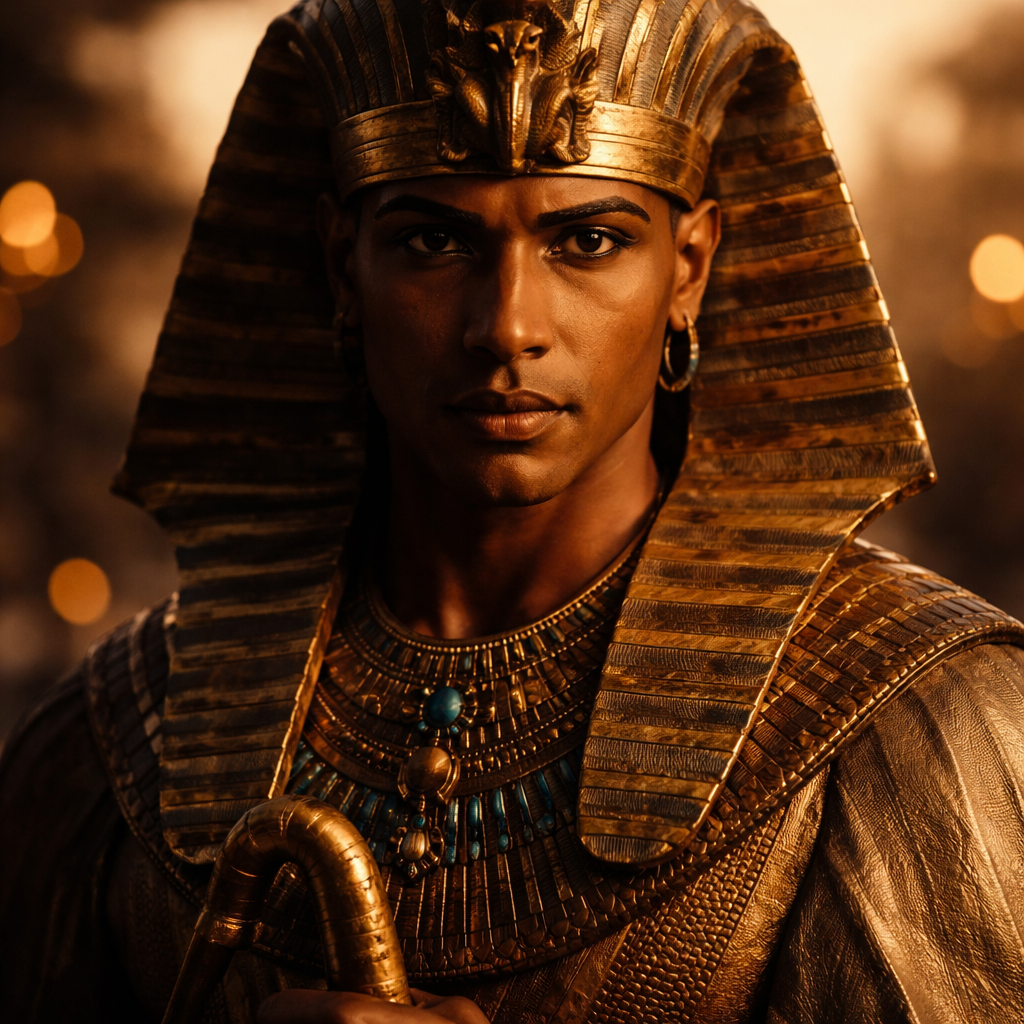
No pharaoh conquered more territory. Thutmose III led at least seventeen military campaigns over two decades, expanding Egypt from the Fourth Cataract of the Nile deep into Nubia to the banks of the Euphrates River in modern Syria. By his death around 1425 BC, after a reign of 54 years, Egypt controlled the largest empire it would ever possess. Thutmose spent the first twenty-two years of his reign in the shadow of his stepmother, Hatshepsut, who ruled as regent and then as pharaoh in her own right. When she died around 1458 BC, Thutmose assumed sole power and immediately launched the military campaigns that defined his legacy. His first and most celebrated victory came at the Battle of Megiddo, where he led his army through a narrow mountain pass that his generals advised against, catching a coalition of Canaanite kings by surprise and routing their forces outside the fortress walls. The Megiddo campaign established a pattern Thutmose would repeat across the Near East: bold tactical decisions, rapid marches, and diplomatic follow-through that converted defeated enemies into tribute-paying vassals. He crossed the Euphrates during his eighth campaign, erecting a victory stela beside the one his grandfather Thutmose I had placed there decades earlier. Naval operations along the Levantine coast secured port cities that provided logistical support for inland campaigns. Beyond military conquest, Thutmose was a prolific builder. He expanded the Temple of Karnak significantly, erected obelisks that still stand in Istanbul and Rome, and commissioned detailed annals of his campaigns carved into temple walls. These records, among the earliest detailed military accounts in history, provide scholars with an unusually precise understanding of Bronze Age warfare. Thutmose III died having transformed Egypt from a regional power into the dominant empire of the ancient world, a position it would hold for nearly a century after his death.
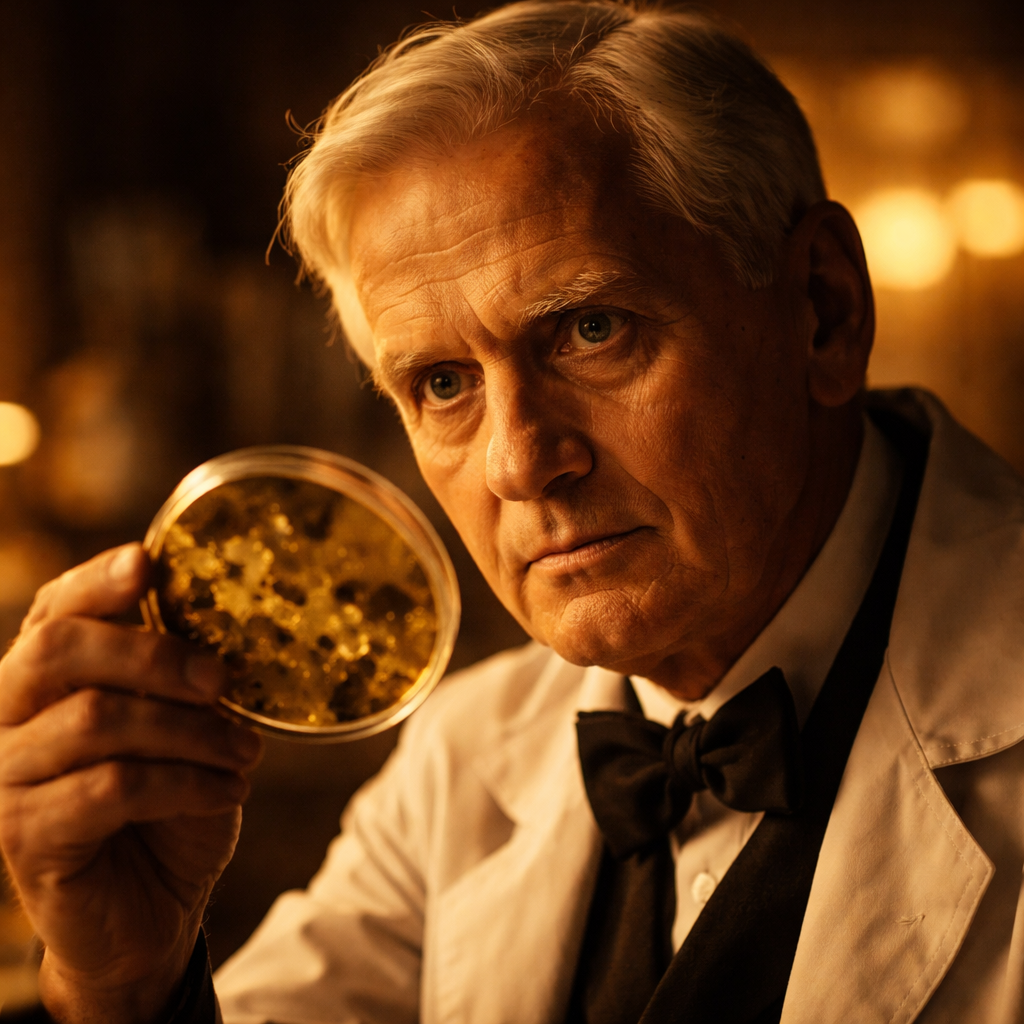
A forgotten petri dish changed the course of medicine. Alexander Fleming returned from a two-week vacation to his laboratory at St. Mary's Hospital in London in September 1928 and noticed that a mold colony had contaminated one of his staphylococcus cultures. Rather than discarding the plate, Fleming observed that bacteria near the mold had been destroyed. He identified the mold as Penicillium notatum and named its antibacterial secretion penicillin. Fleming published his findings in 1929, but the scientific community largely ignored the discovery. He lacked the resources and chemistry expertise to purify penicillin into a usable drug, and the paper attracted minimal attention for over a decade. Fleming himself moved on to other research, convinced the substance degraded too quickly to serve as a practical treatment. Howard Florey and Ernst Boris Chain at Oxford University revived the work in 1940, successfully purifying penicillin and demonstrating its extraordinary effectiveness against bacterial infections. The first human trial saved a policeman dying from septicemia, though supplies ran out before the treatment could be completed. By 1944, mass production in the United States generated enough penicillin to treat every Allied soldier wounded on D-Day. Fleming, Florey, and Chain shared the 1945 Nobel Prize in Physiology or Medicine. Fleming became a global celebrity, knighted in 1944, and showered with honorary degrees from universities worldwide. He spent his later years warning about antibiotic resistance, cautioning that bacteria would evolve to defeat penicillin if the drug was misused. Fleming died of a heart attack at his home in London on March 11, 1955, at age seventy-three. The accidental discovery he almost threw away has since saved an estimated 200 million lives.
South Vietnam's army collapsed faster than anyone predicted. When North Vietnamese forces captured Ban Me Thuot on March 11, 1975, the strategic city in the Central Highlands fell in barely 36 hours, exposing the fragility of a military that had been fighting for survival since American combat troops withdrew two years earlier. The attack was the opening move of the Ho Chi Minh Campaign, Hanoi's final offensive to reunify Vietnam. General Van Tien Dung commanded three divisions totaling roughly 25,000 troops against Ban Me Thuot's garrison of South Vietnamese regulars and regional forces. North Vietnamese sappers infiltrated the city's perimeter the night before, cutting communications and seizing key intersections before the main assault began at dawn. South Vietnam's 23rd Division, responsible for defending the city, was caught badly out of position. President Nguyen Van Thieu had recently ordered a strategic redeployment from the Highlands, but the withdrawal plan was chaotic and poorly communicated. Reinforcements from Pleiku never arrived. By midday on March 11, North Vietnamese tanks rolled through the city center, and organized resistance ceased. The loss triggered a chain reaction that stunned military observers worldwide. Thieu ordered a general retreat from the Central Highlands, but the withdrawal turned into a rout. Hundreds of thousands of civilians and soldiers clogged Route 7B heading toward the coast, bombed and strafed by North Vietnamese forces in what became known as the "Convoy of Tears." Pleiku and Kontum fell without significant resistance within days. Ban Me Thuot proved that South Vietnam's military could no longer hold without American air support. Saigon fell seven weeks later, on April 30, 1975.
The name came from two Danish words: "leg godt," meaning "play well." Ole Kirk Christiansen, a carpenter from Billund, Denmark, founded what would become the world's largest toy company in 1932, during the depths of the Great Depression, when demand for his handmade wooden furniture dried up and he pivoted to making wooden toys. Christiansen's workshop survived by producing ironing boards, stepladders, and simple pull-toys from leftover wood scraps. He named his small company Lego in 1934, unaware that the word also meant "I put together" in Latin. Quality obsessed him. He once ordered his son Godtfred to retrieve and repaint a batch of ducks that had been shipped with only two coats of lacquer instead of the required three, even though the company could barely afford the extra varnish. The pivotal shift from wood to plastic came in 1947, when Christiansen became one of the first toy manufacturers in Denmark to purchase a plastic injection molding machine. His company began producing hollow plastic bricks in 1949 based on a British design, but the bricks lacked the interlocking mechanism that would later define the product. Godtfred continued refining the design after his father's declining health limited his involvement. Christiansen died on March 11, 1958, just months before the company patented the iconic stud-and-tube coupling system on January 28, 1958, that made Lego bricks click together with satisfying precision and hold firm until deliberately pulled apart. That patent created the foundation for a toy system of essentially infinite creative possibility. Godtfred and later his grandson Kjeld Kirk Kristiansen grew the company into a global giant producing over 36 billion bricks per year. The Billund carpenter's insistence on quality became the company's defining trait: Lego bricks manufactured in the 1960s still interlock perfectly with those made today.
The Praetorian Guard didn't just kill the eighteen-year-old emperor—they erased him. After stabbing Elagabalus and his mother Julia Soaemias in a palace latrine where they'd fled together, the guards dragged their bodies through Rome's streets, letting crowds mutilate them before dumping both into the Tiber. The Senate then ordered his name chiseled off every monument, his face scraped from every coin. But here's what they couldn't erase: Elagabalus had smuggled a black meteorite from Syria to replace Jupiter as Rome's supreme god, married a Vestal Virgin, and possibly lived as a woman—behaviors so threatening that Rome's power brokers needed him not just dead, but unmade. Sometimes the violence of forgetting tells you more than memory ever could.
She'd been ruling for a child emperor — her three-year-old son Michael III — when Theodora risked everything to reverse a policy that had torn the Byzantine Empire apart for 120 years. On the first Sunday of Lent in 843, she ordered icons restored to every church, defying military leaders who'd built careers destroying them. The Iconoclasm had claimed thousands of lives, emptied monasteries, and nearly split Christianity forever. Her advisors warned she'd trigger civil war. Instead, she created the "Triumph of Orthodoxy," still celebrated every year by Orthodox Christians worldwide. The woman who wasn't supposed to have real power redefined what counted as sacred — and she did it while her son played with toys in the palace.
The Pope refused to create the archbishopric for seven years because he didn't trust King John of Bohemia's loyalty. Charles IV, John's son, had to wait until his father was safely dead at Crécy in 1346 before Rome finally elevated Prague from a mere bishopric to an archdiocese in 1344. Arnošt of Pardubice wore both titles within fourteen months—last bishop, first archbishop—without changing his office or his desk. The upgrade wasn't ceremonial: it freed the Bohemian church from answering to Mainz, hundreds of miles away in Germany, and let Charles build Prague into the imperial capital he envisioned. Sometimes the most powerful changes happen when someone's business card gets a new line.
English mercenary captain Sir John Hawkwood deployed a feigned retreat to draw Verona's forces into a devastating ambush at Castagnaro, delivering Padua a decisive victory. The battle cemented Hawkwood's reputation as the most brilliant tactician among Italy's condottieri and demonstrated how foreign mercenaries shaped the fate of Italian city-states.
The Jesuits armed thousands of Indigenous converts with European muskets and cavalry tactics, then watched them outmaneuver Portuguese slave raiders at their own game. At Mbororé, 4,200 Guaraní militia defended their mission settlements against bandeirantes who'd already captured over 60,000 Indigenous people from other Jesuit communities. The battle raged for three days along the Uruguay River until the slavers fled. The victory didn't just save the reductions—it created something the Spanish Crown never intended: a semi-autonomous Indigenous Christian state that would last another century, complete with its own army, economy, and the largest printing press operation in South America. Turns out giving people guns to defend their freedom works, even when you're trying to convert them.
She signed hundreds of bills into law, but Anne couldn't stomach this one. The Scottish Militia Bill would've armed 20,000 Scots just seven years after the Act of Union merged their parliament with England's — and her advisors warned those weapons might turn on London. So on March 11, 1708, Queen Anne simply refused. Royal Assent withheld. The bill died instantly. No British monarch has dared use this veto power since, though technically they still possess it. Three centuries later, every sovereign from George I to Charles III has rubber-stamped whatever Parliament sends their way, even laws they personally despise. Anne's fear of Scottish muskets accidentally became the crown's last real "no."
The Nizam's army outnumbered the Marathas nearly two-to-one at Kharda, boasting 90,000 troops backed by French-trained artillery units against just 50,000 Maratha cavalry. But Mahadji Shinde's successor, Daulat Rao Shinde, gambled everything on speed—his horsemen encircled the Nizam's slower infantry in a devastating pincer movement that lasted barely six hours. The Nizam lost 6,000 men and had to cede massive territories. Here's the twist: this crushing defeat didn't weaken Hyderabad long-term. Within three years, the humiliated Nizam became the British East India Company's most loyal ally, specifically to protect himself from the Marathas—a decision that would ultimately help the British conquer the very Marathas who'd beaten him.
Ney didn't just cover the retreat — he fought four separate rearguard battles in a single day, holding off 40,000 Allied troops with just 6,000 men. Marshal Michel Ney personally led cavalry charges at Pombal, then repositioned his exhausted soldiers to defend Redinha, buying Masséna precious hours to escape Wellington's trap. His men were starving, their boots disintegrating, yet they repelled attack after attack. Wellington himself admitted he couldn't break through. The performance earned Ney his nickname "the bravest of the brave" from Napoleon, but it also prolonged a war that would eventually destroy them both. Sometimes the most brilliant military success is just delaying the inevitable.
Hone Heke didn't just cut down the British flagpole once. He chopped it down four times. Each time the colonial authorities at Kororareka re-erected it, he'd return with his axes. The Treaty of Waitangi promised Māori chiefs their sovereignty—*rangatiratanga*—but the English translation said something else entirely. By March 1845, Heke and Chief Kawiti had had enough of the semantic games. When they drove every British settler from the town, they weren't rebelling against a flag. They were rejecting a treaty they'd never actually agreed to.
Fun Facts
Zodiac Sign
Pisces
Feb 19 -- Mar 20
Water sign. Compassionate, intuitive, and artistic.
Birthstone
Aquamarine
Pale blue
Symbolizes courage, serenity, and clear communication.
Next Birthday
--
days until March 11
Quote of the Day
“I will always be open to receive my friends. I will not force myself on them.”
Share Your Birthday
Create a beautiful birthday card with events and famous birthdays for March 11.
Create Birthday CardExplore Nearby Dates
Popular Dates
Explore more about March 11 in history. See the full date page for all events, browse March, or look up another birthday. Play history games or talk to historical figures.