Today In History
July 14 in History
Your birthday shares the stage with stories that shaped the world. Born on this day: Matthew Fox, Rosey Grier, and Ante Pavelić.

Bastille Falls: French Revolution Begins in Blood
Seven prisoners sat inside the Bastille on the morning of July 14, 1789: four forgers, two men judged insane, and a count imprisoned at his family's request. The Parisian crowd that stormed the medieval fortress was not there to free them. They wanted the gunpowder stored inside, and their willingness to die taking it from the king's garrison became the opening act of the French Revolution and the symbolic destruction of royal tyranny. Paris had been on the edge of insurrection for weeks. King Louis XVI dismissed the popular finance minister Jacques Necker on July 11, and rumors spread that royal troops massing around the city would dissolve the newly formed National Assembly. Food prices were catastrophic after two years of crop failures. On July 12, crowds clashed with cavalry in the Tuileries gardens. The next day, mobs looted armories across Paris, seizing 28,000 muskets from the Invalides but finding almost no ammunition. The Bastille held 250 barrels of gunpowder guarded by 82 invalides (veteran soldiers) and 32 Swiss mercenaries under Governor Bernard-René de Launay. A delegation from the new Paris commune entered the fortress to negotiate a peaceful surrender of the powder. While talks dragged on, the crowd in the outer courtyard grew to nearly a thousand. When someone lowered the drawbridge chains, the crowd surged in, and de Launay's garrison opened fire. Nearly a hundred attackers died before a detachment of mutinous Gardes Françaises arrived with cannons. De Launay surrendered at roughly 5:00 p.m. after threatening to ignite the powder magazine and destroy the entire neighborhood. The crowd dragged him through the streets, stabbed him repeatedly, and mounted his head on a pike. The Bastille was systematically demolished over the following months, its stones sold as souvenirs. Louis XVI, told of the fortress's fall, asked "Is it a revolt?" The Duc de La Rochefoucauld-Liancourt replied: "No, sire, it is a revolution." July 14 became France's national day, celebrated with the same fervor that Americans reserve for the Fourth of July.
Famous Birthdays
b. 1966
b. 1932
Ante Pavelić
1889–1959
Cardinal Mazarin
1602–1661
David Mitchell
1974–1710
Javier Solana
b. 1942
Joel Silver
b. 1952
Woody Guthrie
1912–1967
Anna Bligh
b. 1960
Fred Baur
1918–2008
Maulana Karenga
b. 1941
Navin Ramgoolam
b. 1947
Historical Events
Seven prisoners sat inside the Bastille on the morning of July 14, 1789: four forgers, two men judged insane, and a count imprisoned at his family's request. The Parisian crowd that stormed the medieval fortress was not there to free them. They wanted the gunpowder stored inside, and their willingness to die taking it from the king's garrison became the opening act of the French Revolution and the symbolic destruction of royal tyranny. Paris had been on the edge of insurrection for weeks. King Louis XVI dismissed the popular finance minister Jacques Necker on July 11, and rumors spread that royal troops massing around the city would dissolve the newly formed National Assembly. Food prices were catastrophic after two years of crop failures. On July 12, crowds clashed with cavalry in the Tuileries gardens. The next day, mobs looted armories across Paris, seizing 28,000 muskets from the Invalides but finding almost no ammunition. The Bastille held 250 barrels of gunpowder guarded by 82 invalides (veteran soldiers) and 32 Swiss mercenaries under Governor Bernard-René de Launay. A delegation from the new Paris commune entered the fortress to negotiate a peaceful surrender of the powder. While talks dragged on, the crowd in the outer courtyard grew to nearly a thousand. When someone lowered the drawbridge chains, the crowd surged in, and de Launay's garrison opened fire. Nearly a hundred attackers died before a detachment of mutinous Gardes Françaises arrived with cannons. De Launay surrendered at roughly 5:00 p.m. after threatening to ignite the powder magazine and destroy the entire neighborhood. The crowd dragged him through the streets, stabbed him repeatedly, and mounted his head on a pike. The Bastille was systematically demolished over the following months, its stones sold as souvenirs. Louis XVI, told of the fortress's fall, asked "Is it a revolt?" The Duc de La Rochefoucauld-Liancourt replied: "No, sire, it is a revolution." July 14 became France's national day, celebrated with the same fervor that Americans reserve for the Fourth of July.
The Sedition Act became law on July 14, 1798, making it a federal crime to write, publish, or utter false or malicious statements about the United States government, the Congress, or the president. The legislation was pushed through by the Federalist Party under President John Adams during a period of acute fear about the French Revolution's influence on American politics. Federalists argued that pro-French newspapers and pamphleteers were undermining national unity at a moment when war with France appeared imminent. The act's real targets were Republican newspaper editors who criticized Adams and the Federalist agenda. At least twenty-five people were arrested under the Sedition Act, and ten were convicted, including Benjamin Franklin Bache, editor of the Philadelphia Aurora and grandson of Benjamin Franklin, and Vermont Congressman Matthew Lyon, who was jailed for four months for writing a letter criticizing Adams. Thomas Jefferson and James Madison responded by secretly drafting the Kentucky and Virginia Resolutions, which argued that states had the right to nullify federal laws they deemed unconstitutional. The Sedition Act was designed to expire on March 3, 1801, conveniently the last day of Adams's presidential term, ensuring it could not be used against Federalists by a future Republican administration. The backlash against the act contributed directly to Jefferson's victory in the 1800 presidential election and the collapse of the Federalist Party. The act was never tested before the Supreme Court and remains one of the most cited examples of government overreach in American legal history.
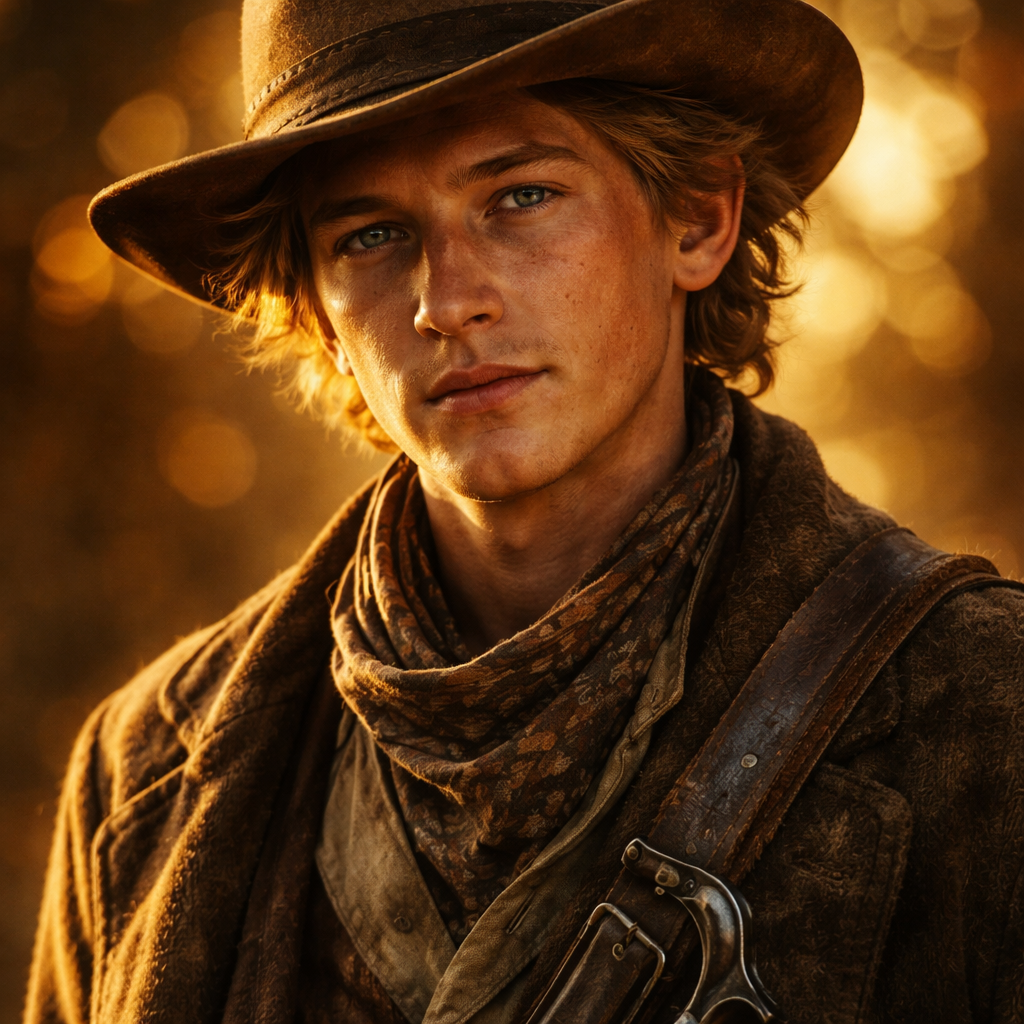
Pat Garrett shot and killed Billy the Kid at approximately midnight on July 14, 1881, inside a darkened bedroom at Pete Maxwell's ranch house near Fort Sumner, New Mexico. Garrett had entered the room to question Maxwell about Billy's whereabouts. Billy walked in moments later, saw a figure in the darkness, asked "Quien es?" and Garrett fired twice. The first shot struck Billy in the chest. He was 21 years old. Born Henry McCarty, probably in New York City in either 1859 or 1860, Billy moved west with his mother as a child and was orphaned by her death from tuberculosis in Silver City, New Mexico when he was about fifteen. He drifted into petty crime, escaped from jail, and became involved in the Lincoln County War, a violent commercial dispute between rival factions of merchants, ranchers, and politicians in southeastern New Mexico. During the Lincoln County War, Billy fought on the side of John Tunstall and Alexander McSween against the business interests of Lawrence Murphy and James Dolan. He participated in the ambush killing of Sheriff William Brady and several other violent incidents. When the territorial governor, Lew Wallace, offered amnesty to participants in the conflict, Billy initially cooperated but broke the agreement and returned to cattle rustling. He was captured by Garrett in December 1880, tried for the murder of Sheriff Brady, convicted, and sentenced to hang. On April 28, 1881, he killed his two guards at the Lincoln County courthouse and escaped, riding out of town while townspeople watched from their windows. Garrett tracked him to Fort Sumner, where Billy had been hiding among friends and a romantic interest. The killing in Maxwell's bedroom ended a pursuit that had consumed Garrett's career and made both men famous. Billy the Kid became one of the most mythologized figures in the American West. Dime novels and newspaper stories published during and after his lifetime portrayed him as everything from a cold-blooded killer to a Robin Hood of the frontier. The number of men he killed has been endlessly debated; he is confirmed to have killed four and may have participated in the deaths of several others.
Germany's last pretense of democratic governance vanished when the Nazi regime declared itself the only legal political organization in the country, completing a six-month demolition of the Weimar Republic's constitutional order. The Law Against the Establishment of Parties, enacted on July 14, 1933, made the formation or maintenance of any political party other than the NSDAP a criminal offense punishable by up to three years in prison. Democracy in Germany was officially dead. The speed of the Nazi seizure was breathtaking. Hitler had been appointed chancellor on January 30, 1933, leading a coalition government in which Nazis held only three of eleven cabinet seats. Conservative politicians believed they could control him. Within six weeks, the Reichstag fire provided the pretext for emergency decrees suspending civil liberties. The Enabling Act of March 23 gave Hitler the power to enact laws without parliamentary approval. The Social Democrats were the only party to vote against it; the Communists had already been arrested or driven underground. Through April and May, the regime dismantled the remaining parties one by one. Trade unions were dissolved on May 2 and their assets seized. The SPD was banned on June 22 after its leadership fled to Prague. The remaining parties, including the Catholic Centre Party, the German National People's Party, and the Bavarian People's Party, dissolved themselves under pressure during late June and early July, their leaders calculating that voluntary dissolution was safer than forcible suppression. By the time the July 14 law was enacted, no opposition parties existed to ban. The same day's legislation also included a eugenics law authorizing forced sterilization of people with hereditary disabilities and a law stripping citizenship from political emigrants. Taken together, the July 14 laws established the legal architecture of the totalitarian state. Germany would not hold a free election again until 1949. The ease with which a functioning democracy was dismantled from within remains the most studied and cautionary political collapse of the twentieth century.
Twenty-two grainy photographs transmitted across 134 million miles of space destroyed a century of romantic speculation about Mars and launched the era of planetary exploration. Mariner 4 completed the first successful flyby of Mars on July 14, 1965, returning images that showed a dead, cratered world resembling the Moon rather than the canal-laced civilization that astronomers and science fiction writers had imagined since the 1870s. NASA's Jet Propulsion Laboratory had launched Mariner 4 on November 28, 1964, after the failure of Mariner 3 three weeks earlier. The spacecraft carried a television camera system capable of capturing 200-line images, crude by later standards but revolutionary for interplanetary science. The seven-and-a-half-month cruise to Mars required constant course corrections and precise timing. The spacecraft passed within 6,118 miles of the Martian surface, scanning a narrow strip of terrain as it flew past. Each photograph took roughly eight hours to transmit back to Earth at a data rate of 8.33 bits per second. JPL engineers were so impatient for the first image that they hand-colored a printout of the raw data with pastel crayons before the computer processing was complete, producing a crude but recognizable picture of the Martian limb. The full set of 22 images, covering about one percent of the planet's surface, revealed a landscape dominated by impact craters, with no evidence of water, vegetation, or the famous canals mapped by Percival Lowell. Mariner 4 also detected that Mars had an extremely thin atmosphere, less than one percent the density of Earth's, and no detectable magnetic field. These findings eliminated most scenarios for Martian life as then imagined and forced a fundamental rethinking of planetary science. The mission cost approximately $83 million and operated flawlessly for three years, continuing to return data on the interplanetary environment long after its Mars encounter. Every subsequent Mars mission, from Viking to Curiosity, builds on the foundation Mariner 4 established.
Pat Garrett crept through Pete Maxwell's darkened ranch house at midnight, and the single pistol shot he fired into the shadows ended the life of the American West's most infamous outlaw at twenty-one years old. William H. Bonney, known as Billy the Kid, was killed at Fort Sumner, New Mexico, on July 14, 1881, less than three months after escaping from the Lincoln County courthouse where he was awaiting execution. Billy the Kid's legend far outstripped his actual criminal career, which lasted roughly four years. Born Henry McCarty in New York City around 1859, he drifted west after his mother's death and fell into cattle rustling and petty theft in Arizona Territory. His involvement in New Mexico's Lincoln County War of 1878, a vicious commercial feud between rival factions of ranchers and merchants, transformed him from a minor outlaw into a folk figure. He killed at least four men personally, though dime novels would later inflate the count to twenty-one, one for each year of his life. Garrett, a former friend and gambling companion of Billy's who had been elected Lincoln County sheriff partly on the promise of capturing him, tracked the outlaw to Fort Sumner after receiving a tip. Billy had been hiding among sympathetic Hispanic ranchers in the Pecos Valley, where he was genuinely popular. On the night of July 14, Billy walked into Maxwell's bedroom, saw an unfamiliar figure sitting beside the bed, and whispered "Quién es?" Garrett fired twice. The first bullet struck Billy above the heart, killing him almost instantly. The killing made Garrett famous but not rich. He wrote a ghosted autobiography, "The Authentic Life of Billy the Kid," that sold poorly. Billy's grave at Fort Sumner became a tourist attraction almost immediately, and his legend grew with every retelling. More than 140 years later, Billy the Kid remains one of the most mythologized figures in American frontier history, the subject of over fifty films and an enduring symbol of the lawless West that never quite existed as people imagine it.
The emperor who'd ruled for forty-four years abandoned 1.2 million people in Chang'an with just hours' warning. Xuanzong fled west on July 14th, 756, as An Lushan's rebel army closed in—taking his favorite concubine Yang Guifei, his guards, and his legitimacy. His own troops mutinied twenty miles out, strangling Yang and leaving her body roadside. They blamed her family for the war. The Tang Dynasty survived another 150 years, but China's golden age ended the moment that convoy left the capital gates.
A one-eyed Hussite commander and a force of heavily outnumbered religious reformers held a hilltop outside Prague against a Crusader army sent by the pope and the Holy Roman Emperor, preserving the radical Czech reformation and humiliating the Catholic military establishment. The Battle of Vítkov Hill on July 14, 1420, was Jan Žižka's first major victory and the opening engagement of the Hussite Wars that would convulse Central Europe for the next sixteen years. The Hussite movement emerged after the execution of Jan Hus at the Council of Constance in 1415. Hus had challenged papal authority, preached in Czech rather than Latin, and demanded that laypeople receive communion in both bread and wine. His burning outraged Bohemia, and within five years, his followers had seized churches, expelled Catholic clergy, and established a revolutionary government in Prague. Pope Martin V declared a crusade, and Emperor Sigismund assembled an international army of German, Hungarian, and Austrian troops to crush the heretics. Sigismund's forces besieged Prague in June 1420, and the city's position appeared desperate. Žižka, a minor Czech nobleman who had already lost one eye in previous fighting, recognized that Vítkov Hill on Prague's eastern flank was the key to the defense. He fortified the hilltop with a small garrison, wooden stockades, and wagons chained together in the formation that would become his signature tactical innovation, the Wagenburg. When Sigismund's cavalry attacked on July 14, they had to charge uphill against prepared defenses. The assault was repulsed with heavy losses. Hussite defenders, including armed women and common laborers, fought with a ferocity that stunned the professional soldiers. Sigismund's army withdrew from Prague shortly afterward, and the first of five papal crusades against the Hussites ended in failure. Žižka would never lose a battle, winning repeatedly against larger and better-equipped forces using his innovative combination of war wagons, handguns, and religious fanaticism. The Hussite Wars ended only through negotiation in 1436, and Bohemia retained its reformed religious practices for two centuries.
The Burgundians handed Joan of Arc to Bishop Pierre Cauchon of Beauvais, transferring her from military captors to an ecclesiastical court controlled by England's allies. Cauchon had been personally selected to preside over her trial because of his loyalty to the English crown, ensuring the proceedings would deliver a guilty verdict. This transaction sealed Joan's fate, leading directly to the rigged heresy trial and her execution by burning at the stake on May 30, 1431, in Rouen's marketplace.
Scotland gambled a quarter of its entire liquid capital—roughly £400,000—on five ships heading to Panama's fever coast. The Caledonia, St. Andrew, Unicorn, Dolphin, and Endeavour carried 1,200 colonists from Leith in July 1698, convinced they'd build a trading empire at Darién. Within eight months, 400 were dead from disease and starvation. The survivors abandoned New Edinburgh before year's end. The financial catastrophe bankrupted Scottish nobles and merchants alike, making union with England seven years later not just politically convenient but economically necessary. Sometimes an empire dies before it's born.
Sixty-four men marched 650 miles up the California coast searching for a harbor their orders described as "sheltered and magnificent." They walked right past it. Twice. Gaspar de Portolà's expedition spent months hunting for Monterey Bay in 1769, but Sebastián Vizcaíno's 1602 description had been so exaggerated that when Portolà found the actual crescent-shaped inlet, he didn't recognize it. Too small, too exposed. They kept walking north and accidentally discovered San Francisco Bay instead. The Spanish empire's first permanent settlements in Alta California began because explorers couldn't match reality to a 167-year-old travel brochure.
Junípero Serra sang the Salve Regina while hanging bells from an oak tree, hoping the sound would attract Salinan people to his third California mission. July 14, 1771. The nearest Spanish settlement sat 25 miles away—he wanted isolation. Within months, 158 Salinans arrived for baptism, trading their seasonal migration patterns for fixed agricultural labor. The mission eventually claimed 165,000 acres of their ancestral land. By 1834, when Mexico secularized the missions, disease had reduced the Salinan population by 95 percent. Serra called it conversion. The Salinans had no written language to record what they called it.
Parisian revolutionaries stormed the Bastille on July 14, 1789, overwhelming the fortress's small garrison and freeing its handful of prisoners in a violent spectacle that electrified the nation. The assault shattered the physical symbol of royal authority and transformed local urban unrest into a full-scale national uprising against the monarchy. France still celebrates the anniversary every year as its most important national holiday, commemorating the moment citizens seized sovereignty from the crown.
Angry mobs stormed Joseph Priestley's home and laboratory in Birmingham, smashing his scientific instruments and burning his library of irreplaceable manuscripts. The rioters targeted Priestley specifically for his vocal support of the French Revolution and his dissenting religious views. The violence shattered Birmingham's reputation as a tolerant hub of Enlightenment thought and drove Priestley to emigrate to America, where he spent the remainder of his life continuing his chemical research in Pennsylvania.
The mob burned fourteen buildings in three days, targeting homes and meeting houses of anyone who'd toasted the French Revolution's second anniversary. Joseph Priestley—discoverer of oxygen, inventor, theologian—watched his laboratory, library, and life's work turn to ash on July 14th. He'd written pamphlets defending the revolutionaries. Birmingham's establishment had noticed. The rioters carried lists of addresses. Priestley fled to London, then America, never returning to England. His friends stayed quiet. The scientist who'd isolated eight gases couldn't breathe free in his own country for supporting liberty across the Channel.
Fun Facts
Zodiac Sign
Cancer
Jun 21 -- Jul 22
Water sign. Loyal, emotional, and nurturing.
Birthstone
Ruby
Red
Symbolizes passion, vitality, and prosperity.
Next Birthday
--
days until July 14
Quote of the Day
“The rare few, who, early in life have rid themselves of the friendship of the many.”
Share Your Birthday
Create a beautiful birthday card with events and famous birthdays for July 14.
Create Birthday CardExplore Nearby Dates
Popular Dates
Explore more about July 14 in history. See the full date page for all events, browse July, or look up another birthday. Play history games or talk to historical figures.