Today In History
July 12 in History
Your birthday shares the stage with stories that shaped the world. Born on this day: Julius Caesar, Malala Yousafzai, and Pablo Neruda.

Prokhorovka: Largest Tank Battle in History
Hundreds of tanks collided at point-blank range in a sunflower field south of Kursk, producing the largest armored engagement of the Second World War. The Battle of Prokhorovka on July 12, 1943, threw roughly 800 Soviet tanks of the 5th Guards Tank Army against approximately 300 German panzers of the II SS Panzer Corps in a chaotic, smoke-choked melee that lasted most of the day. The collision occurred during the wider Battle of Kursk, Hitler's last major offensive on the Eastern Front. Germany's Operation Citadel aimed to pinch off the massive Kursk salient, a westward bulge in the Soviet lines stretching 150 miles wide. The Wehrmacht concentrated its best armored divisions, including the new Tiger and Panther tanks, for a converging attack from north and south. Soviet intelligence had detected the preparations months in advance, and Marshal Georgy Zhukov built the deepest defensive network in military history: eight concentric lines of trenches, minefields, and anti-tank positions stretching back 190 miles. At Prokhorovka, Soviet commander Pavel Rotmistrov ordered his T-34s to charge directly into the German formation at full speed, closing the distance to negate the superior range of German tank guns. The battlefield dissolved into individual duels between armored vehicles firing at ranges under 200 yards. Dust and smoke reduced visibility to nearly zero. Soviet losses were staggering, with some estimates reaching 300 tanks destroyed in a single day, though German losses of roughly 70 to 80 panzers proved proportionally devastating given their smaller numbers and inability to replace them. Prokhorovka did not produce a clear tactical winner, but its strategic consequences were decisive. Hitler called off Citadel on July 13 after the Allied invasion of Sicily demanded forces be transferred west. The Wehrmacht never mounted another major offensive in the east. From Kursk forward, the Red Army held the initiative until it reached Berlin.
Famous Birthdays
100 BC–44 BC
b. 1997
1904–1973
b. 1951
Christine McVie
1943–2022
George Eastman
d. 1932
John Petrucci
b. 1967
Josiah Wedgwood
d. 1795
Julio César Chávez
b. 1962
Joe DeRita
1909–1993
Louis II
1330–1384
Michael I of Russia
b. 1596
Historical Events
England's first true king forced every rival power in Britain to bend the knee at a single gathering, forging a political unity the island had not seen since the Romans departed five centuries earlier. Athelstan, grandson of Alfred the Great, compelled Constantine II of Scotland, Hywel Dda of Wales, Ealdred of Bamburgh, and Owen of Strathclyde to submit at Eamont Bridge in Cumbria in July 927. The meeting established English dominance over the entire island and created the template for British royal authority. Athelstan had inherited the throne of Wessex and Mercia from his father Edward the Elder in 924, already controlling the largest Anglo-Saxon kingdom. But his ambitions extended far beyond his grandfather's legacy. Alfred had dreamed of unifying the English-speaking kingdoms; Athelstan wanted hegemony over all of Britain. His opportunity came when Sihtric, the Viking king of York, died in 927. Athelstan marched north, seized York without significant resistance, and expelled Sihtric's heir Guthfrith. The submission at Eamont Bridge was as much diplomatic theater as genuine surrender. The gathered rulers acknowledged Athelstan as overlord, likely in exchange for guarantees of their own territorial integrity. Constantine pledged not to ally with the Vikings, a promise he would later break spectacularly. Hywel Dda of Wales became a genuine ally, regularly attending Athelstan's court and modeling his own law codes on English precedents. Athelstan backed his diplomatic achievements with military force when necessary. After Constantine broke his oath and allied with the Vikings and Strathclyde Welsh, Athelstan crushed the coalition at the Battle of Brunanburh in 937, a victory celebrated in an Anglo-Saxon poem as the greatest battle since the Germanic migrations. When Athelstan died in 939, he left behind the concept of a unified English kingdom that, despite setbacks, would never fully dissolve.
Two kings fighting for one throne met across a shallow Irish river, and the outcome shaped sectarian politics on the island for the next three centuries. The Battle of the Boyne on July 12, 1690, pitted the Protestant King William III of Orange against the deposed Catholic King James II near Drogheda, Ireland, in the decisive engagement of the Williamite War. William's victory secured the Protestant succession in England and established Protestant political supremacy in Ireland that would endure until the twentieth century. James II had been overthrown in the Glorious Revolution of 1688, when Parliament invited William of Orange and his wife Mary to take the English throne. James fled to France, where Louis XIV provided troops and ships for an attempt to reclaim his crown through Ireland, where the Catholic majority remained loyal. James landed in March 1689 and quickly controlled most of the island, but his forces failed to take the Protestant stronghold of Derry after a brutal 105-day siege. William arrived with a multinational army of roughly 36,000 men, including English, Dutch, Danish, and French Huguenot soldiers. James commanded about 25,000, mostly Irish Catholics supplemented by French regulars. The armies met along the River Boyne, where William identified a crossing point near the village of Oldbridge. On the morning of July 12, Williamite infantry forded the river under heavy fire while a flanking force crossed upstream to threaten James's left. The fighting lasted most of the day, but James's nerve broke before his army did. He fled the battlefield and sailed for France, earning the Irish nickname "Séamus an Chaca" (James the Shit). William's victory did not end the war immediately, as Jacobite resistance continued until the Treaty of Limerick in 1691, but the Boyne became the symbolic foundation of Protestant Unionist identity in Ireland. The anniversary is still marched every July 12 in Northern Ireland.
Hundreds of tanks collided at point-blank range in a sunflower field south of Kursk, producing the largest armored engagement of the Second World War. The Battle of Prokhorovka on July 12, 1943, threw roughly 800 Soviet tanks of the 5th Guards Tank Army against approximately 300 German panzers of the II SS Panzer Corps in a chaotic, smoke-choked melee that lasted most of the day. The collision occurred during the wider Battle of Kursk, Hitler's last major offensive on the Eastern Front. Germany's Operation Citadel aimed to pinch off the massive Kursk salient, a westward bulge in the Soviet lines stretching 150 miles wide. The Wehrmacht concentrated its best armored divisions, including the new Tiger and Panther tanks, for a converging attack from north and south. Soviet intelligence had detected the preparations months in advance, and Marshal Georgy Zhukov built the deepest defensive network in military history: eight concentric lines of trenches, minefields, and anti-tank positions stretching back 190 miles. At Prokhorovka, Soviet commander Pavel Rotmistrov ordered his T-34s to charge directly into the German formation at full speed, closing the distance to negate the superior range of German tank guns. The battlefield dissolved into individual duels between armored vehicles firing at ranges under 200 yards. Dust and smoke reduced visibility to nearly zero. Soviet losses were staggering, with some estimates reaching 300 tanks destroyed in a single day, though German losses of roughly 70 to 80 panzers proved proportionally devastating given their smaller numbers and inability to replace them. Prokhorovka did not produce a clear tactical winner, but its strategic consequences were decisive. Hitler called off Citadel on July 13 after the Allied invasion of Sicily demanded forces be transferred west. The Wehrmacht never mounted another major offensive in the east. From Kursk forward, the Red Army held the initiative until it reached Berlin.
Congress created the nation's highest award for military valor during the darkest months of the Civil War, establishing a decoration that would become the most coveted and carefully guarded honor in American military history. President Abraham Lincoln signed legislation on July 12, 1862, authorizing the Army Medal of Honor, following the Navy version approved in December 1861. The creation reflected both a genuine desire to recognize extraordinary courage and a practical need to boost morale in an army suffering devastating losses. The United States had resisted creating military decorations since the Revolution, viewing them as relics of European aristocracy. George Washington established the Badge of Military Merit in 1782, but the tradition lapsed. For eighty years, American soldiers received no official recognition for bravery beyond mention in dispatches. The scale of Civil War combat, with its massive volunteer armies and staggering casualties, demanded something more tangible. Early standards for the medal were loose by modern criteria. During the Civil War, 1,522 medals were awarded, some for actions that would not meet today's requirements of conspicuous gallantry above and beyond the call of duty. The entire 27th Maine Infantry received medals simply for extending their enlistment by four days. In 1917, a review board revoked 911 medals, including those of the Maine regiment and the five civilian scouts, among them Buffalo Bill Cody. Modern standards, codified after World War I, require incontrovertible proof of valor so extraordinary that it clearly distinguishes the recipient from comrades. The review process involves multiple levels of command verification, and fewer than twenty have been awarded in conflicts since Vietnam. Recipients receive a monthly pension, their children gain automatic admission to military academies, and they are saluted by all ranks, including the president. Roughly 3,500 have been awarded since 1862, and each carries the weight of actions that most soldiers consider beyond human expectation.
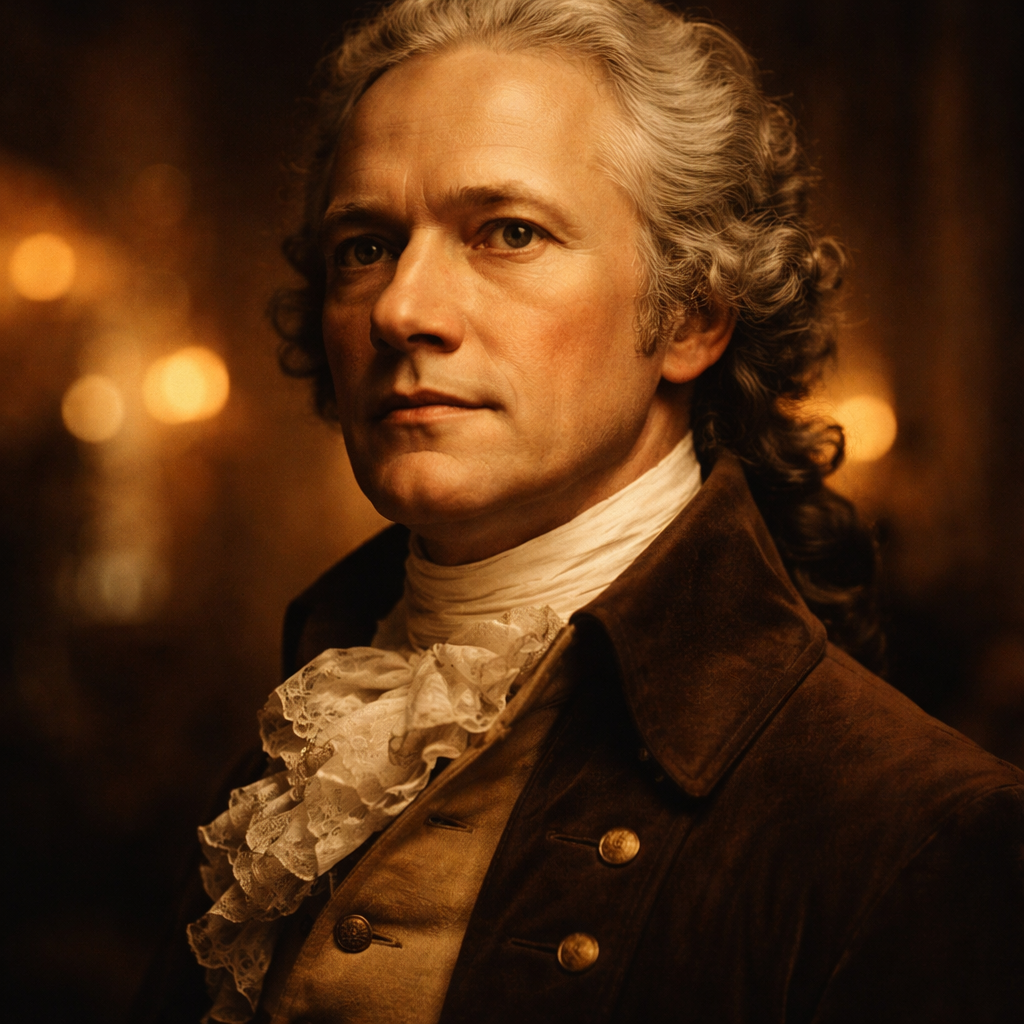
Alexander Hamilton spent thirty-one hours dying from a wound that modern trauma surgery might have survived, and his death at forty-seven robbed the young republic of its most sophisticated economic thinker. Hamilton was carried by boat from the Weehawken dueling ground across the Hudson to the Greenwich Village home of William Bayard on July 11, 1804, where a team of physicians quickly determined the injury was fatal. The ball fired by Vice President Aaron Burr had entered Hamilton's right side, fractured a rib, perforated his liver and diaphragm, and lodged against his lumbar spine, paralyzing him from the waist down. Dr. David Hosack, Hamilton's personal physician who had waited at the bottom of the cliff during the duel, administered laudanum for pain but could offer nothing else. Hamilton drifted in and out of consciousness, at one point asking to see his seven children, at another receiving communion from Episcopal Bishop Benjamin Moore, who initially hesitated because the church opposed dueling. Hamilton reportedly told the bishop he bore no ill will toward Burr and met death with Christian resignation. Eliza Hamilton stayed at her husband's bedside through the night. Friends and political allies streamed through the Bayard house, and word of the duel spread across Manhattan within hours, provoking public fury against Burr. Hamilton died at approximately 2:00 p.m. on July 12. He was buried two days later at Trinity Church in lower Manhattan, with a funeral procession witnessed by thousands that effectively shut down the city. The political fallout was immediate and lasting. Burr was indicted for murder in both New York and New Jersey, though never tried. Hamilton's death energized the movement against dueling, and several states strengthened their prohibitions. More profoundly, the loss removed the most articulate voice for strong central banking and industrial policy from American governance, leaving Jeffersonian agrarianism dominant for a generation.
Theodore Roosevelt Jr. carried a cane and a pistol onto Utah Beach on June 6, 1944, the oldest man in the first wave at age fifty-six. His arthritis was so severe he could barely walk, and a heart condition should have kept him off the invasion entirely. He had requested permission to land with his troops four times before General Raymond Barton finally relented, reportedly saying that Roosevelt's presence would steady the men more than any tactical advantage his absence might provide. When the landing craft deposited his men on the wrong section of beach, a mile south of the intended target, Roosevelt surveyed the terrain, made a decision on the spot, and told his officers: "We'll start the war from right here." He spent the rest of D-Day directing traffic under fire, walking up and down the beach organizing units that had landed in confusion, his cane in one hand and his pistol in the other. His calm under fire was credited with preventing a catastrophic bottleneck that could have turned Utah Beach into another Omaha. The contrast between the two beaches was stark — Utah suffered fewer than 200 casualties compared to Omaha's estimated 2,000, and historians have attributed much of that difference to the rapid reorganization Roosevelt improvised on the sand. He had served with distinction in World War I as well, winning the Distinguished Service Cross in France and leading troops through some of the war's bloodiest engagements. Between the wars he served as Governor of Puerto Rico and later as Governor-General of the Philippines, positions that reflected both his family's political connections and his own administrative competence. He earned a posthumous Medal of Honor for his actions at Utah Beach, making the Roosevelts one of only two father-son pairs to both receive the Medal of Honor — his father, President Theodore Roosevelt, received his posthumously in 2001 for the charge at San Juan Hill. He died of a heart attack in Normandy on July 12, 1944, just five weeks after the landing. He is buried at the American Cemetery in Colleville-sur-Mer, next to his brother Quentin, who was killed in aerial combat in World War I.
Titus's legions smashed through Jerusalem's battered walls three days after breaching the outer perimeter, unleashing a fire that consumed the Second Temple and ended centuries of Jewish worship at the site. Roman soldiers looted the Temple's treasures, including the golden menorah later depicted on the Arch of Titus in Rome. The destruction scattered the Jewish population across the Roman Empire and fundamentally altered religious practice, forcing Judaism to adapt from a temple-centered faith to one based on synagogue study and prayer.
King Æthelstan of England secured the submission of Scotland's Constantine II, Wales' Hywel Dda, and northern leaders Ealdred and Owain at a meeting that ended decades of border warfare. This agreement established seven years of unprecedented peace across the north, allowing trade to flourish while solidifying English authority over the region without further bloodshed.
Pope Benedict XII issued the papal bull Fulgens sicut stella matutina on July 12, 1335, to enforce stricter discipline within the Cistercian Order. This decree forced monks to abandon their traditional white habits for black ones and restricted their ability to own property, effectively ending a period of growing laxity that had diluted the order's original ascetic ideals.
Lê Cung Hoàng handed over Vietnam's throne in 1527 after reigning just three years. He was seventeen. Mạc Đăng Dung, his military commander, didn't storm the palace or stage a coup—the teenage emperor simply signed everything away. But the Lê family refused to accept it. They fled south and kept fighting for the next sixty years, turning Vietnam into two kingdoms with two courts, two tax systems, two armies. The civil war killed hundreds of thousands. Sometimes the person who surrenders isn't the one who ends the fight.
Catherine Parr had already buried two husbands when Henry VIII proposed. She was in love with Thomas Seymour. Didn't matter. On July 12, 1543, she became wife number six at Hampton Court—a quiet ceremony, no grand celebration for the 52-year-old king with an ulcerated leg. She'd outlive him by just one year. But first, she'd survive what two queens before her couldn't: being married to Henry. The woman who wanted someone else became the only wife to escape both the axe and divorce papers.
Williamite forces annihilated the Jacobite army at Aughrim in the bloodiest single engagement of the war in Ireland, killing over 7,000 soldiers in a single afternoon of close-quarters fighting across boggy terrain. The destruction of the Jacobite field army removed the last serious military obstacle to William III's control of Ireland. The Protestant ascendancy that followed would dominate Irish political, economic, and religious life for more than two centuries, fueling resentments that persisted into the modern era.
A 29-year-old lawyer with a severe stutter climbed onto a table at the Palais-Royal garden, pistol in one hand, leaf in the other. Camille Desmoulins had never addressed a crowd before. But Jacques Necker's dismissal the day before meant King Louis XVI was done negotiating. Desmoulins screamed for citizens to arm themselves, ripped leaves from a chestnut tree for cockades, and within hours Paris erupted. Two days later: the Bastille fell. The journalist who could barely speak in conversation had just started a revolution with his voice.
Radical journalist Camille Desmoulins rallied Parisians in the gardens of the Palais-Royal after King Louis XVI dismissed the popular finance minister Jacques Necker. Brandishing a pistol and wearing a green cockade, Desmoulins called citizens to arms in a speech that electrified the crowd and spread through the capital within hours. Two days later, the fury he unleashed drove thousands to storm the Bastille fortress, shattering royal authority and launching the French Revolution.
British warships attacked a combined Franco-Spanish squadron in the harbor of Algeciras, engaging in a fierce action that resulted in the capture of one enemy vessel and the destruction of another while British losses remained minimal. The engagement reversed a rare French naval victory that had occurred in the same waters just days earlier. The Second Battle of Algeciras reinforced Britain's strategic control of the Strait of Gibraltar and demonstrated the Royal Navy's ability to recover rapidly from setbacks during the Napoleonic Wars.
Fun Facts
Zodiac Sign
Cancer
Jun 21 -- Jul 22
Water sign. Loyal, emotional, and nurturing.
Birthstone
Ruby
Red
Symbolizes passion, vitality, and prosperity.
Next Birthday
--
days until July 12
Quote of the Day
“As a rule, men worry more about what they can't see than about what they can.”
Share Your Birthday
Create a beautiful birthday card with events and famous birthdays for July 12.
Create Birthday CardExplore Nearby Dates
Popular Dates
Explore more about July 12 in history. See the full date page for all events, browse July, or look up another birthday. Play history games or talk to historical figures.