

Bastille Falls: French Revolution Begins in Blood
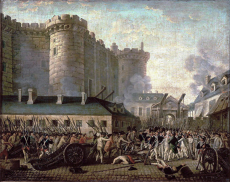
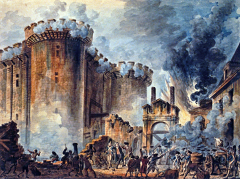
Seven prisoners sat inside the Bastille on the morning of July 14, 1789: four forgers, two men judged insane, and a count imprisoned at his family's request. The Parisian crowd that stormed the medieval fortress was not there to free them. They wanted the gunpowder stored inside, and their willingness to die taking it from the king's garrison became the opening act of the French Revolution and the symbolic destruction of royal tyranny. Paris had been on the edge of insurrection for weeks. King Louis XVI dismissed the popular finance minister Jacques Necker on July 11, and rumors spread that royal troops massing around the city would dissolve the newly formed National Assembly. Food prices were catastrophic after two years of crop failures. On July 12, crowds clashed with cavalry in the Tuileries gardens. The next day, mobs looted armories across Paris, seizing 28,000 muskets from the Invalides but finding almost no ammunition. The Bastille held 250 barrels of gunpowder guarded by 82 invalides (veteran soldiers) and 32 Swiss mercenaries under Governor Bernard-René de Launay. A delegation from the new Paris commune entered the fortress to negotiate a peaceful surrender of the powder. While talks dragged on, the crowd in the outer courtyard grew to nearly a thousand. When someone lowered the drawbridge chains, the crowd surged in, and de Launay's garrison opened fire. Nearly a hundred attackers died before a detachment of mutinous Gardes Françaises arrived with cannons. De Launay surrendered at roughly 5:00 p.m. after threatening to ignite the powder magazine and destroy the entire neighborhood. The crowd dragged him through the streets, stabbed him repeatedly, and mounted his head on a pike. The Bastille was systematically demolished over the following months, its stones sold as souvenirs. Louis XVI, told of the fortress's fall, asked "Is it a revolt?" The Duc de La Rochefoucauld-Liancourt replied: "No, sire, it is a revolution." July 14 became France's national day, celebrated with the same fervor that Americans reserve for the Fourth of July.
July 14, 1789
237 years ago
Key Figures & Places
What Else Happened on July 14
The emperor who'd ruled for forty-four years abandoned 1.2 million people in Chang'an with just hours' warning. Xuanzong fled west on July 14th, 756, as An Lush…
King Otto II fled into the sea after the forces of the Emirate of Sicily crushed his imperial army at the Battle of Cape Colonna. This disaster shattered the Ho…
Louis VIII ascended the French throne following the death of Philip II, inheriting a kingdom vastly expanded by his father’s strategic territorial conquests. By…

A one-eyed Hussite commander and a force of heavily outnumbered religious reformers held a hilltop outside Prague against a Crusader army sent by the pope and t…
The Burgundians handed Joan of Arc to Bishop Pierre Cauchon of Beauvais, transferring her from military captors to an ecclesiastical court controlled by England…
English and Dutch forces stormed Cádiz, systematically looting the city and burning the Spanish fleet anchored in the harbor. This humiliation crippled Spain’s …
Talk to History
Have a conversation with historical figures who witnessed this era. Ask questions, explore perspectives, and bring history to life.