
Today In History logo TIH

Today In History

July 17 in History

Your birthday shares the stage with stories that shaped the world. Born on this day: Angela Merkel, Ali Khamenei, and Elbridge Gerry.

Romanovs Executed: Bolsheviks End Russian Dynasty
1918Death

Romanovs Executed: Bolsheviks End Russian Dynasty

Bolshevik executioners woke the Romanov family at 1:30 a.m. on July 17, 1918, led them to a basement room in the Ipatiev House in Yekaterinburg, and opened fire with revolvers at point-blank range. Tsar Nicholas II, Tsarina Alexandra, their five children, the family physician, and three servants were killed in a chaotic slaughter that took twenty minutes because the bullets ricocheted off jewels sewn into the women's corsets. The execution ended three centuries of Romanov rule and became one of the twentieth century's most extensively investigated murders. Nicholas had abdicated in March 1917 after the February Revolution, expecting to take his family into exile in Britain. His cousin King George V initially agreed to offer asylum but quietly withdrew the invitation, fearing that hosting the unpopular tsar would provoke republican sentiment at home. The Provisional Government held the family at the Alexander Palace near Petrograd, then moved them to Tobolsk in Siberia. After the Bolshevik seizure of power in October 1917, the family was transferred to the Ipatiev House in Yekaterinburg, where they were held under increasingly harsh conditions. The decision to execute came from the top. Yakov Yurovsky, the local Cheka commander, received orders from the Ural Soviet, almost certainly with Lenin's approval, as White Army forces approached Yekaterinburg. The family was told they were being moved for their safety and brought to the basement. Yurovsky read a brief statement announcing the execution, and Nicholas barely had time to say "What?" before the shooting began. The children proved hardest to kill. Anastasia and her siblings were initially protected by the diamonds hidden in their clothing, and soldiers resorted to bayonets and additional gunshots. The bodies were loaded onto a truck, doused with sulfuric acid and gasoline, and buried in a shallow pit in the Koptyaki forest. The remains were discovered in 1991, and DNA analysis confirmed the identities. Two missing children, believed to be Alexei and Maria, were found in a separate grave in 2007. The Romanovs were canonized by the Russian Orthodox Church in 2000 as "passion bearers." The Ipatiev House was demolished on Boris Yeltsin's orders in 1977, but a cathedral now stands on the site, drawing thousands of pilgrims annually.

Famous Birthdays

Ali Khamenei
Ali Khamenei

1939–2026

Elbridge Gerry
Elbridge Gerry

1744–1814

António Costa

António Costa

b. 1961

Erle Stanley Gardner

Erle Stanley Gardner

1889–1970

Ismail I of Iran (d. 1524)

Ismail I of Iran (d. 1524)

b. 1487

Mark Burnett

Mark Burnett

b. 1960

Tom Fletcher

Tom Fletcher

b. 1985

Xianfeng Emperor of China (d. 1861)

Xianfeng Emperor of China (d. 1861)

b. 1831

Kenan Evren

Kenan Evren

d. 2015

Mick Tucker

Mick Tucker

1947–2002

Naser al-Din Shah

Naser al-Din Shah

b. 1831

Historical Events

A teenage peasant girl from Lorraine escorted a reluctant prince through English-held territory to the cathedral where French kings had been crowned for eight centuries, and the coronation she engineered on July 17, 1429, transformed the Hundred Years' War. Charles VII was anointed at Reims Cathedral with Joan of Arc standing nearby in full armor, holding her banner. The ceremony gave Charles the legitimacy he had lacked for seven years and rallied French resistance to English occupation.

Charles's claim to the throne had been contested since the Treaty of Troyes in 1420, when his father, the mentally ill Charles VI, disinherited him in favor of England's Henry V. When both Henry V and Charles VI died in 1422, the English crowned the infant Henry VI as king of both England and France. Charles retreated south of the Loire, controlling roughly a third of his kingdom, while the Anglo-Burgundian alliance held Paris and most of northern France. French morale was shattered, and the siege of Orléans in 1428 threatened to extinguish the Valois cause entirely.

Joan arrived at Charles's court in Chinon in March 1429, claiming divine voices had commanded her to lift the siege and see the Dauphin crowned. Despite skepticism, Charles allowed her to join the relief force. Joan's presence electrified the French army. The siege of Orléans was broken in nine days, and Joan led a lightning campaign up the Loire valley, winning engagements at Jargeau, Meung, Beaugency, and Patay in rapid succession. The road to Reims lay open, and Charles followed Joan's urging to march north immediately rather than consolidate his gains.

The coronation at Reims carried enormous symbolic and legal weight. The cathedral had hosted every French coronation since 816, and the sacred oil used in the anointing ritual was believed to have been delivered by a dove from heaven for the baptism of Clovis. Once anointed, Charles was the legitimate king in the eyes of French law and the Catholic Church, regardless of English claims. Joan's mission was fulfilled, though her own fate was already darkening. Captured by Burgundian forces in May 1430, she was sold to the English and burned at the stake in Rouen on May 30, 1431. Charles made no effort to ransom her.
1429

A teenage peasant girl from Lorraine escorted a reluctant prince through English-held territory to the cathedral where French kings had been crowned for eight centuries, and the coronation she engineered on July 17, 1429, transformed the Hundred Years' War. Charles VII was anointed at Reims Cathedral with Joan of Arc standing nearby in full armor, holding her banner. The ceremony gave Charles the legitimacy he had lacked for seven years and rallied French resistance to English occupation. Charles's claim to the throne had been contested since the Treaty of Troyes in 1420, when his father, the mentally ill Charles VI, disinherited him in favor of England's Henry V. When both Henry V and Charles VI died in 1422, the English crowned the infant Henry VI as king of both England and France. Charles retreated south of the Loire, controlling roughly a third of his kingdom, while the Anglo-Burgundian alliance held Paris and most of northern France. French morale was shattered, and the siege of Orléans in 1428 threatened to extinguish the Valois cause entirely. Joan arrived at Charles's court in Chinon in March 1429, claiming divine voices had commanded her to lift the siege and see the Dauphin crowned. Despite skepticism, Charles allowed her to join the relief force. Joan's presence electrified the French army. The siege of Orléans was broken in nine days, and Joan led a lightning campaign up the Loire valley, winning engagements at Jargeau, Meung, Beaugency, and Patay in rapid succession. The road to Reims lay open, and Charles followed Joan's urging to march north immediately rather than consolidate his gains. The coronation at Reims carried enormous symbolic and legal weight. The cathedral had hosted every French coronation since 816, and the sacred oil used in the anointing ritual was believed to have been delivered by a dove from heaven for the baptism of Clovis. Once anointed, Charles was the legitimate king in the eyes of French law and the Catholic Church, regardless of English claims. Joan's mission was fulfilled, though her own fate was already darkening. Captured by Burgundian forces in May 1430, she was sold to the English and burned at the stake in Rouen on May 30, 1431. Charles made no effort to ransom her.

Three leaders who barely trusted each other sat down in a German palace to divide a continent, and the decisions they made over seventeen days shaped the Cold War before it had a name. The Potsdam Conference opened on July 17, 1945, at Cecilienhof Palace outside Berlin, with Harry Truman, Winston Churchill, and Joseph Stalin negotiating the postwar settlement for Europe while the rubble of Hitler's capital smoldered a few miles away. Truman had been president for barely three months, and he arrived carrying a secret that changed his negotiating calculus: the Trinity nuclear test had succeeded the morning the conference opened.

The agenda was enormous. Germany had surrendered unconditionally on May 8, and the victors had to determine occupation zones, reparations, denazification procedures, territorial adjustments, and the political future of liberated Eastern Europe. The "Big Three" had agreed on broad outlines at Yalta in February 1945, but implementation revealed deep conflicts. Stalin wanted maximum reparations to rebuild the devastated Soviet Union. Truman and Churchill wanted a reconstructed Germany that could stabilize Western Europe. Poland's borders needed redrawing, and millions of ethnic Germans would need to be expelled from territories transferred to Poland and Czechoslovakia.

Churchill left the conference midway through and did not return. The British general election of July 26 produced a Labour landslide, and Clement Attlee replaced Churchill at the negotiating table. Truman casually mentioned to Stalin on July 24 that the United States possessed "a new weapon of unusual destructive force." Stalin, whose spies had kept him informed about the Manhattan Project for years, replied that he hoped America would make good use of it. Both men understood the subtext.

The Potsdam Agreement divided Germany into four occupation zones, established the framework for war crimes trials at Nuremberg, and authorized the "orderly transfer" of German populations from Poland, Czechoslovakia, and Hungary. The conference also issued the Potsdam Declaration demanding Japan's unconditional surrender, warning of "prompt and utter destruction" without specifying the atomic bomb. Japan rejected the ultimatum. Hiroshima was bombed eleven days later. The optimistic language of Allied cooperation at Potsdam masked the emerging reality: the United States and Soviet Union were already competing for influence across the globe, and the wartime alliance would not survive the peace.
1945

Three leaders who barely trusted each other sat down in a German palace to divide a continent, and the decisions they made over seventeen days shaped the Cold War before it had a name. The Potsdam Conference opened on July 17, 1945, at Cecilienhof Palace outside Berlin, with Harry Truman, Winston Churchill, and Joseph Stalin negotiating the postwar settlement for Europe while the rubble of Hitler's capital smoldered a few miles away. Truman had been president for barely three months, and he arrived carrying a secret that changed his negotiating calculus: the Trinity nuclear test had succeeded the morning the conference opened. The agenda was enormous. Germany had surrendered unconditionally on May 8, and the victors had to determine occupation zones, reparations, denazification procedures, territorial adjustments, and the political future of liberated Eastern Europe. The "Big Three" had agreed on broad outlines at Yalta in February 1945, but implementation revealed deep conflicts. Stalin wanted maximum reparations to rebuild the devastated Soviet Union. Truman and Churchill wanted a reconstructed Germany that could stabilize Western Europe. Poland's borders needed redrawing, and millions of ethnic Germans would need to be expelled from territories transferred to Poland and Czechoslovakia. Churchill left the conference midway through and did not return. The British general election of July 26 produced a Labour landslide, and Clement Attlee replaced Churchill at the negotiating table. Truman casually mentioned to Stalin on July 24 that the United States possessed "a new weapon of unusual destructive force." Stalin, whose spies had kept him informed about the Manhattan Project for years, replied that he hoped America would make good use of it. Both men understood the subtext. The Potsdam Agreement divided Germany into four occupation zones, established the framework for war crimes trials at Nuremberg, and authorized the "orderly transfer" of German populations from Poland, Czechoslovakia, and Hungary. The conference also issued the Potsdam Declaration demanding Japan's unconditional surrender, warning of "prompt and utter destruction" without specifying the atomic bomb. Japan rejected the ultimatum. Hiroshima was bombed eleven days later. The optimistic language of Allied cooperation at Potsdam masked the emerging reality: the United States and Soviet Union were already competing for influence across the globe, and the wartime alliance would not survive the peace.

Tom Stafford reached through an open hatch 140 miles above the Atlantic Ocean and shook hands with Alexei Leonov on July 17, 1975, creating the first physical link between American and Soviet spacecraft in orbit. The Apollo-Soyuz Test Project docking was a feat of engineering diplomacy, requiring two nations that pointed nuclear weapons at each other to share classified technical specifications, train in each other's languages, and entrust their crews to foreign-built hardware.

The technical challenge was substantial. American and Soviet spacecraft had been designed independently with no thought of compatibility. Apollo used a pure oxygen atmosphere at 5 psi; Soyuz used a nitrogen-oxygen mix at standard atmospheric pressure. Opening a hatch between the two without a transition would have risked oxygen toxicity for the cosmonauts or decompression for the astronauts. Engineers designed a docking module that served as both airlock and connection point, with hatches on both ends and its own independent atmosphere control. The module was launched attached to the Apollo spacecraft.

Soyuz 19 lifted off from Baikonur at 12:20 UTC on July 15, followed by Apollo from Kennedy Space Center at 19:50 UTC. The two spacecraft rendezvoused on July 17, with Stafford manually guiding Apollo to dock with Soyuz using a new androgynous docking system that allowed either ship to be the active partner. The symbolic equality mattered to the Soviets, who refused any arrangement suggesting their spacecraft was subordinate.

Leonov, who had performed the first spacewalk in 1965 and nearly died when his spacesuit ballooned in the vacuum, greeted Stafford with a bear hug. The crews exchanged flags, shared meals of borscht and turkey, and conducted five joint scientific experiments over two days. Deke Slayton, flying for the first and only time after being grounded for thirteen years, floated between the two vessels with evident joy. The mission proved that international cooperation in space was technically feasible and politically survivable, establishing a precedent that led to the Shuttle-Mir program and ultimately the International Space Station, the most complex and longest-running international engineering project in human history.
1975

Tom Stafford reached through an open hatch 140 miles above the Atlantic Ocean and shook hands with Alexei Leonov on July 17, 1975, creating the first physical link between American and Soviet spacecraft in orbit. The Apollo-Soyuz Test Project docking was a feat of engineering diplomacy, requiring two nations that pointed nuclear weapons at each other to share classified technical specifications, train in each other's languages, and entrust their crews to foreign-built hardware. The technical challenge was substantial. American and Soviet spacecraft had been designed independently with no thought of compatibility. Apollo used a pure oxygen atmosphere at 5 psi; Soyuz used a nitrogen-oxygen mix at standard atmospheric pressure. Opening a hatch between the two without a transition would have risked oxygen toxicity for the cosmonauts or decompression for the astronauts. Engineers designed a docking module that served as both airlock and connection point, with hatches on both ends and its own independent atmosphere control. The module was launched attached to the Apollo spacecraft. Soyuz 19 lifted off from Baikonur at 12:20 UTC on July 15, followed by Apollo from Kennedy Space Center at 19:50 UTC. The two spacecraft rendezvoused on July 17, with Stafford manually guiding Apollo to dock with Soyuz using a new androgynous docking system that allowed either ship to be the active partner. The symbolic equality mattered to the Soviets, who refused any arrangement suggesting their spacecraft was subordinate. Leonov, who had performed the first spacewalk in 1965 and nearly died when his spacesuit ballooned in the vacuum, greeted Stafford with a bear hug. The crews exchanged flags, shared meals of borscht and turkey, and conducted five joint scientific experiments over two days. Deke Slayton, flying for the first and only time after being grounded for thirteen years, floated between the two vessels with evident joy. The mission proved that international cooperation in space was technically feasible and politically survivable, establishing a precedent that led to the Shuttle-Mir program and ultimately the International Space Station, the most complex and longest-running international engineering project in human history.

Walt Disney sank his personal fortune, mortgaged his life insurance, and borrowed against future television revenue to build a theme park that every amusement industry expert told him would fail. Disneyland opened in Anaheim, California, on July 17, 1955, and the invitation-only premiere was a legendary disaster that nearly destroyed the park's reputation before it began. Within a year, one million visitors had come, and Disney had created an entirely new form of American entertainment.

Disney conceived the park after taking his daughters to local amusement parks and finding them dirty, poorly maintained, and unwelcoming to families. He envisioned a clean, meticulously themed environment where adults and children could share experiences. The entertainment industry dismissed the idea. Disney's own brother Roy initially refused to fund it. Studio executives called it "Walt's folly." Disney financed construction by partnering with ABC television, which invested $500,000 and guaranteed $4.5 million in loans in exchange for a weekly television show that doubled as promotion for the park.

The 160-acre orange grove in Anaheim was transformed in just over a year of frantic construction. Opening day, broadcast live on ABC as "Dateline: Disneyland," was a catastrophe of logistics. Counterfeit invitations doubled the expected crowd to 28,000. The asphalt on Main Street was freshly poured and women's heels sank into it. A plumbers' strike forced Disney to choose between functioning drinking fountains and working toilets; he chose toilets, and the press complained about a lack of water on a 101-degree day. Rides broke down. Food ran out. Frank Sinatra was trapped on the Mark Twain riverboat with hundreds of other guests.

The press coverage was savage. Disney and his team spent the following weeks fixing every problem, and public reaction quickly diverged from the critics. Families loved the experience. Disneyland drew its millionth guest by September and earned $10 million in its first year. Disney's innovations, including themed "lands," controlled sightlines that eliminated views of the outside world, and continuously maintained attractions, became the global standard for theme park design. The concept spawned Walt Disney World in Florida, Tokyo Disneyland, Disneyland Paris, and parks in Shanghai and Hong Kong, collectively attracting over 150 million visitors annually.
1955

Walt Disney sank his personal fortune, mortgaged his life insurance, and borrowed against future television revenue to build a theme park that every amusement industry expert told him would fail. Disneyland opened in Anaheim, California, on July 17, 1955, and the invitation-only premiere was a legendary disaster that nearly destroyed the park's reputation before it began. Within a year, one million visitors had come, and Disney had created an entirely new form of American entertainment. Disney conceived the park after taking his daughters to local amusement parks and finding them dirty, poorly maintained, and unwelcoming to families. He envisioned a clean, meticulously themed environment where adults and children could share experiences. The entertainment industry dismissed the idea. Disney's own brother Roy initially refused to fund it. Studio executives called it "Walt's folly." Disney financed construction by partnering with ABC television, which invested $500,000 and guaranteed $4.5 million in loans in exchange for a weekly television show that doubled as promotion for the park. The 160-acre orange grove in Anaheim was transformed in just over a year of frantic construction. Opening day, broadcast live on ABC as "Dateline: Disneyland," was a catastrophe of logistics. Counterfeit invitations doubled the expected crowd to 28,000. The asphalt on Main Street was freshly poured and women's heels sank into it. A plumbers' strike forced Disney to choose between functioning drinking fountains and working toilets; he chose toilets, and the press complained about a lack of water on a 101-degree day. Rides broke down. Food ran out. Frank Sinatra was trapped on the Mark Twain riverboat with hundreds of other guests. The press coverage was savage. Disney and his team spent the following weeks fixing every problem, and public reaction quickly diverged from the critics. Families loved the experience. Disneyland drew its millionth guest by September and earned $10 million in its first year. Disney's innovations, including themed "lands," controlled sightlines that eliminated views of the outside world, and continuously maintained attractions, became the global standard for theme park design. The concept spawned Walt Disney World in Florida, Tokyo Disneyland, Disneyland Paris, and parks in Shanghai and Hong Kong, collectively attracting over 150 million visitors annually.

2000

Alliance Air Flight 7412 crashed into a residential neighborhood in Patna during its approach, killing all 55 people aboard and 5 on the ground. The Boeing 737 struck homes just short of the runway in poor visibility conditions, scattering wreckage across a densely populated area. The disaster forced India to confront aging aircraft fleets and inadequate instrument landing systems at regional airports. The crash occurred on July 17, 2000, when the aircraft, operated by Alliance Air, a subsidiary of Indian Airlines, was on approach to Lok Nayak Jayaprakash Airport in Patna, Bihar. The aircraft descended below the minimum safe altitude during its approach in reduced visibility caused by monsoon weather conditions. The airport lacked a precision instrument landing system, requiring pilots to rely on less accurate non-precision approaches that demanded greater pilot skill and judgment. The Boeing 737-200, one of the older variants in service, struck a residential area approximately one kilometer short of the runway threshold. The impact destroyed several houses and scattered aircraft wreckage and burning fuel across the neighborhood. Rescue operations were complicated by the dense urban environment and the monsoon rains. The investigation by the Directorate General of Civil Aviation found that the crew had descended below the decision altitude without establishing visual contact with the runway, a violation of standard operating procedures. Contributing factors included the lack of precision approach aids, the aircraft's age, and crew fatigue. The crash prompted the Indian government to accelerate the installation of instrument landing systems at regional airports, though the pace of modernization remained a subject of criticism. Alliance Air was eventually restructured, and India's overall aviation safety record improved substantially in the following two decades.
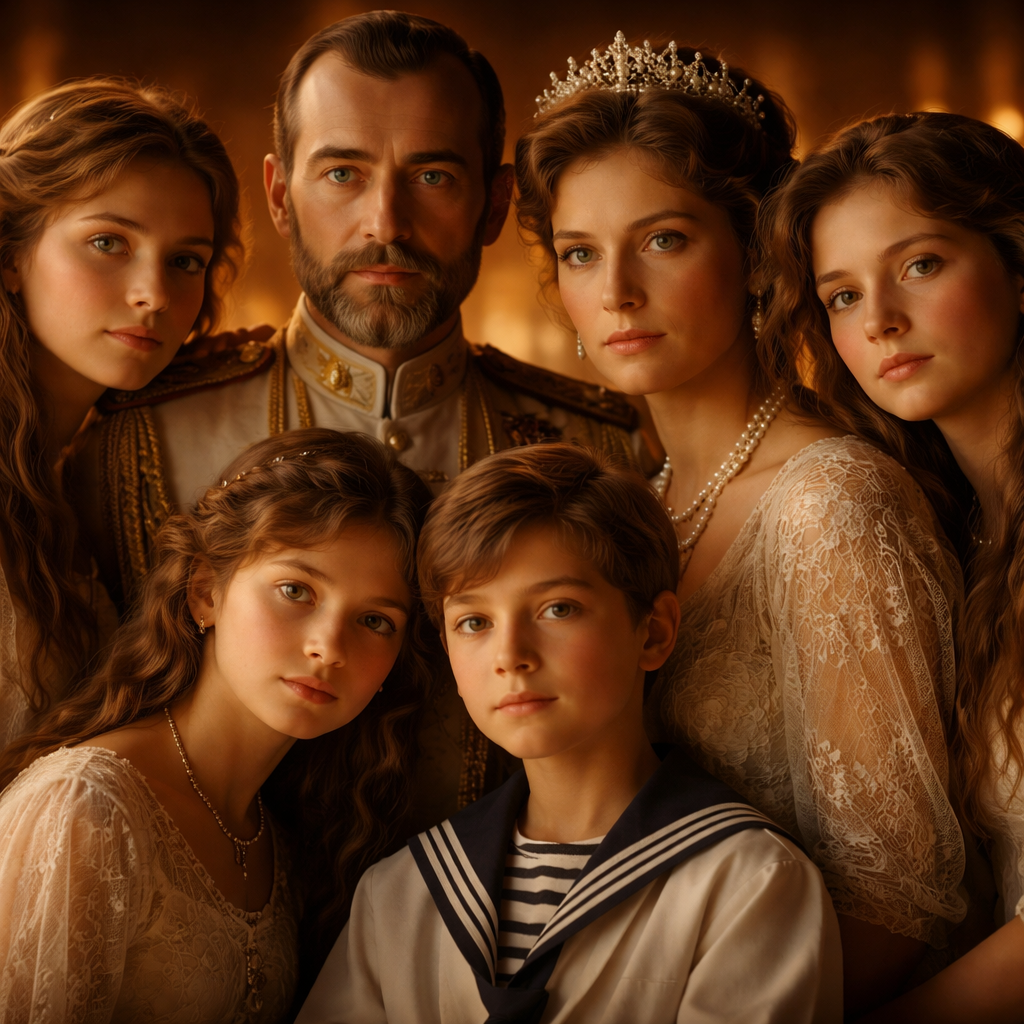
Bolshevik executioners woke the Romanov family at 1:30 a.m. on July 17, 1918, led them to a basement room in the Ipatiev House in Yekaterinburg, and opened fire with revolvers at point-blank range. Tsar Nicholas II, Tsarina Alexandra, their five children, the family physician, and three servants were killed in a chaotic slaughter that took twenty minutes because the bullets ricocheted off jewels sewn into the women's corsets. The execution ended three centuries of Romanov rule and became one of the twentieth century's most extensively investigated murders.

Nicholas had abdicated in March 1917 after the February Revolution, expecting to take his family into exile in Britain. His cousin King George V initially agreed to offer asylum but quietly withdrew the invitation, fearing that hosting the unpopular tsar would provoke republican sentiment at home. The Provisional Government held the family at the Alexander Palace near Petrograd, then moved them to Tobolsk in Siberia. After the Bolshevik seizure of power in October 1917, the family was transferred to the Ipatiev House in Yekaterinburg, where they were held under increasingly harsh conditions.

The decision to execute came from the top. Yakov Yurovsky, the local Cheka commander, received orders from the Ural Soviet, almost certainly with Lenin's approval, as White Army forces approached Yekaterinburg. The family was told they were being moved for their safety and brought to the basement. Yurovsky read a brief statement announcing the execution, and Nicholas barely had time to say "What?" before the shooting began. The children proved hardest to kill. Anastasia and her siblings were initially protected by the diamonds hidden in their clothing, and soldiers resorted to bayonets and additional gunshots.

The bodies were loaded onto a truck, doused with sulfuric acid and gasoline, and buried in a shallow pit in the Koptyaki forest. The remains were discovered in 1991, and DNA analysis confirmed the identities. Two missing children, believed to be Alexei and Maria, were found in a separate grave in 2007. The Romanovs were canonized by the Russian Orthodox Church in 2000 as "passion bearers." The Ipatiev House was demolished on Boris Yeltsin's orders in 1977, but a cathedral now stands on the site, drawing thousands of pilgrims annually.
1918

Bolshevik executioners woke the Romanov family at 1:30 a.m. on July 17, 1918, led them to a basement room in the Ipatiev House in Yekaterinburg, and opened fire with revolvers at point-blank range. Tsar Nicholas II, Tsarina Alexandra, their five children, the family physician, and three servants were killed in a chaotic slaughter that took twenty minutes because the bullets ricocheted off jewels sewn into the women's corsets. The execution ended three centuries of Romanov rule and became one of the twentieth century's most extensively investigated murders. Nicholas had abdicated in March 1917 after the February Revolution, expecting to take his family into exile in Britain. His cousin King George V initially agreed to offer asylum but quietly withdrew the invitation, fearing that hosting the unpopular tsar would provoke republican sentiment at home. The Provisional Government held the family at the Alexander Palace near Petrograd, then moved them to Tobolsk in Siberia. After the Bolshevik seizure of power in October 1917, the family was transferred to the Ipatiev House in Yekaterinburg, where they were held under increasingly harsh conditions. The decision to execute came from the top. Yakov Yurovsky, the local Cheka commander, received orders from the Ural Soviet, almost certainly with Lenin's approval, as White Army forces approached Yekaterinburg. The family was told they were being moved for their safety and brought to the basement. Yurovsky read a brief statement announcing the execution, and Nicholas barely had time to say "What?" before the shooting began. The children proved hardest to kill. Anastasia and her siblings were initially protected by the diamonds hidden in their clothing, and soldiers resorted to bayonets and additional gunshots. The bodies were loaded onto a truck, doused with sulfuric acid and gasoline, and buried in a shallow pit in the Koptyaki forest. The remains were discovered in 1991, and DNA analysis confirmed the identities. Two missing children, believed to be Alexei and Maria, were found in a separate grave in 2007. The Romanovs were canonized by the Russian Orthodox Church in 2000 as "passion bearers." The Ipatiev House was demolished on Boris Yeltsin's orders in 1977, but a cathedral now stands on the site, drawing thousands of pilgrims annually.

180

Twelve people refused to sacrifice to Roman gods. That's it. That's what got them killed in Scillium, North Africa, on July 17, 180 AD. The proconsul Saturninus offered them thirty days to reconsider. They said no immediately. We know their names: Speratus, Nartzalus, Cittinus, Veturius, Felix, Aquilinus, Laetantius, Januaria, Generosa, Vestia, Donata, Secunda. Their trial transcript survived—the oldest proof Christianity had reached Roman Africa. Twelve executions became a religion's birth certificate for an entire continent.

1203

The Crusaders weren't supposed to be there at all. They'd borrowed 85,000 silver marks from Venice to reach Egypt, couldn't pay, and got rerouted to Constantinople instead. On July 17, 1203, they breached the sea walls with just twenty ships. Emperor Alexios III grabbed a thousand pounds of gold and ran that night, abandoning a city that had stood unconquered for nine centuries. The Christians had sacked the Christian capital. A year later, they'd return to finish the job, splitting the Byzantine Empire into pieces it never fully reassembled. Sometimes your allies do more damage than your enemies ever could.

1402

A prince burned his nephew's palace to the ground and took the throne by force. Zhu Di had spent three years waging civil war against the Jianwen Emperor, his own brother's son, who'd tried to strip him of military power. The capital Nanjing fell on July 13th, 1402. The young emperor vanished in the flames—body never found. Zhu Di declared himself the Yongle Emperor and moved China's capital to Beijing, built the Forbidden City, and sent Zheng He's treasure fleets across the Indian Ocean. But he spent his entire reign hunting rumors that his nephew had survived.

1453

Jean Bureau positioned 300 cannons in a fortified camp outside Castillon and waited. The English commander John Talbot, Earl of Shrewsbury, charged anyway—73 years old, leading 6,000 men uphill into artillery fire on July 17, 1453. His horse collapsed on him. French soldiers found him in the mud and killed him there. The battle lasted an hour. England lost Gascony, its last continental territory except Calais, ending 116 years of war. But nobody officially declared it over—the conflict just stopped, both kingdoms too exhausted to sign papers saying so.

1586

The Protestant princes gathered in Lüneburg with 83,000 troops pledged on paper and zero agreement on who'd command them. March 1586. Denmark wanted control. Saxony refused to join. The Palatinate demanded veto power over any military action. Their Confederatio Militiae Evangelicae collapsed within months—no single battle fought, no Catholic army deterred. But the failure taught both sides something crucial: the next religious war in Germany wouldn't be stopped by defensive pacts. It required the kind of violence that would, forty-two years later, reduce the population by a third. Sometimes the meeting that accomplishes nothing reveals more than the treaty that does.

1717

Fifty musicians crammed onto a barge, floating behind the King's boat for three hours. George Frideric Handel had composed an entire orchestral suite without knowing if it'd carry across water. It did. King George I ordered it played three times that July night on the Thames—once going upriver, again during supper, once more returning. The concert cost £150, roughly a year's wages for a skilled craftsman. Handel's gamble paid off: the King restored his royal salary. Sometimes the best apology isn't words but horns, strings, and enough volume to reach a moving target.

1771

Samuel Hearne woke to screaming. His Chipewyan guide Matonabbee and his warriors were already among the Inuit tents at Bloody Falls, killing everyone they found. Twenty Inuit died that July morning in 1771—men, women, one girl Hearne watched take multiple spear thrusts before she died at his feet. Hearne, there to map the Coppermine River for the Hudson's Bay Company, wrote it all down in clinical detail. And that's how we know: the first European account of Canada's Arctic interior is also a record of mass murder.

1791

Lafayette ordered the red flag raised—the legal warning that troops would fire on crowds refusing to disperse. The Jacobins on the Champ de Mars didn't move. They'd come to sign a petition demanding the king's removal after his failed escape attempt three weeks earlier. Fifty people died in the volley, maybe more. The general who'd fought for American liberty had just become the man who massacred French citizens demanding theirs. Within a year, he'd flee France with a price on his head, hunted by the very revolution he'd once championed.

1794

Sixteen nuns sang the "Veni Creator Spiritus" as they climbed the scaffold steps in Paris, one by one. The Carmelites of Compiègne had refused to abandon their monastery despite Radical orders, choosing their vows over survival. Each sister renewed her vows before the blade fell. July 17, 1794. Their execution took thirty-eight minutes. Ten days later, Robespierre himself faced the guillotine, ending the Terror that had killed roughly 17,000 people in thirteen months. The last woman to die, Prioress Madeleine Lidoine, watched her fifteen sisters go first.

Fun Facts

Zodiac Sign

Cancer

Jun 21 -- Jul 22

Water sign. Loyal, emotional, and nurturing.

Birthstone

Ruby

Red

Symbolizes passion, vitality, and prosperity.

Next Birthday

--

days until July 17

Quote of the Day

“You know, the period of World War I and the Roaring Twenties were really just about the same as today. You worked, and you made a living if you could, and you tried to make the best of things. For an actor or a dancer, it was no different then than today. It was a struggle.”

Share Your Birthday

Create a beautiful birthday card with events and famous birthdays for July 17.

Create Birthday Card

Explore Nearby Dates

Popular Dates

Explore more about July 17 in history. See the full date page for all events, browse July, or look up another birthday. Play history games or talk to historical figures.