Today In History logo TIH
Julius Caesar

Historical Figure

Julius Caesar

100 BC–44 BC

Roman general and dictator (100–44 BC)

Classical

Character Profile

The Turning Point

Julius Caesar

It’s January 10, 49 BC. Julius Caesar, 50 years old, is on the north bank of a small river in northern Italy called the Rubicon. It is winter, cold, and the river is no wider than a modern two-lane road. Caesar has one legion with him — the Thirteenth, about 5,000 men — and he has been walking this riverbank for most of the day. On the far side is Italy proper. Roman law, established for 400 years, forbids any general to bring an army across the sacred boundary. To do so is treason. The punishment is death. The Senate has specifically warned Caesar that he is about to commit this crime.

He knows this. He has been stalling on purpose all afternoon. His officers watch him. He watches the river.

What he knows, standing there: that Pompey has most of the army. That the Senate has declared him an enemy of the state. That if he crosses, there is no going back — no negotiation, no compromise, no consulship earned lawfully through the system he spent 30 years climbing. That if he doesn’t cross, he will be tried, exiled or killed, his estates confiscated, his veterans left unpensioned. The choice is between treason and destruction, and he has known for two weeks that this was where the road led. What he doesn’t know: that he’ll win. That he’ll defeat Pompey at Pharsalus. That he’ll conquer Gaul and name a month after himself. That he’ll be stabbed 23 times in the Theatre of Pompey on March 15, 44 BC. He doesn’t know any of this. He knows only that he has stalled as long as any man could reasonably stall.

Suetonius records what he said. Not for the cameras — there were no cameras — but to the officers around him, men who would remember for the rest of their lives: Alea iacta est. The die is cast. He said it, according to the source, “in Greek” — quoting the playwright Menander, a small literary flex in the middle of treason, because Caesar was the kind of man who would choose his treason quotation from memory. Then he walked his horse into the water. The Thirteenth followed. The Republic, in the sense of the thing it had been for 400 years, died in that crossing, though it would take another 30 years for everyone to admit it.

He’d tell you now that it didn’t feel like courage. It felt like the last inevitable step. The actual courage, he’d say, was in everything he’d done the decade before — the campaigns in Gaul, the political maneuvers in Rome, the debts taken on, the alliances built — which had narrowed his options to two, and left him free to choose neither as a free man might have chosen. By the riverbank, there was no choice. The choice had been made, piece by piece, over years.

“The die is cast” isn’t a declaration of action. It’s a statement that action no longer matters because the outcome has already been determined. He wasn’t leaping. He was admitting he’d already jumped. That’s the distinction he’d want you to understand about turning points.


Three questions to start with:

  • The line in Greek. Why Menander, in that moment?
  • You said later that the decade in Gaul had already decided the crossing. Where, along that decade, was the actual turning point — the one you could still have changed?
  • The Ides of March. Brutus’s face. Walk me through what you saw in the last thirty seconds.
Talk to Julius Caesar

Have a conversation with this historical figure through AI

Biography

Gaius Julius Caesar was a Roman general and statesman who was the dictator of the Roman Republic almost continuously from 49 BC until his assassination in 44 BC. A member of the First Triumvirate, he led the Roman armies through the Gallic Wars and defeated his political rival Pompey in Caesar’s civil war. He consolidated power and proclaimed himself dictator perpetuo in 44 BC, which contributed to the political conditions that led to the collapse of the Roman Republic and the emergence of the Roman Empire. For his role in these events, he is regarded as one of the most influential historical figures.

Read more on Wikipedia

Timeline

The story of Julius Caesar, told in moments.

100 BC Birth

Born Gaius Julius Caesar to a patrician family in Rome. The Julii claim descent from Venus through Aeneas. An ancient name, but not a wealthy one. His father dies when Caesar is 15, leaving him head of the family.

58 BC Event

Begins the Gallic Wars. Over the next eight years he conquers roughly 800 cities, fights 30 battles, and kills or enslaves an estimated one million Gauls. He writes his own account of the war in the third person. "Caesar decided." "Caesar marched." The book is still assigned in Latin classes.

49 BC Event

Crosses the Rubicon with a single legion. The river marks the boundary between his province and Roman Italy. Bringing soldiers across it is treason. According to Suetonius, he says "alea iacta est" (the die is cast). Civil war begins.

48 BC Event

Defeats Pompey at the Battle of Pharsalus in Greece. Caesar is outnumbered roughly two to one. Pompey flees to Egypt, where Ptolemy XIII has him beheaded on the beach, hoping to win Caesar's favor. It doesn't work. Caesar weeps when he's presented with Pompey's head.

46 BC Life

Creates the Julian calendar, replacing the chaotic Roman lunisolar system. He adds 67 days to the year 46 BC to realign the seasons, making it 445 days long. Romans call it "the last year of confusion." The Julian calendar will be used for 1,600 years.

45 BC Life

Cleopatra and their son Caesarion live in a villa across the Tiber. His wife Calpurnia knows. Rome knows. He puts a golden statue of Cleopatra in the Temple of Venus Genetrix. It is still there when the senators come for him.

44 BC Life

Declared dictator perpetuo. Dictator for life. He sits on a golden throne in the Senate. His image appears on coins. A month is renamed in his honor: July. Sixty senators begin meeting in secret.

44 BC Death

Stabbed 23 times on the Ides of March at the Theatre of Pompey. Sixty senators participated. A physician later determined only one wound was fatal: the second stab, to his chest. According to Suetonius, when he saw Brutus among the attackers, he pulled his toga over his head and stopped resisting. He was 55.

42 BC Legacy

The Roman Senate posthumously deifies Julius Caesar. He is now Divus Iulius, a god. His adopted heir Octavian becomes "son of a god," a title he uses to devastating political effect. Within thirteen years, Octavian will rule the Roman Empire alone, as Augustus.

In Their Own Words (16)

I assure you I had rather be the first man here than the second man in Rome.

On passing through a village in the Alps, as attributed in Parallel Lives , by Plutarch, as translated by John Langhorne and William Langhorne (1836), p. 499<!-- ; also quoted in p. 372 Handy-Book of Literary Curiosities (1892) by William Shepard Walsh, 1836

I will not ... that my wife be so much as suspected.

His declaration as to why he had divorced his wife Pompeia, when questioned in the trial against Publius Clodius Pulcher for sacrilege against Bona Dea festivities (from which men were excluded), in entering Caesar's home disguised as a lute-girl apparently with intentions of a seducing Caesar's wife; as reported in Plutarch's Lives of Coriolanus, Caesar, Brutus, and Antonius by Plutarch, as translated by Thomas North, p. 53

It is not the well-fed long-haired man I fear, but the pale and the hungry looking.

As reported in Plutarch's ''Anthony'; William Shakespeare adapted this in having Caesar declare Cassius as having "a lean and hungry look."

The die is cast.

Said when crossing the river Rubicon with his legions on 10 January, 49 BC, thus beginning the civil war with the forces of Pompey. The Rubicon river was the boundary of Gaul, the province Caesar had the authority to keep his army in. By crossing the river, he had committed an invasion of Italy.

It is, after all, well known that impulsive and inexperienced people are often terrified by false gossip and impelled to take inconsiderate action, making their own decisions about what should actually be matters of state.

Book V

Artifacts (15)

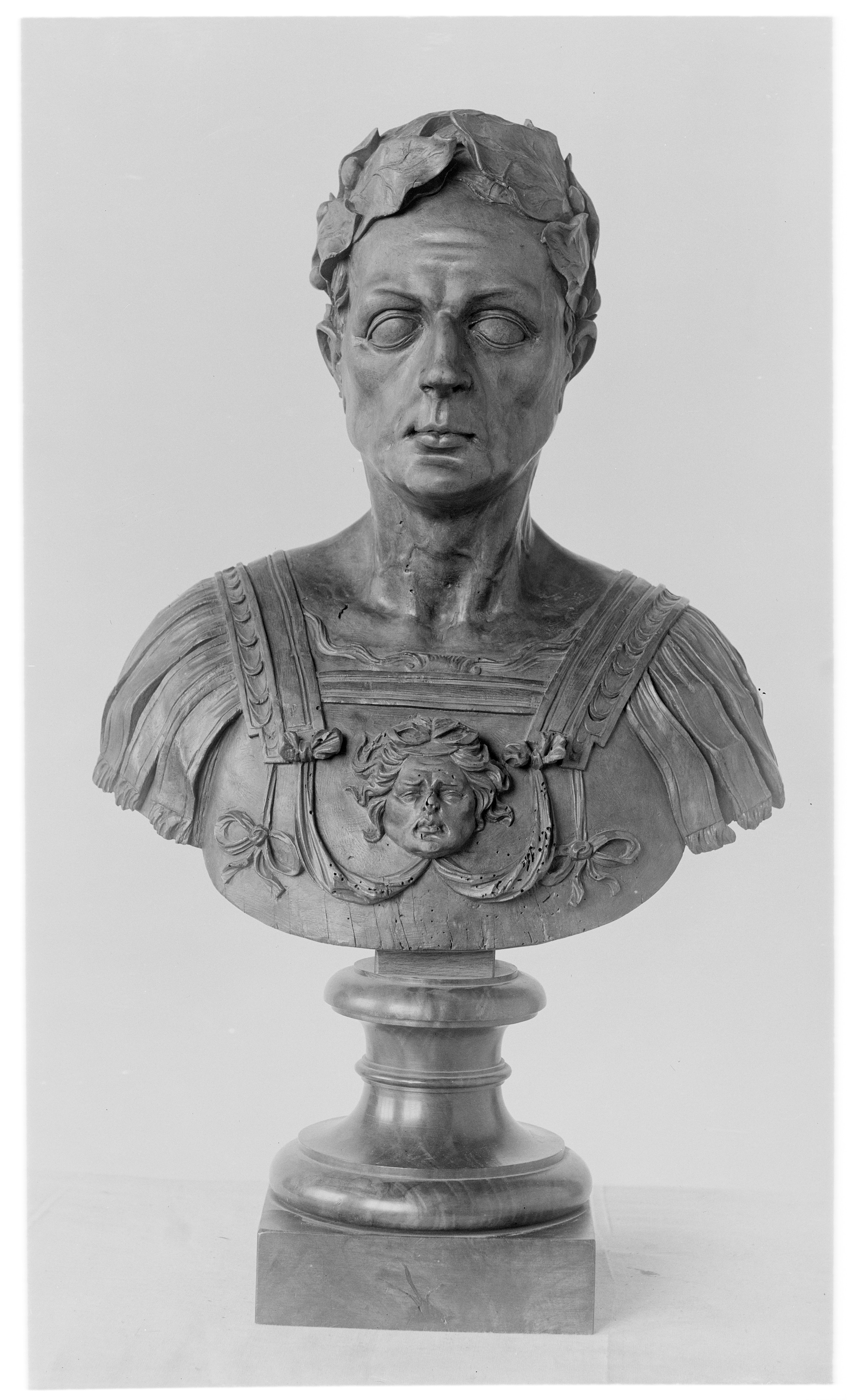
Julius Caesar

16th–17th century · Walnut
The Met View

Julius Cæsar

17XX/18XX · Graphic
europeana View

Julius Caesar

17XX/18XX · Graphic
europeana View

Julius Caesar

18XX · Graphic
europeana View

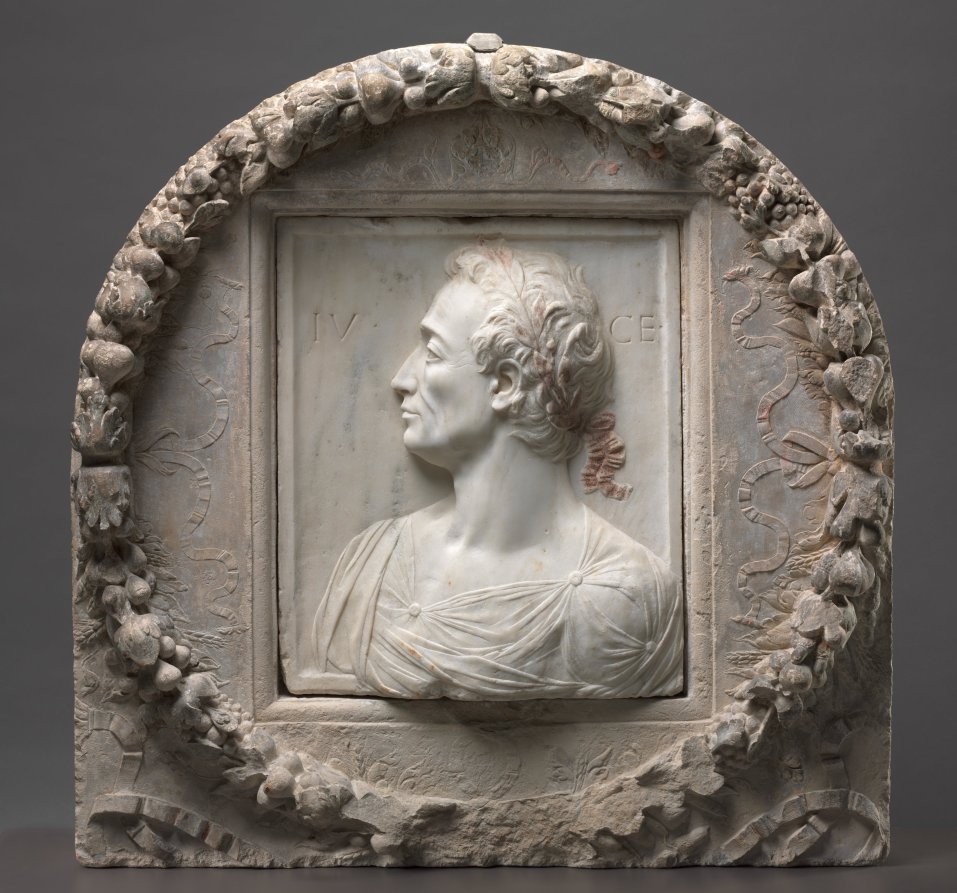
Julius Caesar

Mino da Fiesole (Italian, c. 1430–1484)

c. 1455–60 · marble with traces of bole (red clay) and limestone with traces of paint
cma View

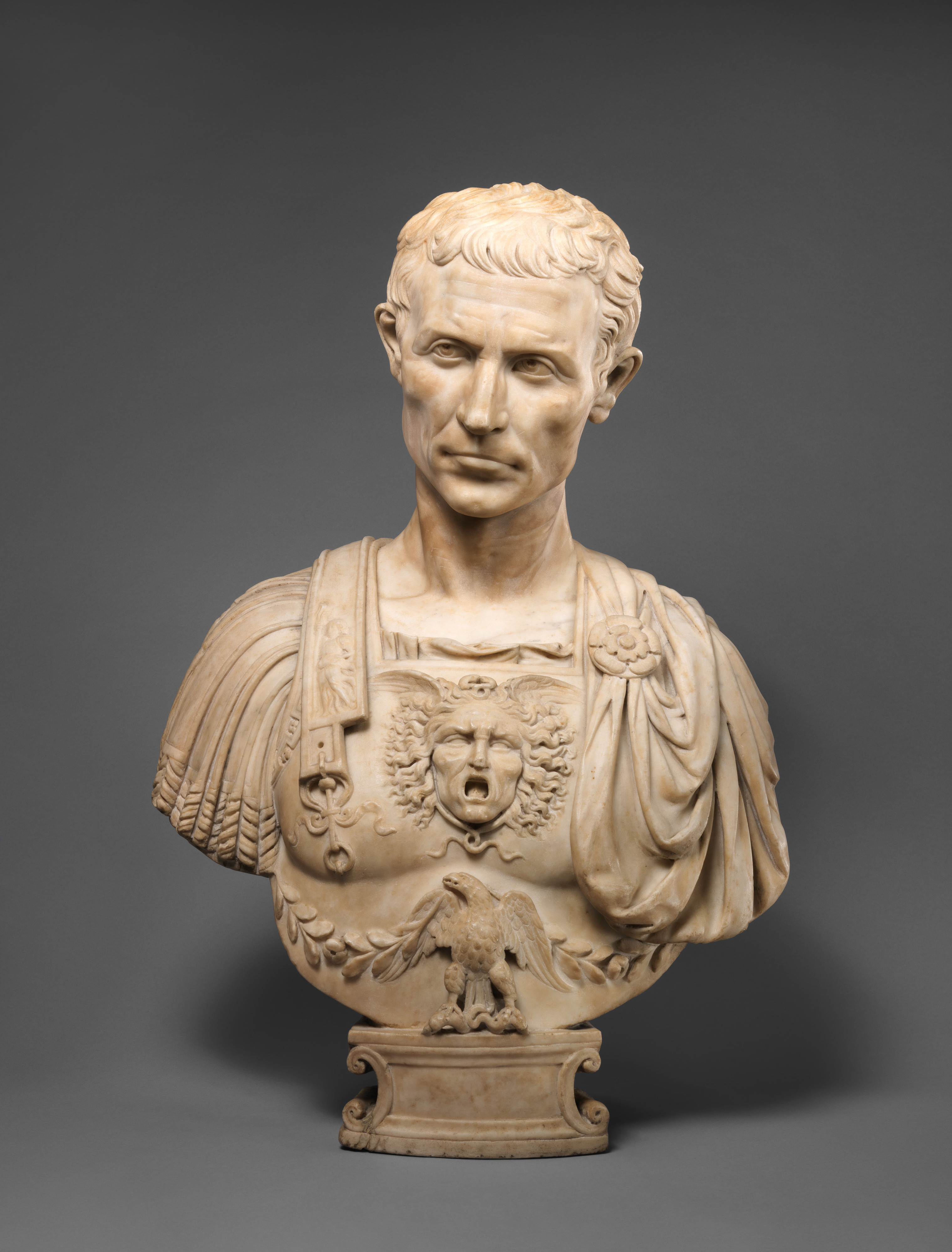
Julius Caesar

Andrea di Pietro di Marco Ferrucci

ca. 1512–14 · Marble
The Met View

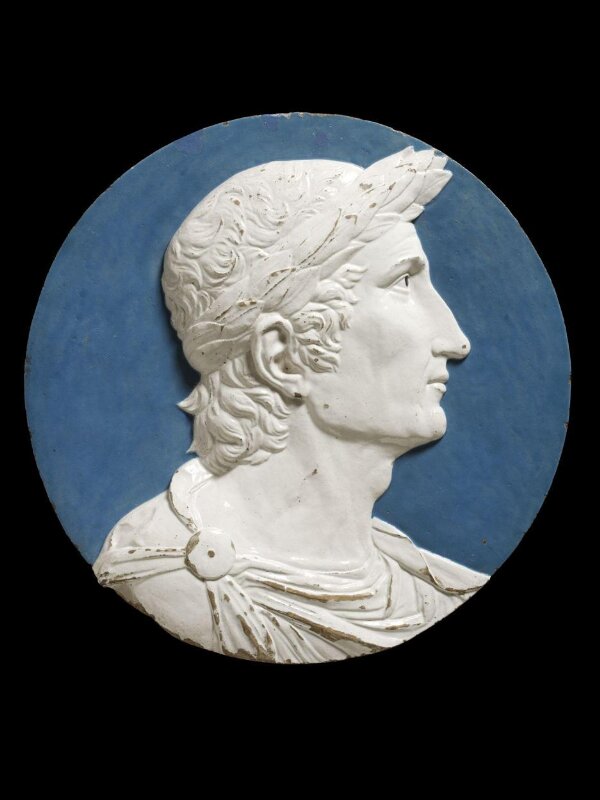
Juilus Caesar

della Robbia

second half of fifteenth century
vam View

Julius Caesar, a tragedy (IA juliuscaesartrag00shak)

Shakespeare, William, 1564-1616 Miller, Edwin Lillie, 1868- [from old catalog] ed Kinney, Eva May, [from old catalog] joint ed

commons View

Rosslyn Castle, by Julius Caesar Ibbetson

Julius Caesar Ibbetson

commons View

Julius Caesar

europeana View

Julius Caesar

http://d-nb.info/118599380

Regienotiz
europeana View

Untitled

Unknown

vam View

"De Bello Gallico" and Other Commentaries

[Transcriber's Note: Typographical errors in the original have been corrected and noted using the notation ** . Macrons, breves, umlauts etc have been removed from the body of the text since...

-51

De Bello Gallico and Other Commentaries

BOOK I I.--All Gaul is divided into three parts, one of which the Belgae inhabit, the Aquitani another, those who in their own language are called Celts, in ours Gauls, the third. All these...

-50

Poems That Every Child Should Know/A Fragment from Julius Caesar

Excerpt from Julius Caesar 85849Poems That Every Child Should Know — A Fragment from Julius CaesarMary Elizabeth BurtWilliam Shakespeare (1564-1616) ​A Fragment from Mark Antony's Speech. This was...

1564
Speeches Read Talk

More from the Classical

Explore what happened on the days that shaped Julius Caesar's life. Today In History connects historical figures with the events, births, and deaths that defined their era. Browse all historical figures or explore today's events.