Today In History
April 18 in History
Your birthday shares the stage with stories that shaped the world. Born on this day: Lucrezia Borgia, Jessica Jung, and Menachem Mendel Schneerson.

Revere's Midnight Ride: The Shot Heard 'Round the World
Dr. Joseph Warren dispatched two riders from Boston on the night of April 18, 1775, to warn the Massachusetts countryside that British regulars were marching to seize colonial weapons stockpiled at Concord. Paul Revere crossed the Charles River by rowboat and rode northwest through Medford and Lexington, while William Dawes took the longer land route through Roxbury and Cambridge. Revere reached Lexington around midnight and warned Samuel Adams and John Hancock, both targeted for arrest, to flee. Henry Wadsworth Longfellow's 1860 poem would immortalize Revere alone, erasing Dawes and a third rider, Samuel Prescott, from popular memory. General Thomas Gage, the British military governor of Massachusetts, had ordered 700 regulars under Lieutenant Colonel Francis Smith to march from Boston to Concord and destroy the colonial militia's supplies. The operation was supposed to be secret, but patriot intelligence networks, including a spy ring organized by Revere, detected the troop movement almost immediately. Church bells, signal lanterns, and relay riders spread the alarm across the countryside faster than the British column could march. The famous "one if by land, two if by sea" signal from the steeple of the Old North Church was just one element of a sophisticated alert system. Revere had arranged the lantern signal to notify patriots across the river in Charlestown in case he was unable to cross himself. He was, in fact, captured by a British patrol near Lexington after warning Adams and Hancock, and never reached Concord. Prescott, who had joined Revere and Dawes on the road, was the only rider who made it through to Concord to warn the militia there. By dawn on April 19, militia companies across Middlesex County were assembling with loaded muskets. The system of alarm riders that Revere had helped organize turned a secret military operation into a running battle that would chase the British column back to Boston. The night ride succeeded not because of one man's heroism but because colonial Massachusetts had built an organized resistance network that could mobilize thousands of armed civilians in a matter of hours.
Famous Birthdays
1480–1519
Jessica Jung
b. 1989
Menachem Mendel Schneerson
1902–1994
Ahmed I
1590–1617
George H. Hitchings
1905–1998
Jochen Rindt
1942–1970
Joseph L. Goldstein
b. 1940
Malcolm Marshall
1958–1999
Mark Tremonti
b. 1974
Saad Hariri
b. 1970
Sayako Kuroda
b. 1969
Tadeusz Mazowiecki
d. 2013
Historical Events
Dr. Joseph Warren dispatched two riders from Boston on the night of April 18, 1775, to warn the Massachusetts countryside that British regulars were marching to seize colonial weapons stockpiled at Concord. Paul Revere crossed the Charles River by rowboat and rode northwest through Medford and Lexington, while William Dawes took the longer land route through Roxbury and Cambridge. Revere reached Lexington around midnight and warned Samuel Adams and John Hancock, both targeted for arrest, to flee. Henry Wadsworth Longfellow's 1860 poem would immortalize Revere alone, erasing Dawes and a third rider, Samuel Prescott, from popular memory. General Thomas Gage, the British military governor of Massachusetts, had ordered 700 regulars under Lieutenant Colonel Francis Smith to march from Boston to Concord and destroy the colonial militia's supplies. The operation was supposed to be secret, but patriot intelligence networks, including a spy ring organized by Revere, detected the troop movement almost immediately. Church bells, signal lanterns, and relay riders spread the alarm across the countryside faster than the British column could march. The famous "one if by land, two if by sea" signal from the steeple of the Old North Church was just one element of a sophisticated alert system. Revere had arranged the lantern signal to notify patriots across the river in Charlestown in case he was unable to cross himself. He was, in fact, captured by a British patrol near Lexington after warning Adams and Hancock, and never reached Concord. Prescott, who had joined Revere and Dawes on the road, was the only rider who made it through to Concord to warn the militia there. By dawn on April 19, militia companies across Middlesex County were assembling with loaded muskets. The system of alarm riders that Revere had helped organize turned a secret military operation into a running battle that would chase the British column back to Boston. The night ride succeeded not because of one man's heroism but because colonial Massachusetts had built an organized resistance network that could mobilize thousands of armed civilians in a matter of hours.
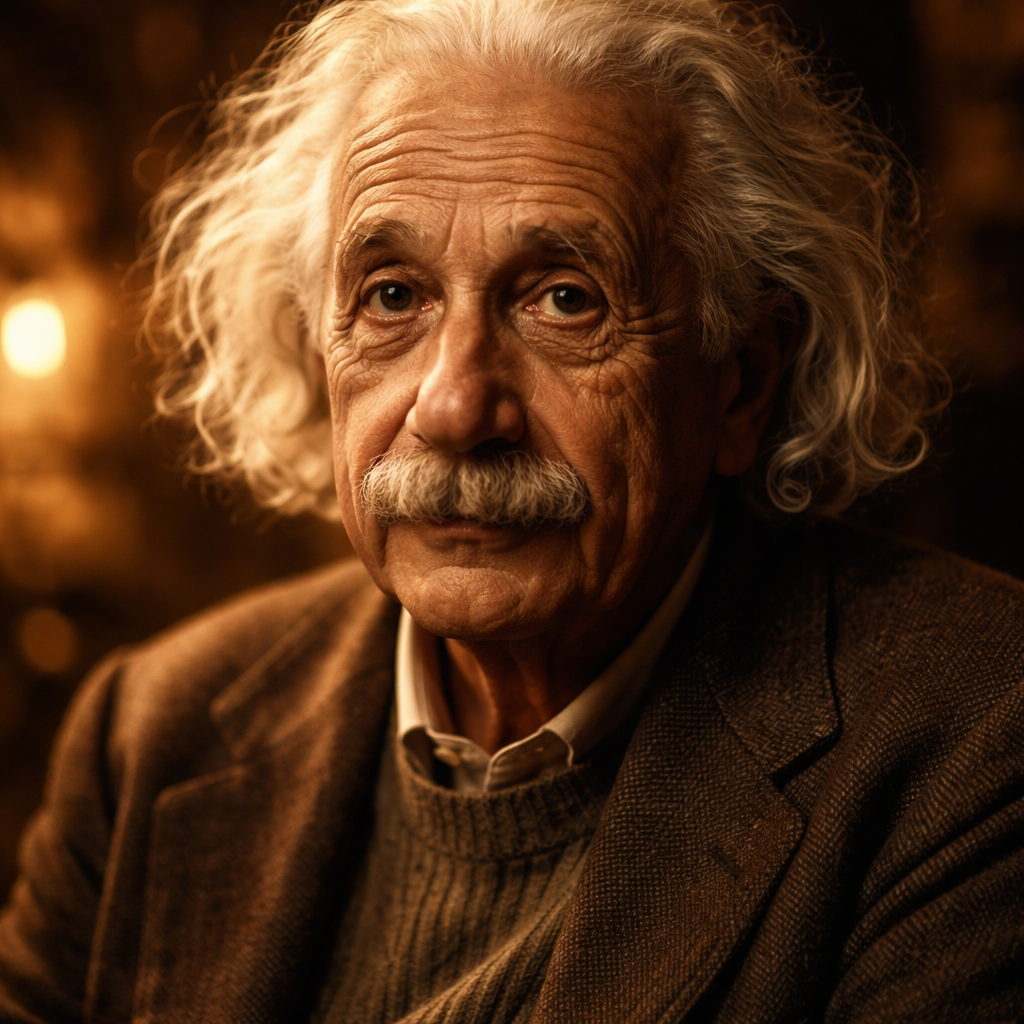
Albert Einstein died at Princeton Hospital in the early morning hours of April 18, 1955, after refusing surgery for a ruptured abdominal aortic aneurysm. He was 76 years old. "I want to go when I want," he told his doctors. "It is tasteless to prolong life artificially. I have done my share; it is time to go. I will do it elegantly." He spent his last hours working on a speech for Israeli Independence Day, which lay unfinished on his hospital bedside table, and on equations for his unified field theory, the quest that had consumed and eluded him for thirty years. Einstein had reshaped the understanding of the physical universe more fundamentally than any scientist since Newton. His 1905 papers on special relativity, the photoelectric effect, and Brownian motion, produced while he was a 26-year-old patent clerk in Bern, overturned the foundations of classical physics. His 1915 general theory of relativity replaced Newton's concept of gravitational force with the curvature of spacetime itself, a framework that predicted phenomena from black holes to gravitational waves that physicists would not confirm experimentally until a century later. He fled Nazi Germany in 1933, settling at the Institute for Advanced Study in Princeton, where he became the most famous scientist in the world and an icon of intellectual achievement. His 1939 letter to President Roosevelt warning that Germany might develop an atomic bomb helped launch the Manhattan Project, though Einstein himself was excluded from the program on security grounds. After Hiroshima, he became a vocal advocate for nuclear disarmament and world government. His brain was removed during autopsy by pathologist Thomas Harvey without the family's explicit permission. Harvey kept it in a jar for decades, occasionally sending slices to researchers who found minor anatomical anomalies but nothing that convincingly explained genius. Einstein had requested cremation with his ashes scattered in an undisclosed location, wanting no grave that could become a shrine. His wishes were honored for everything except the brain, which became the most studied three pounds of tissue in medical history.
The San Andreas Fault ruptured at 5:12 AM on April 18, 1906, and within sixty seconds the city of San Francisco was destroyed. The earthquake, estimated at magnitude 7.9, tore a 296-mile gash along the fault line from San Juan Bautista to Cape Mendocino. Buildings collapsed across the city as the ground lurched horizontally up to twenty feet. But the earthquake was only the beginning. Broken gas mains ignited fires that burned uncontrolled for three days, destroying 28,000 buildings across 490 city blocks. The fire department was crippled from the first minutes. Fire Chief Dennis Sullivan was fatally injured when the California Hotel collapsed onto the fire station where he slept. Water mains shattered throughout the city, leaving firefighters with empty hoses. Brigadier General Frederick Funston, acting without orders from Washington, deployed Army troops from the Presidio to dynamite buildings and create firebreaks, a strategy that sometimes worked and sometimes spread the fires further. Mayor Eugene Schmitz authorized soldiers to shoot looters on sight. An estimated 3,000 people died, though the actual toll was almost certainly higher. The city government deliberately undercounted deaths to protect real estate values and encourage reconstruction. Approximately 225,000 of the city's 400,000 residents were left homeless, camping in Golden Gate Park and the Presidio in tent cities that persisted for months. Refugee camps operated under quasi-military discipline, with meal lines, sanitation details, and curfews. San Francisco rebuilt with remarkable speed, driven partly by the city's commercial importance as the West Coast's premier port and financial center, and partly by a deliberate campaign to minimize the disaster's significance. City leaders blamed the fire rather than the earthquake for the destruction, because earthquake damage was not covered by insurance while fire damage was. This strategic framing shaped public memory but did nothing to address seismic risk. The city was rebuilt on the same fault lines, with the same vulnerability, a gamble that continues today.
British regulars marched up the Charles River toward Concord to seize colonial militia weapons, while Paul Revere and other express riders galloped ahead to warn the countryside. Their midnight alarm roused the minutemen who would confront the redcoats at dawn, triggering the first shots of the American Revolution. The operation began on the night of April 18, 1775, when approximately 700 British soldiers under Lieutenant Colonel Francis Smith departed Boston by boat across the Charles River, then marched toward Concord where intelligence indicated the Massachusetts Provincial Congress had stockpiled weapons and gunpowder. Dr. Joseph Warren, a leading patriot in Boston, dispatched Paul Revere and William Dawes on separate routes to warn the countryside and alert Samuel Adams and John Hancock, who were staying in Lexington and would be arrested if the British found them. Revere rode through Medford, Menotomy, and Lexington, warning households along the way. He was briefly captured by a British patrol near Lincoln but was released without his horse. The alarm system worked as designed: riders spread the warning outward in a cascading network that woke militiamen across Middlesex County. By dawn on April 19, seventy-seven militiamen under Captain John Parker stood on Lexington Green to face the approaching column. The confrontation was brief and catastrophic. Someone fired, though which side remains disputed, and the British volley killed eight Americans and wounded ten. The column continued to Concord, where a larger militia force fired on the retreating British at the North Bridge. The march back to Boston became a running battle as militia companies fired from behind stone walls and trees, inflicting 273 British casualties against 95 American losses.
Corbridge blood ran red before dawn in 796. King Æthelred I didn't die in battle; he was hacked down by his own ealdormen, Ealdred and Wada. The human cost? Pure terror as power shifted like sand. Osbald sat on the throne for a mere twenty-seven days before fleeing. He realized the crown was heavier than any sword. Now you know why Northumbria never recovered from that summer.
Boleslaw Chrobry was crowned the first king of Poland at Gniezno Cathedral on April 18, 1025, unifying the Slavic tribes between the Oder and Bug rivers into a sovereign Christian state that would endure for a millennium. The coronation came just months before Boleslaw's death at roughly age 58, the culmination of a reign that had transformed a regional duchy into a European power. He had waited decades for this crown, needing papal approval that various political entanglements had repeatedly delayed. Boleslaw had inherited the Duchy of Poland from his father Mieszko I in 992, but ambition drove him far beyond his father's borders. He conquered Silesia, Lusatia, Moravia, and parts of modern Slovakia and Ukraine, creating the largest Polish state until the Jagiellonian dynasty three centuries later. His military campaigns were matched by diplomatic skill: at the Congress of Gniezno in 1000, Emperor Otto III visited Boleslaw and reportedly placed his own diadem on the Polish duke's head, recognizing him as a sovereign ally rather than a vassal. The relationship with the Holy Roman Empire defined Boleslaw's reign. Otto III's death in 1002 ended the cooperative arrangement, and his successor Henry II fought five wars against Poland over the next sixteen years. Boleslaw held his ground, and the Peace of Bautzen in 1018 confirmed Polish control over Lusatia and Milsko. He then turned east, capturing Kyiv in 1018 in support of his son-in-law's claim to the Kievan Rus throne, though the occupation was brief. The coronation itself was a statement of sovereignty. In medieval Europe, a king's crown required either papal or imperial approval, and Boleslaw's ability to crown himself without explicit imperial consent demonstrated Poland's independence from the Holy Roman Empire. The kingdom he established survived Mongol invasions, partition among rival princes, and the partitions of the eighteenth century that erased Poland from the map for 123 years. When Poland reemerged as an independent state in 1918, it traced its political lineage directly back to the crown Boleslaw placed on his head at Gniezno.
They signed ink over spilled wine in Ferrara while Venice's doge demanded Mantua's taxes. Milan's soldiers, exhausted and unpaid, finally sheathed their swords after years of burning fields. But Florence didn't send troops; they just watched the balance shift. That fragile truce let merchants breathe again. It created conditions for for Lodi a quarter-century later. Suddenly, art wasn't just for warlords—it became the city's new currency.
Pope Julius II laid the cornerstone of the new St. Peter's Basilica on April 18, 1506, beginning a construction project that would take 120 years, consume the fortunes of a dozen popes, and inadvertently trigger the Protestant Reformation. The old basilica, built by Emperor Constantine in the fourth century, had stood for over a thousand years but was crumbling beyond repair. Julius, nicknamed "the Warrior Pope" for his military campaigns, envisioned a replacement of unprecedented scale, the largest church in Christendom and a monument to papal authority. The original architect, Donato Bramante, designed a centralized Greek cross plan topped by an enormous dome inspired by the Pantheon. Bramante demolished much of the old basilica with such enthusiasm that critics called him "Bramante Ruinante." He died in 1514 with only the four massive crossing piers completed. Over the next century, a succession of architects, including Raphael, Antonio da Sangallo the Younger, and Michelangelo, revised and expanded the design. Michelangelo, who took over at age 72, designed the dome that would become the basilica's defining feature, though he died in 1564 before it was completed. The staggering cost of construction had consequences far beyond Rome. Pope Leo X authorized the sale of indulgences to fund the building, commissioning Johann Tetzel to sell remission of sins across Germany with the slogan "As soon as a coin in the coffer rings, a soul from purgatory springs." Martin Luther's Ninety-Five Theses of 1517, which attacked this practice, were a direct response to the fundraising for St. Peter's. The church that was meant to glorify Catholicism instead provoked the greatest schism in Western Christian history. The basilica was finally consecrated on November 18, 1626, by Pope Urban VIII. Carlo Maderno had extended Bramante's plan into a Latin cross, and Gian Lorenzo Bernini designed the sweeping colonnade of the piazza outside. The finished structure covers 5.7 acres, rises 448 feet to the top of the dome, and can hold 20,000 worshippers. It remains the largest church in the world and the center of Catholic Christianity, built at a cost that bankrupted popes and broke a church in half.
A heavy cloak, worn for weeks on the road, barely hid Luther's trembling hands as he faced the Emperor. He stood in a room where silence could kill him, yet he only asked one thing: "Unless I am convinced by Scripture." The human cost? A man who knew his own execution was likely waiting outside those doors. But that quiet refusal didn't just save his life; it shattered an empire's grip on truth. You'll tell your friends tonight that sometimes the loudest revolution is a whisper you can't un-hear.
Napoleon signed peace in a muddy farmhouse while his soldiers starved nearby, leaving Venice to Austria as mere bargaining chips for the French Republic's future. The human cost was immediate: thousands of dead and displaced Italians who suddenly found their city-state erased from maps without a vote. This armistice didn't just end a war; it gave Napoleon the freedom to reshape Europe entirely on his own terms. Now, you can tell your friends that empires often die not with a bang, but over dinner tables where one man decides another's fate.
Seventy souls vanished when the *Harwich* capsized in the North Sea, crushed by a storm that turned the Essex coast into a graveyard. Families didn't just lose loved ones; they lost fathers and sons who'd boarded for a routine crossing. But the tragedy sparked immediate outrage, forcing England to finally demand lifeboats on crowded ferries. Now, every time you see a safety sign on a boat, remember those 70 people who died so others wouldn't have to.
Prussian infantry stormed the Danish fortifications at Dybbol on April 18, 1864, after a two-week bombardment that had reduced the redoubts to rubble and buried defenders under tons of earth. The assault lasted thirty minutes. Roughly 37,000 Prussian troops overwhelmed a Danish garrison of 11,000, killing 671 Danes and capturing 3,534. The battle decided the Second Schleswig War and stripped Denmark of the duchies of Schleswig, Holstein, and Lauenburg, territories that contained nearly forty percent of the Danish kingdom's population. The Schleswig-Holstein question had bedeviled European diplomacy for decades. The duchies were ruled by the Danish crown but contained large German-speaking populations, and their constitutional status was tangled in a knot of feudal inheritance law that Lord Palmerston reportedly said only three people had ever understood: one was dead, one had gone mad, and the third had forgotten. When Denmark tried to integrate Schleswig directly into the Danish state in 1863, Prussia and Austria found the pretext they needed for war. Otto von Bismarck, the Prussian Minister-President, orchestrated the conflict with calculated precision. He secured Austrian participation to provide diplomatic cover, then used the joint victory to create the conditions for a Prussian-Austrian war two years later. The defeat at Dybbol was a national trauma for Denmark. The country lost a third of its territory and entered a period of cultural introversion, redirecting national energy from external ambitions to internal development under the philosophy "what is lost without must be gained within." For Bismarck, Dybbol was the first step in a sequence of three wars that unified Germany under Prussian leadership. Austria was defeated in 1866, France in 1870-71, and the German Empire was proclaimed at Versailles. Denmark's loss fed into the forces that reshaped the European map entirely. Schleswig was partitioned after a 1920 plebiscite following Germany's defeat in World War I, with northern Schleswig returning to Denmark, but the southern portion remains German territory. Dybbol itself has become Denmark's most sacred battlefield, commemorated annually on April 18.
Mud swallowed two entire neighborhoods in Guatemala City while the ground simply stopped shaking for hours. Survivors huddled in the dark, counting the dead among the rubble before dawn could even arrive. That night's terror forced the capital to rebuild stone by stone, not just brick by brick. You'll tell your friends that this quake taught a nation how to survive its own soil.
William Seymour launched one of the most consequential religious movements in modern history from a converted stable on Azusa Street in Los Angeles on April 12, 1906. The revival he led from a rundown building at 312 Azusa Street attracted thousands of seekers who came to experience speaking in tongues, faith healing, and what participants described as baptism in the Holy Spirit. Services ran nearly continuously, morning through midnight, seven days a week, for three years straight. Seymour was a one-eyed Black preacher and son of former slaves who had studied under Charles Fox Parham in Houston, Texas, though Jim Crow laws forced him to sit in the hallway outside the classroom. Parham's theology held that speaking in tongues was evidence of Holy Spirit baptism, a doctrine Seymour carried to Los Angeles when a small Holiness congregation invited him to preach. When his initial hosts locked him out for his radical teachings, Seymour moved services to a home on Bonnie Brae Street, where ecstatic prayer meetings drew such crowds that the porch collapsed. The Azusa Street mission defied the racial segregation that defined American life in 1906. Black, white, Mexican, and Asian worshippers prayed side by side, sharing the same altar and communion table. The Los Angeles Times mocked the gatherings as "a weird babble of tongues" led by people of questionable sanity. Visitors from across the country and around the world attended, then returned home to start their own congregations, carrying the Pentecostal message to every continent within a decade. Pentecostalism grew from this converted stable into a global movement of over 600 million adherents by the twenty-first century, making it the fastest-growing branch of Christianity in history. Its emphasis on direct spiritual experience, emotional worship, and healing ministry found particular resonance in Latin America, sub-Saharan Africa, and Southeast Asia, regions where Pentecostal churches now outnumber traditional Protestant denominations. Seymour died in relative obscurity in 1922, but the movement he sparked reshaped global Christianity more profoundly than any single revival since the Reformation.
They thought the ground had finished shaking by Tuesday morning, but the real killer waited in the flames they'd accidentally started. A single misfired gas main ignited a inferno that burned for three days straight, turning the city's own streets into ovens while officials refused to order water cutoffs until it was too late. Over 3,000 people vanished into smoke that choked out the sun. Today, you can still find those scorched bricks in the basement of the Ferry Building, a silent warning that sometimes our biggest enemy isn't the earth moving beneath us, but the fire we light to keep warm.
Fun Facts
Zodiac Sign
Aries
Mar 21 -- Apr 19
Fire sign. Courageous, energetic, and confident.
Birthstone
Diamond
Clear
Symbolizes eternal love, strength, and invincibility.
Next Birthday
--
days until April 18
Quote of the Day
“Just think of the tragedy of teaching children not to doubt.”
Share Your Birthday
Create a beautiful birthday card with events and famous birthdays for April 18.
Create Birthday CardExplore Nearby Dates
Popular Dates
Explore more about April 18 in history. See the full date page for all events, browse April, or look up another birthday. Play history games or talk to historical figures.