

Historical Figure
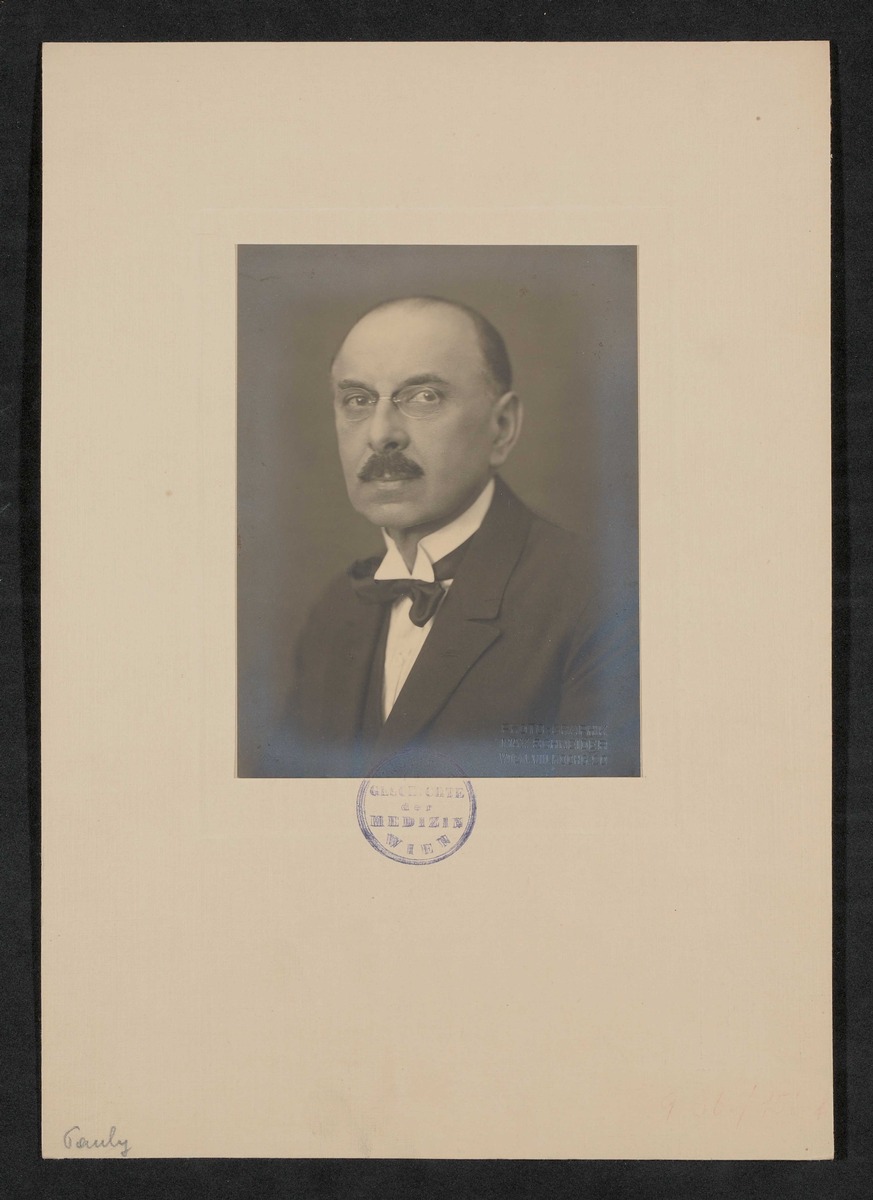
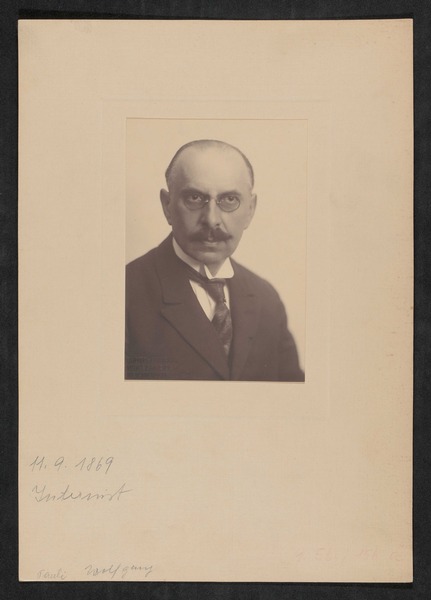
Wolfgang Pauli
1900–1958
Austrian–Swiss theoretical physicist (1900–1958)
Talk to Wolfgang Pauli
Have a conversation with this historical figure through AI
Biography
Wolfgang Ernst Pauli was an Austrian–Swiss theoretical physicist and a pioneer of quantum mechanics. In 1945, after having been nominated by Albert Einstein, Pauli received the Nobel Prize in Physics "for the discovery of the Exclusion Principle, also called the Pauli Principle". The discovery involved spin theory, which is the basis of a theory of the structure of matter.
Timeline
The story of Wolfgang Pauli, told in moments.
Formulated the exclusion principle. No two electrons in an atom can have the same set of quantum numbers. The idea explained why matter takes up space, why the periodic table has its structure, and why chemistry works at all.
Werner Heisenberg wrote to Pauli describing his uncertainty principle for the first time. Pauli was the sounding board for nearly every major quantum physics breakthrough. Other physicists called him "the conscience of physics."
Predicted the existence of the neutrino to explain missing energy in beta decay. He apologized for predicting a particle that couldn't be detected. It was finally observed in 1956.
Won the Nobel Prize in Physics, nominated by Albert Einstein. Pauli had been at Princeton during the war, having fled Austria in 1940. His sharp tongue was famous. His worst insult: "That's not even wrong."
In Their Own Words (20)
When I was young, I thought I was the best formalist of my time. I thought I was a revolutionary. When the big problems would come, I would solve them and write about them. The big problems came and passed by, others solved them and wrote about them. I was a classicist and not a revolutionary.
As quoted in Faust in Copenhagen (2007) by Gino Segrè, p. 130.5, which cites The Historical Development of Quantum Theory (1982) by Jagdish Mehra and Helmut Rechenberg, vol 1 of 4, p. xxiv, and Inward Bound (1986) by Abraham Pais, p. 186, 2007
The layman always means, when he says "reality" that he is speaking of something self-evidently known; whereas to me it seems the most important and exceedingly difficult task of our time is to work on the construction of a new idea of reality.
Letter to Markus Fierz (12 August 1948), as quoted in The Innermost Kernel : Depth Psychology and Quantum Physics : Wolfgang Pauli's Dialogue with C. G. Jung (2005) by Suzanne Gieser., 2005
The best that most of us can hope to achieve in physics is simply to misunderstand at a deeper level.
to Jagdish Mehra, in Berkeley, California (May 1958), as quoted in The Historical Development of Quantum Theory (2000) by Jagdish Mehra, 2000
The setup of the book as far as printing and paper are concerned is splendid.
Said regarding Elementare Quantenmechanik by Max Born and Pascual Jordan, as quoted in Quantum Dialogue (1999) by Mara Beller, p. 38, 1999
This is to show the world that I can paint like Titian. [A big drawing of a rectangle] Only technical details are missing.
In a letter to George Gamow, 1958, commenting on Werner Heisenberg's claim to a journalist that Pauli and Heisenberg have found a unified field theory, "but the technical details were missing"; as quoted in Hyperspace : A Scientific Odyssey through Parallel Universes, Time Warps, and the Tenth Dimension (1995) by Michio Kaku, p. 137, 1995
Artifacts (15)

Catalogue de livres de la bibliothèque de M. le vicomte d. V. (IA cataloguedelivre00comm)
Commandeur, commissaire-priseur
The history of Germany, from the earliest period to the present time (IA historyofgermany01menziala)
Menzel, Wolfgang, 1798-1873 Horrocks, George, Mrs, tr
A collection of the Emblem books of Andrea Alciati ... in the library of George Edward Sears (IA cu31924029623513)
Sears, George Edward
More from the Postwar


Explore what happened on the days that shaped Wolfgang Pauli's life. Today In History connects historical figures with the events, births, and deaths that defined their era. Browse all historical figures or explore today's events.