Freddie Mercury
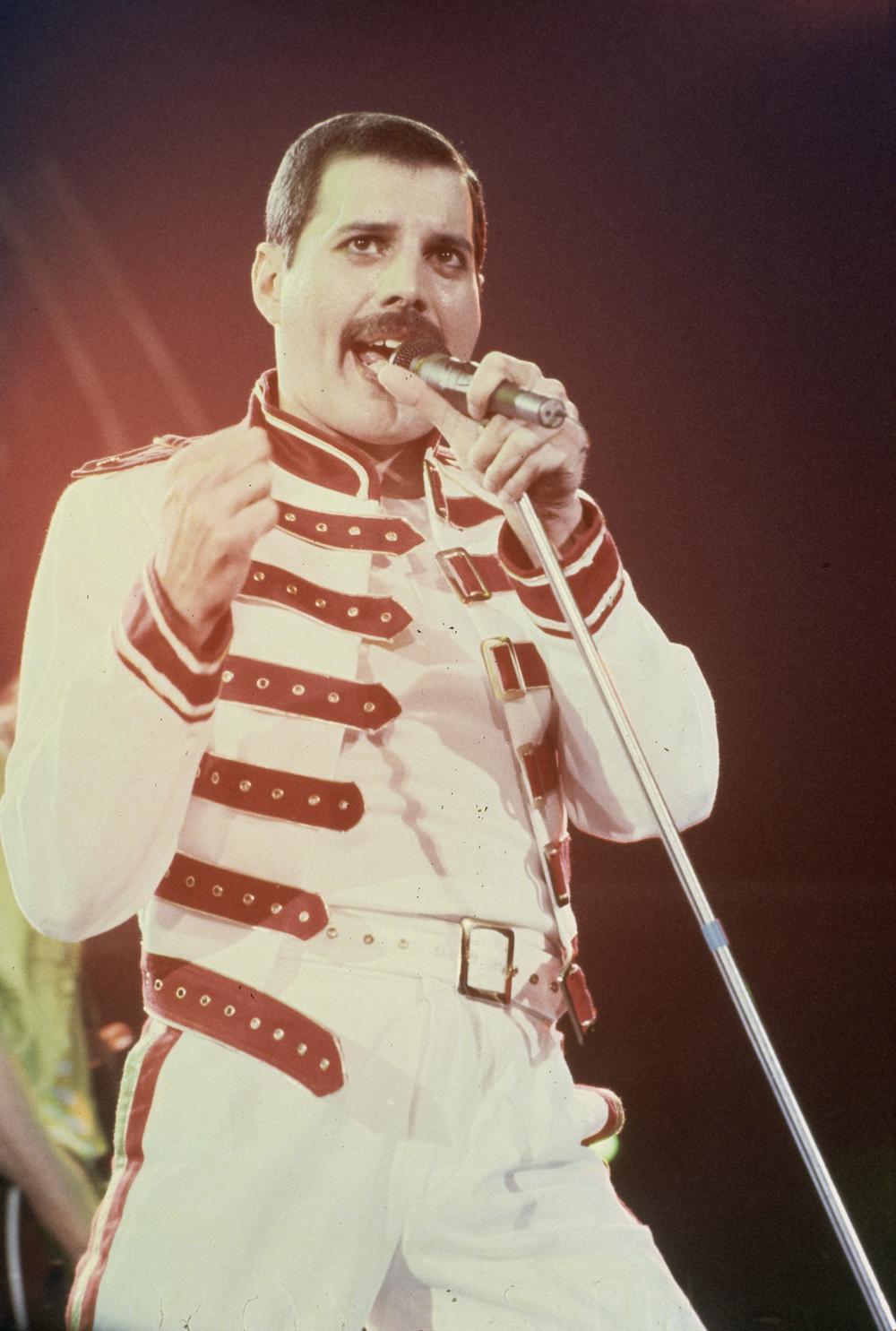
It’s 7:02 PM on July 13, 1985. Wembley Stadium, Live Aid. Queen has eighteen minutes. Mercury walks to the piano, plays the opening of Bohemian Rhapsody for 25 seconds, drops it, vaults the piano bench, grabs the mic, and moves downstage to meet 72,000 people. Then he does the thing — the “ay-o” call and response. Six notes, total. The crowd answers him six times, each answer louder than the last. He stops, raises his hand, silences them. Then does it again, higher. They match him. He does it again, higher still. They match him. On the fourth iteration, he hits a note they can’t follow. He’s laughing. They’re laughing. He’s won something, and so have they, and nobody can articulate what. Dave Grohl, who wasn’t born when Queen formed, later called it “the greatest rock performance of all time.” What Grohl meant is: the crowd was the instrument, and Mercury played it.
The thing to understand about Mercury is that it wasn’t spontaneous. It looked spontaneous. He’d rehearsed the “ay-o” call for 20 years of bar gigs. He knew exactly which notes broke a crowd’s ability to follow. He knew to use silence before octave leaps. He knew the yellow jacket and the stripped-to-the-waist white tank were going to read better than a shirt on camera. Brian May, the guitarist, said later: “Freddie was a complete actor. Every single second of a show, he was thinking about what the audience was seeing.” But the thinking was so fast it looked like feeling. That was the whole trick.
He’d turn it on you in ninety seconds. First, the assessment — he’d size up what you were wearing, what you’d just said, how loudly you laughed — and decide what character to be with you. Then the impression, or the mock-flirtation, or the scathing correction of a fact you’d gotten wrong. Then the cackle. Then he’d hand you a drink and ask, intently, about your mother. He read rooms the way pickpockets read crowds.
What’s underneath? Farrokh Bulsara, born in Zanzibar, raised in a boarding school in India, a lifelong obsessive about opera who wrote one of the greatest rock songs of all time by layering 180 overdubs of his own voice because he wanted to sound like a choir and didn’t trust anyone else to hit the notes. Reserved offstage. Almost shy. Loved his cats. The stage persona was not fake — it was constructed, deliberately, over decades, from the raw material of a man who needed somewhere to put all of that.
He never stopped being ON because the alternative, for him, was being somewhere he didn’t want to be.
Three questions to start with:
- Live Aid. Eighteen minutes. Walk me through the opening 25 seconds of Bohemian Rhapsody — what you were watching as you played.
- The “ay-o” call-and-response. How much of that was the crowd and how much was you playing them like a piano?
- Farrokh Bulsara to Freddie Mercury. When you look back, which version felt more like you?