

Historical Figure
Ovid
43 BC–AD 17
Roman poet (43 BC – AD 17/18)
Talk to Ovid
Have a conversation with this historical figure through AI
Biography
Publius Ovidius Naso, known in English as Ovid, was a Roman poet who lived during the reign of Augustus. He was a younger contemporary of Virgil and Horace, with whom he is often ranked as one of the three canonical poets of Latin literature. The Imperial scholar Quintilian considered him the last of the Latin love elegists. Although Ovid enjoyed enormous popularity during his lifetime, the emperor Augustus exiled him to Tomis, the capital of the newly organised province of Moesia, on the Black Sea, where he remained for the last nine or ten years of his life. Ovid himself attributed his banishment to a carmen et error, but his reluctance to disclose specifics has resulted in much speculation among scholars.
Timeline
The story of Ovid, told in moments.
Born Publius Ovidius Naso in Sulmo, about 90 miles east of Rome. His family was wealthy and of the equestrian class. His father wanted him to be a lawyer.
Gave up law after his first public readings of poetry made him famous in Rome. Married three times by his early twenties. "My muse kept calling me back," he wrote later.
Published the Ars Amatoria, a witty instruction manual on seduction. It scandalized Augustus's court at a time when the emperor was pushing moral legislation. "I taught what was allowed, not what was right," Ovid claimed.
Completed the Metamorphoses, 15 books of mythological transformations in verse. 250 stories from the creation of the world to the death of Caesar. It became the most influential poem of the medieval and Renaissance periods.
Augustus exiled him to Tomis, a frontier outpost on the Black Sea in modern Romania. The reason was never fully explained. Ovid called it "a poem and a mistake." He spent the rest of his life writing pleas to be allowed home.
In Their Own Words (20)
Well doth he live who lives retired, and keepsHis wants within the limit of his means.
Variant translation: Believe me that he who has passed his time in retirement, has lived to a good end, and it behoves every man to live within his means
If you want to be loved, be lovable.
Variant translation: To be loved, be lovable.
So I can't live either without you or with you.
Variant translation: Thus, I can neither live without you nor with you.
You will be safest in the middle.
Variant translation: You will go most safely by the middle way.
Quo quisque est maior, magis est placabilis irae,et faciles motus mens generosa capit.corpora magnanimo satis est prostrasse leoni,pugna suum finem, cum iacet hostis, habet:at lupus et turpes instant morientibus ursiet quaecumque minor nobilitate fera.maius apud Troiam forti quid habemus Achille?Dardanii lacrimas non tulit ille senis.
The greater a man is, the more can his wrath be appeased; a noble spirit is capable of kindly impulses. For the noble lion 'tis enough to have overthrown his enemy; the fight is at an end when his foe is fallen. But the wolf, the ignoble bears harry the dying and so with every beast of less nobility. At Troy what have we mightier than brave Achilles? But the tears of the aged Dardanian he could not endure.
Artifacts (15)

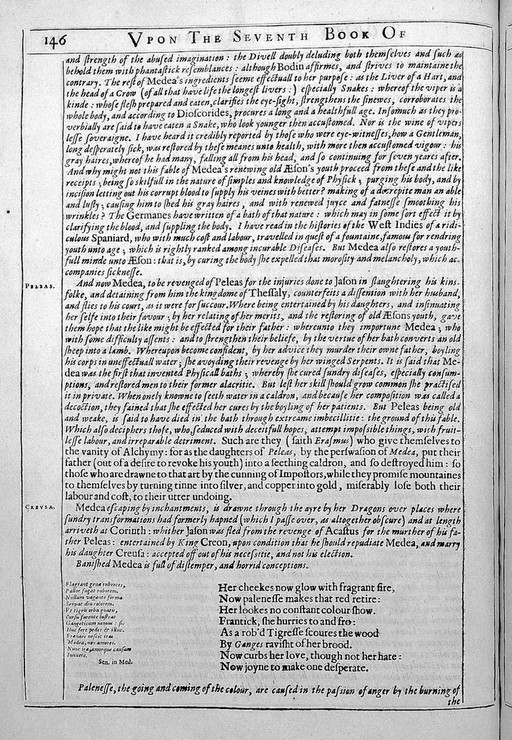
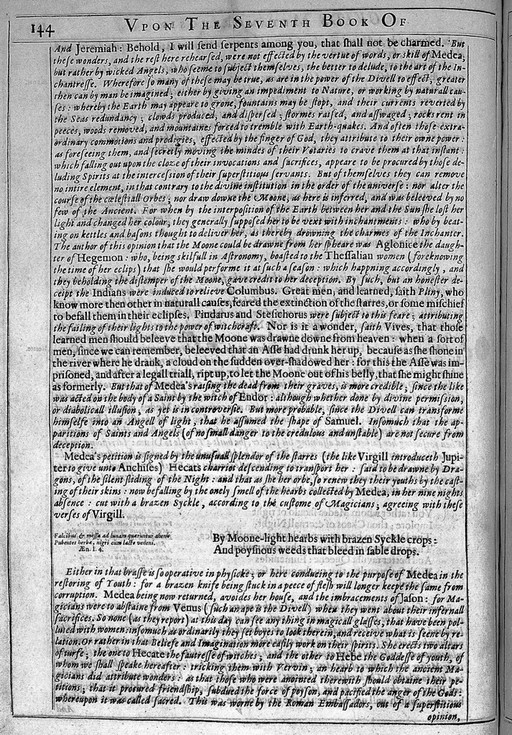
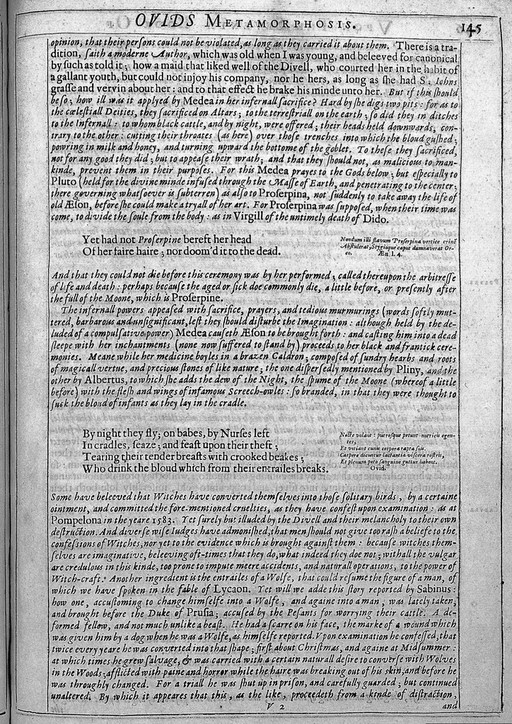
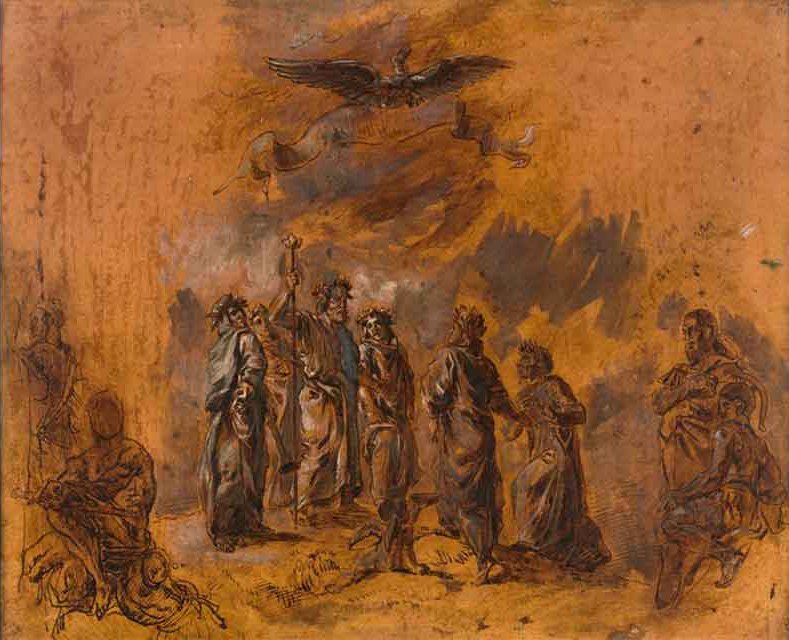
Study for Homer with Poets Ovid, Horace and Lucain … by Eugène Delacroix
Eugène Delacroix
Selections from Ovid, chiefly the Metamorphoses (IA selectionsfromov00ovid)
Ovid, 43 B.C.-17 or 18 A.D Allen, William Francis, 1830-1889 Greenough, J. B. (James Bradstreet), 1833-1901 Fowler, Harold North, 1859-1955 Allen, Joseph Henry, 1820-1898
More from the Classical


Explore what happened on the days that shaped Ovid's life. Today In History connects historical figures with the events, births, and deaths that defined their era. Browse all historical figures or explore today's events.