

Historical Figure
Guru Nanak
1469–1539
Founder and first guru of Sikhism (1469–1539)
Talk to Guru Nanak
Have a conversation with this historical figure through AI
Biography
Gurū Nānak, also known as Bābā Nānak, was an Indian spiritual teacher, mystic and poet, who is regarded as the founder of Sikhism and is the first of the ten Sikh Gurus.
Timeline
The story of Guru Nanak, told in moments.
Disappears into the River Beas while bathing. Gone for three days. Everyone assumes he's drowned. He reappears and declares: "There is no Hindu, there is no Muslim." He says he was taken to God's court and given a cup of nectar with a mission to teach. He is 30. This is the founding moment of Sikhism.
Disappeared into a river for three days. When he emerged, he said: "There is no Hindu. There is no Muslim." His first words as a spiritual teacher. He was 30. He'd spent years working as a government grain storekeeper.
Traveled across South Asia, the Middle East, and possibly Tibet over four great journeys spanning 20 years. Visited Mecca, Baghdad, and Sri Lanka. Debated with priests, mullahs, and yogis. Composed hymns along the way.
Begins a series of long journeys across Asia lasting over 20 years. He visits Mecca, Baghdad, Tibet, and Sri Lanka. Travels with Mardana, a Muslim musician who accompanies his hymns on the rebab. He debates with yogis, mullahs, and pandits. His message is consistent: one God, equality, shared meals.
Founds the town of Kartarpur on the banks of the Ravi River. Establishes the first Sikh community. Introduces the langar, a communal kitchen where everyone sits together to eat regardless of caste or faith. This is radical in a society defined by caste segregation.
Founded the town of Kartarpur on the banks of the Ravi River. Established the first Sikh community. Everyone ate together regardless of caste. The communal kitchen, or langar, became a core Sikh practice.
Dies in Kartarpur at age 70. Before dying, he appoints Guru Angad as his successor rather than his own sons. His 974 hymns are later compiled into the Guru Granth Sahib. Hindus and Muslims both claim the right to his funeral rites. According to tradition, when the sheet is lifted from his body, they find only flowers.
In Their Own Words (12)
Of a woman are we conceived, Of a woman are we born, To a woman are we betrothed and married, It is a woman who keeps the race going, Another companion is sought when the life-partner dies, Through a woman are established social ties. Why should we consider woman cursed and condemned, When from woman are born leaders and rulers. From woman alone is born a woman, Without woman there can be no human birth. Without woman, O Nanak, only the True One exists. Be it man or be it woman, Only those who sing His glory Are blessed and radiant with His Beauty, In His Presence and with His grace They appear with a radiant face.
Raag Aasaa Mehal 1, p. 473; in Aad Guru Granth Sahib (1983 edition by Shiromani Gurdwara Parbandhak Committee); also in Guru Nanak and His Times (1971) by Anil Chandra Banerjee, p. 78 ISBN 1573929980 -->, 1971
Of a woman are we conceived, Of a woman are we born, To a woman are we betrothed and married, It is a woman who keeps the race going, Another companion is sought when the life-partner dies, Through a woman are established social ties. Why should we consider woman cursed and condemned, When from woman are born leaders and rulers. From woman alone is born a woman, Without woman there can be no human birth. Without woman, O Nanak, only the True One exists. Be it man or be it woman, Only those who sing His glory Are blessed and radiant with His Beauty, In His Presence and with His grace They appear with a radiant face.
Raag Aasaa Mehal 1, p. 473; in Aad Guru Granth Sahib (1983 edition by Shiromani Gurdwara Parbandhak Committee); also in Guru Nanak and His Times (1971) by Anil Chandra Banerjee, p. 78 ISBN 1573929980 -->, 1971
You shall everywhere mind the book of the Granth-Sahib as your Guru; whatever you shall ask it will show you.
As quoted in Religious Thought and Life in India : An Account of the Religions of the Indian Peoples, Based on a Life's Study of Their Literature and on Personal Investigations in Their Own Country (1883) by Monier Monier-Williams, 1883
You shall everywhere mind the book of the Granth-Sahib as your Guru; whatever you shall ask it will show you.
As quoted in Religious Thought and Life in India : An Account of the Religions of the Indian Peoples, Based on a Life's Study of Their Literature and on Personal Investigations in Their Own Country (1883) by Monier Monier-Williams, 1883
Make compassion the cotton, contentment the thread, modesty the knot and truth the twist. This is the sacred thread of the soul; if you have it, then go ahead and put it on me.
Raag Aasaa 471:5383-4
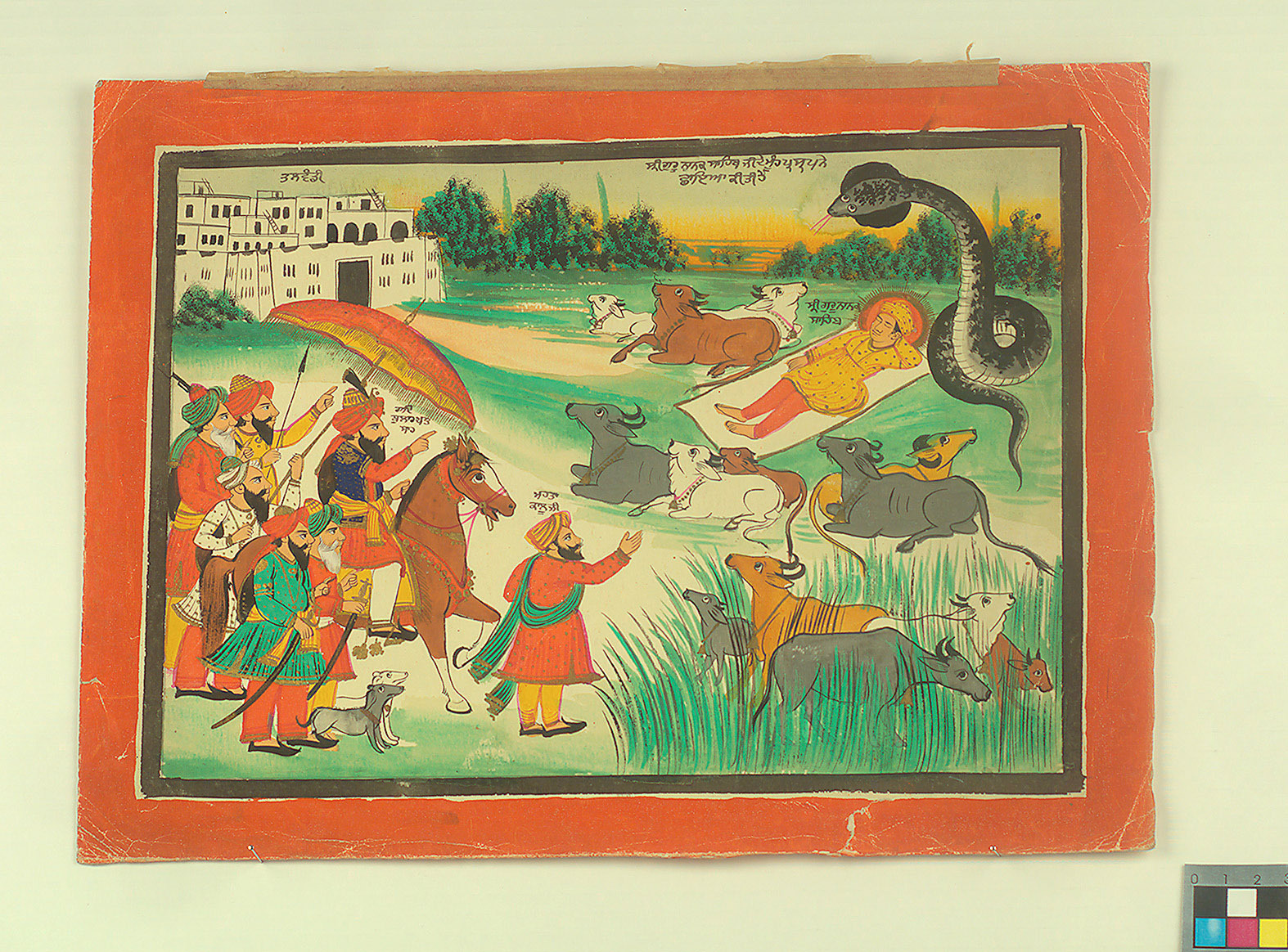
Artifacts (15)


More from the Renaissance


Explore what happened on the days that shaped Guru Nanak's life. Today In History connects historical figures with the events, births, and deaths that defined their era. Browse all historical figures or explore today's events.