

Verdun's Agony Ends: 337,000 German Casualties
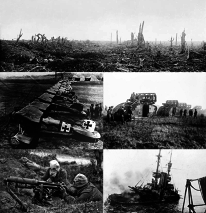
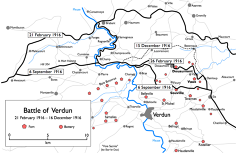
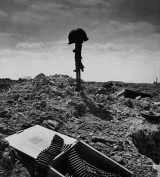
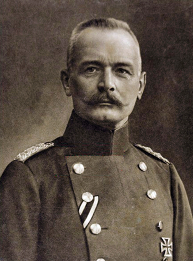
Ten months of continuous fighting over a patch of ground barely ten miles wide left nearly 700,000 men dead, wounded, or missing. The Battle of Verdun, the longest single engagement of World War I, ended on December 18, 1916, when the last French offensive pushed German forces back to roughly the positions they had held the previous February. The battle achieved nothing for either side except an industrial-scale harvest of human life. German Chief of Staff Erich von Falkenhayn launched the offensive on February 21, 1916, targeting the fortress city of Verdun on the Meuse River. His strategy was to attack a position France would defend at any cost, grinding down the French army through attrition. Verdun, steeped in national symbolism, was exactly that target. The French rallied around "Ils ne passeront pas" and committed division after division to hold the line. The opening bombardment was the heaviest in history to that point: over one million shells in the first twenty-one hours. Fort Douaumont, the largest of Verdun's ring of fortresses, fell on February 25. General Philippe Petain reorganized the defense, established a rotation system cycling fresh divisions through the sector, and kept the single supply road open. The fighting devolved into a grinding contest of artillery, poison gas, flamethrowers, and close-quarters assaults over moonscaped terrain. Fort Vaux fell in June after its garrison held out until their water ran dry. German advances peaked in summer but never reached Verdun itself. French counteroffensives in October and December recaptured both forts and most lost ground. Final casualties are estimated at roughly 377,000 French and 337,000 German, including approximately 163,000 killed on each side. Verdun became France's defining memory of the Great War and a synonym for the futility of industrial warfare.
December 18, 1916
110 years ago
Key Figures & Places
What Else Happened on December 18
Hannibal had just crossed the Alps with elephants. Now he needed Rome to bleed. The Trebia River ran cold that December morning. Hannibal sent cavalry to provo…
King Alfonso I of Aragon seized Zaragoza from the Almoravid dynasty, ending centuries of Islamic rule in the Ebro Valley. This conquest transformed his kingdom …

A Mongol emperor gave his dynasty a Chinese name and claimed the Mandate of Heaven. On December 18, 1271, Kublai Khan proclaimed the Yuan Dynasty, renaming his …
Moorish residents of the Alpujarras mountains rose in armed revolt against the Castilian Crown, directly challenging the systematic forced conversions imposed b…

After sixty-six days at sea, 102 passengers who had staked everything on religious freedom stepped onto a frozen shore with almost nothing. On December 18, 1620…
The Kingdom of Kongo fielded 400,000 warriors. Portugal brought 12,000 soldiers and superior firearms. Kongo's ruler, Álvaro III, had converted to Catholicism d…
Talk to History
Have a conversation with historical figures who witnessed this era. Ask questions, explore perspectives, and bring history to life.