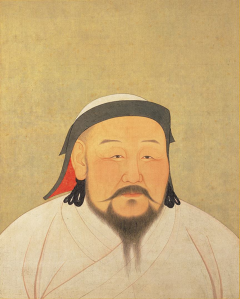
Kublai Khan Founds Yuan: China's First Foreign Dynasty
A Mongol emperor gave his dynasty a Chinese name and claimed the Mandate of Heaven. On December 18, 1271, Kublai Khan proclaimed the Yuan Dynasty, renaming his realm with the Chinese character meaning "origin" and positioning himself not as a foreign conqueror but as the legitimate successor to centuries of Chinese imperial tradition. The declaration marked the first time a non-Han ruler established a dynasty governing all of China. Kublai was the grandson of Genghis Khan, but his ambitions extended beyond steppe warfare. Since becoming Great Khan in 1260, he had been moving the center of Mongol power from the grasslands to northern China. He built a new capital at Dadu, modern Beijing, designed with Chinese urban planning and staffed with Chinese, Persian, and Central Asian administrators. The proclamation was deliberate political strategy. By adopting Chinese dynastic conventions, Kublai sought legitimacy among his Chinese subjects. He embraced Confucian governance rituals, patronized arts and scholarship, and maintained the civil service examination system, though Mongols occupied the highest positions. The dynasty would not conquer all of China for another eight years. The Southern Song Dynasty resisted fiercely. Kublai's forces destroyed the Song fleet at the naval Battle of Yamen in 1279, completing unification under Mongol rule. The Yuan Dynasty lasted less than a century. Kublai's successors proved less capable, and ethnic tensions festered. Famine, plague, and rebellion brought the dynasty down in 1368, when Zhu Yuanzhang, a former peasant, drove the Mongols north and founded the Ming Dynasty.
December 18, 1271
755 years ago
Key Figures & Places

What Else Happened on December 18
Hannibal had just crossed the Alps with elephants. Now he needed Rome to bleed. The Trebia River ran cold that December morning. Hannibal sent cavalry to provo…
King Alfonso I of Aragon seized Zaragoza from the Almoravid dynasty, ending centuries of Islamic rule in the Ebro Valley. This conquest transformed his kingdom …
Moorish residents of the Alpujarras mountains rose in armed revolt against the Castilian Crown, directly challenging the systematic forced conversions imposed b…
After sixty-six days at sea, 102 passengers who had staked everything on religious freedom stepped onto a frozen shore with almost nothing. On December 18, 1620…
The Kingdom of Kongo fielded 400,000 warriors. Portugal brought 12,000 soldiers and superior firearms. Kongo's ruler, Álvaro III, had converted to Catholicism d…
Abel Tasman dropped anchor in Golden Bay, becoming the first European to encounter New Zealand. The expedition ended abruptly after a violent confrontation with…
Talk to History
Have a conversation with historical figures who witnessed this era. Ask questions, explore perspectives, and bring history to life.