

Outer Space Treaty Takes Effect: Nukes Banned
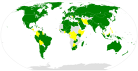
The most important arms control agreement of the Space Age took effect on October 10, 1967, and it was negotiated so quickly that most of the world barely noticed. The Outer Space Treaty — formally the Treaty on Principles Governing the Activities of States in the Exploration and Use of Outer Space — banned nuclear weapons in orbit, prohibited military bases on the Moon, and declared space the "province of all mankind." More than sixty nations signed, including the United States and Soviet Union, the two countries whose rivalry made the treaty necessary. The treaty's origins lay in the terrifying logic of orbital weapons. By the early 1960s, both superpowers were testing rockets capable of placing nuclear warheads in orbit, where they could be deorbited onto any target with virtually no warning time. A weapon in low Earth orbit could reach its target in minutes — faster than any ground-launched intercontinental ballistic missile. The prospect of a nuclear-armed satellite constellation orbiting overhead was destabilizing enough to make both sides eager for restrictions. President Lyndon Johnson and Soviet Premier Alexei Kosygin agreed to negotiate through the United Nations Committee on the Peaceful Uses of Outer Space. The resulting treaty, opened for signature on January 27, 1967, was remarkably comprehensive for a Cold War agreement. Article IV prohibited placing nuclear weapons or "any other kinds of weapons of mass destruction" in orbit or on celestial bodies. Article II declared that no nation could claim sovereignty over the Moon or any other celestial body. Article I guaranteed that space exploration would be conducted "for the benefit and in the interests of all countries." The treaty's speed reflected genuine mutual interest. Neither superpower wanted to bear the cost of an orbital arms race on top of their existing nuclear arsenals, and both recognized that space-based weapons would be extraordinarily difficult to verify or control. The treaty essentially froze the military competition at the level of reconnaissance satellites and communications, which both sides found useful and non-threatening. Enforcement relies entirely on good faith — the treaty has no inspection mechanism or penalty provisions. Its most tested principle is the prohibition on national sovereignty claims, which has faced increasing pressure from commercial space ventures and national programs eyeing lunar mining rights. The Outer Space Treaty remains the foundational legal framework for human activity beyond Earth, a rare Cold War achievement that both superpowers honored throughout their rivalry and that 114 nations have ratified.
October 10, 1967
59 years ago
Key Figures & Places
What Else Happened on October 10
Germanicus died vomiting in Antioch. He was 33, Rome's most popular general, and Tiberius's heir. His body showed signs of poisoning. His room contained curse t…
Germanicus succumbed to a mysterious, agonizing illness near Antioch, convinced that his rival, Governor Gnaeus Calpurnius Piso, had poisoned him. His death tri…

Seventy-two men faced an army of thousands on the plains of Karbala, and their deaths on October 10, 680 CE, created the deepest and most enduring schism in Isl…
Husayn ibn Ali fell in battle against the forces of the Umayyad Caliph Yazid I at Karbala, cementing the definitive schism between Sunni and Shia Islam. His dea…

Frankish infantry formed a massive square "like a wall of ice," as one Arab chronicler described it, and absorbed wave after wave of Muslim cavalry charges near…
Charles Martel’s Frankish infantry shattered the Umayyad Caliphate’s cavalry charge between Tours and Poitiers, halting the northern expansion of Islamic forces…
Talk to History
Have a conversation with historical figures who witnessed this era. Ask questions, explore perspectives, and bring history to life.