Martel Halts Islam at Tours: Europe's Fate Decided
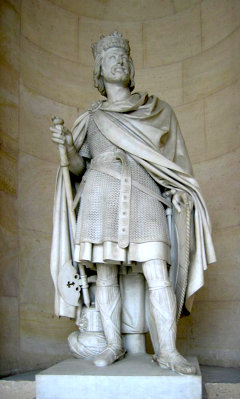
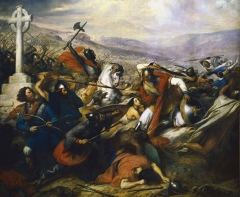
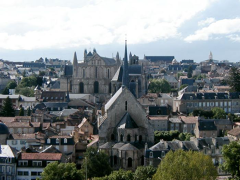
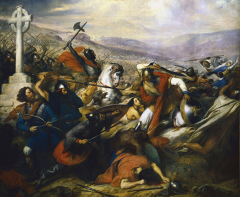
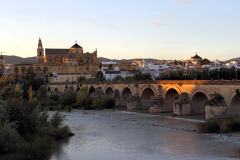
Frankish infantry formed a massive square "like a wall of ice," as one Arab chronicler described it, and absorbed wave after wave of Muslim cavalry charges near the city of Tours in October 732. When the fighting ended, Emir Abdul Rahman Al Ghafiqi lay dead on the field, and the Islamic advance into Western Europe — which had consumed the Iberian Peninsula in barely two decades — reached its northernmost limit. Charles Martel's victory at Tours ranks among the most consequential military engagements in European history. The Muslim conquest of Iberia had been astonishingly rapid. Tariq ibn Ziyad crossed the Strait of Gibraltar in 711, and within seven years the Umayyad Caliphate controlled virtually all of modern Spain and Portugal. Raiding parties pushed across the Pyrenees into Aquitaine and Burgundy, sacking Bordeaux and threatening the rich monasteries of the Loire Valley. Abdul Rahman, the governor of Al-Andalus, organized the 732 expedition not as a raid but as a full military campaign aimed at plundering the wealthy Abbey of St. Martin at Tours. Charles Martel — whose surname means "the Hammer" — was the de facto ruler of the Frankish kingdoms, holding power as Mayor of the Palace under a figurehead Merovingian king. He had spent years consolidating Frankish military power and was among the few European leaders capable of assembling a large enough force to confront the Muslims. His army, estimated between 15,000 and 30,000, was composed primarily of veteran infantry equipped with heavy armor, shields, and long spears. The exact location of the battle remains debated — somewhere between Tours and Poitiers — and the date is uncertain within October 732. What is clear is that Martel chose his ground carefully, positioning his infantry on wooded, hilly terrain that negated the Muslim cavalry's advantage. Abdul Rahman's horsemen charged repeatedly but could not break the Frankish phalanx. When Frankish scouts threatened the Muslim camp and the plunder stored there, portions of the cavalry broke off to protect their loot, creating disorder that Martel exploited with a counterattack. Abdul Rahman was killed in the fighting. The Muslim army withdrew overnight, abandoning their tents and much of their plunder. Martel, suspecting an ambush, did not pursue. Historians debate whether Tours truly "saved" Christian Europe or was merely a large raid turned back, but the battle's psychological impact was real. Muslim armies never again penetrated so deeply into Francia, and Martel's prestige laid the foundation for his grandson Charlemagne's empire.
October 10, 732
1294 years ago
Key Figures & Places
What Else Happened on October 10
Germanicus died vomiting in Antioch. He was 33, Rome's most popular general, and Tiberius's heir. His body showed signs of poisoning. His room contained curse t…
Germanicus succumbed to a mysterious, agonizing illness near Antioch, convinced that his rival, Governor Gnaeus Calpurnius Piso, had poisoned him. His death tri…
Seventy-two men faced an army of thousands on the plains of Karbala, and their deaths on October 10, 680 CE, created the deepest and most enduring schism in Isl…
Husayn ibn Ali fell in battle against the forces of the Umayyad Caliph Yazid I at Karbala, cementing the definitive schism between Sunni and Shia Islam. His dea…
Charles Martel’s Frankish infantry shattered the Umayyad Caliphate’s cavalry charge between Tours and Poitiers, halting the northern expansion of Islamic forces…
Regent Sten Sture the Elder rallied Swedish farmers and miners to defend Stockholm against a Danish invasion led by King Christian I at the Battle of Brunkeberg…
Talk to History
Have a conversation with historical figures who witnessed this era. Ask questions, explore perspectives, and bring history to life.