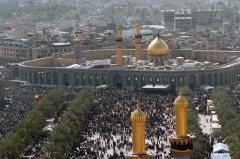
Husayn Falls at Karbala: Islam's Defining Tragedy
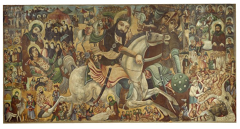
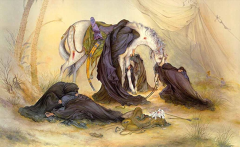
Seventy-two men faced an army of thousands on the plains of Karbala, and their deaths on October 10, 680 CE, created the deepest and most enduring schism in Islam. Husayn ibn Ali — grandson of the Prophet Muhammad, son of Ali ibn Abi Talib, and the figure Shia Muslims regard as the rightful leader of the faith — was killed along with nearly all of his companions and male family members by forces loyal to the Umayyad Caliph Yazid I. His severed head was carried to Damascus as a trophy. The confrontation at Karbala was the culmination of a succession crisis that had divided the Muslim community since the Prophet's death in 632. Husayn's father, Ali, had served as the fourth caliph but was assassinated in 661. Mu'awiya ibn Abi Sufyan seized the caliphate and founded the Umayyad dynasty, passing power to his son Yazid in 680 — a hereditary transfer that many Muslims considered illegitimate. When Yazid demanded that Husayn, living in Medina, pledge allegiance, Husayn refused and set out for Kufa in Iraq, where supporters had promised military backing. The promised support never materialized. Yazid's governor in Kufa, Ubayd Allah ibn Ziyad, had identified and crushed the pro-Husayn faction before Husayn's caravan arrived. On the first day of Muharram (the first month of the Islamic calendar), an Umayyad cavalry force of roughly 4,000 intercepted Husayn's small party near the banks of the Euphrates River and cut off access to water. For eight days, Husayn's group — which included women, children, and elderly family members — endured thirst in the desert heat. Husayn attempted to negotiate safe passage, offering to leave Iraq entirely. Ibn Ziyad refused any terms except unconditional surrender. On the tenth of Muharram (Ashura), the Umayyad forces attacked. The fighting was desperately unequal. Husayn's companions were killed one by one. His infant son Ali al-Asghar was reportedly struck by an arrow while Husayn held him up, begging for water for the child. Husayn was the last man standing. Wounded by multiple arrows and sword blows, he was finally killed by Shimr ibn Thil-Jawshan, who beheaded him. The women and surviving children, including Husayn's son Ali Zayn al-Abidin (who was too ill to fight), were taken prisoner and paraded through Kufa and Damascus. Karbala became the founding narrative of Shia Islam. The annual Ashura commemorations — involving mourning processions, passion plays, and acts of self-flagellation — have been observed for over thirteen centuries.
October 10, 680
1346 years ago
Key Figures & Places

What Else Happened on October 10
Germanicus died vomiting in Antioch. He was 33, Rome's most popular general, and Tiberius's heir. His body showed signs of poisoning. His room contained curse t…
Germanicus succumbed to a mysterious, agonizing illness near Antioch, convinced that his rival, Governor Gnaeus Calpurnius Piso, had poisoned him. His death tri…
Husayn ibn Ali fell in battle against the forces of the Umayyad Caliph Yazid I at Karbala, cementing the definitive schism between Sunni and Shia Islam. His dea…
Frankish infantry formed a massive square "like a wall of ice," as one Arab chronicler described it, and absorbed wave after wave of Muslim cavalry charges near…
Charles Martel’s Frankish infantry shattered the Umayyad Caliphate’s cavalry charge between Tours and Poitiers, halting the northern expansion of Islamic forces…
Regent Sten Sture the Elder rallied Swedish farmers and miners to defend Stockholm against a Danish invasion led by King Christian I at the Battle of Brunkeberg…
Talk to History
Have a conversation with historical figures who witnessed this era. Ask questions, explore perspectives, and bring history to life.