Today In History logo TIH
President Woodrow Wilson pressed a telegraph key in Washington, D.C., on October
Featured Event 1913 Event

October 10

Panama Canal Advances: Wilson Blasts the Last Dike

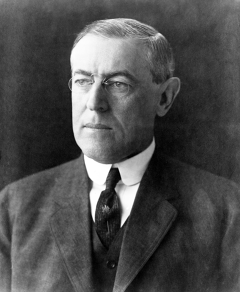
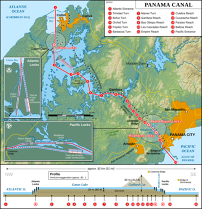
President Woodrow Wilson pressed a telegraph key in Washington, D.C., on October 10, 1913, sending an electrical signal 4,000 miles to the Isthmus of Panama, where it detonated eight tons of dynamite and blew apart the Gamboa Dike — the last barrier separating the Atlantic and Pacific approaches of the Panama Canal. Water from Gatun Lake surged into the Culebra Cut, and for the first time in history, the two great oceans were connected through the American continent. The canal had consumed ten years of American construction, following twenty years of French failure. Ferdinand de Lesseps, the builder of the Suez Canal, had launched a sea-level canal attempt in 1881 that collapsed spectacularly in 1889, killing an estimated 22,000 workers (mostly from malaria and yellow fever) and bankrupting thousands of French investors. The scandal destroyed careers and sent politicians to prison. The United States took over in 1904 after engineering Panamanian independence from Colombia — a diplomatic maneuver that Theodore Roosevelt accomplished in barely two weeks with a warship stationed offshore. Chief engineer John Frank Stevens and his successor, Army Colonel George Washington Goethals, made the critical decision to abandon the sea-level design in favor of a lock canal that would raise ships 85 feet to an artificial lake created by damming the Chagres River. The Culebra Cut — later renamed the Gaillard Cut — was the canal's most brutal challenge. Workers carved a nine-mile channel through the Continental Divide, removing over 100 million cubic yards of rock and earth. Landslides constantly refilled sections of the excavation. Steam shovels, dynamite, and a workforce of over 45,000 men (predominantly West Indian laborers paid a fraction of white American wages) worked in equatorial heat, fighting mud, rock slides, and tropical disease. By the time Wilson triggered the Gamboa Dike explosion, the structural work was essentially complete. The first unofficial transit — a crane boat — crossed the full canal on January 7, 1914. The SS Ancon made the first official transit on August 15, 1914, though the event was largely overshadowed by the outbreak of World War I in Europe the same month. The canal cut the shipping distance between New York and San Francisco from 13,000 miles around Cape Horn to 5,000 miles, reshaping global maritime trade routes.

October 10, 1913

113 years ago

Key Figures & Places
What Else Happened on October 10

Talk to History

Have a conversation with historical figures who witnessed this era. Ask questions, explore perspectives, and bring history to life.

Start Talking