
McKinley Falls to Anarchist Bullet: Roosevelt Rises
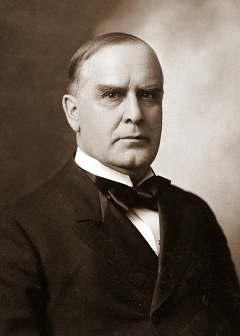
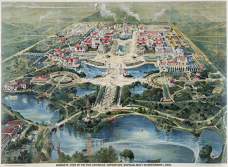
Leon Czolgosz waited in the receiving line at the Temple of Music at the Pan-American Exposition in Buffalo, New York, on September 6, 1901, his right hand wrapped in a handkerchief concealing a .32-caliber Iver Johnson revolver. When President William McKinley reached out to shake his hand, Czolgosz fired twice into the president's abdomen at point-blank range. McKinley staggered, looked at his attacker, and said, "Don't let them hurt him." The president died eight days later from gangrene caused by a bullet that doctors could not locate, despite the exposition featuring an X-ray machine that was never used on him. Czolgosz was a 28-year-old unemployed factory worker from Cleveland who described himself as an anarchist, though organized anarchist groups in the United States had rejected him as unstable and possibly a government spy. He claimed to have been inspired by the political philosophy of Emma Goldman and by the assassination of King Umberto I of Italy by an anarchist the previous year. His motivations were both ideological and personal: he believed McKinley was an agent of wealth and privilege, and he harbored the directionless rage of a man whom the industrial economy had discarded. McKinley had been reelected in 1900 on a platform of prosperity and imperial expansion, carrying 28 of 45 states against William Jennings Bryan. His presidency had overseen the Spanish-American War, the annexation of the Philippines, Hawaii, and Puerto Rico, and a booming economy fueled by industrial growth. His assassination elevated Vice President Theodore Roosevelt, at 42 the youngest person ever to assume the presidency, and inaugurated the Progressive Era of American politics. Czolgosz was tried, convicted, and executed in the electric chair at Auburn Prison just 45 days after the shooting, one of the fastest progressions from arrest to execution in American history. His last words were, "I killed the President because he was the enemy of the good people." McKinley's death was the third presidential assassination in 36 years, following Lincoln and Garfield, and it prompted Congress to formally assign the Secret Service to presidential protection, a role the agency has held ever since.
September 6, 1901
125 years ago
Key Figures & Places
President of the United States
Wikipedia
William McKinley
Wikipedia
Anarchism
Wikipedia
Pan-American Exposition
Wikipedia
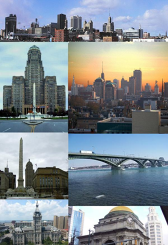
Buffalo, New York
Wikipedia
anarchist
Wikipedia
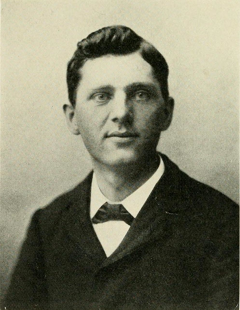
Leon Czolgosz
Wikipedia
Leon Czolgosz
Wikipedia
Anarchism
Wikipedia
Assassination of William McKinley
Wikipedia
President
Wikipedia
William McKinley
Wikipedia
Pan-American Exposition
Wikipedia
Buffalo, New York
Wikipedia
World's fair
Wikipedia
Anexo:Presidentes de los Estados Unidos
Wikipedia
What Else Happened on September 6
The Maya Long Count calendar began its current cycle on this day, anchoring a sophisticated system of timekeeping that tracked thousands of years with mathemati…
The Battle of the Frigidus wasn't just Theodosius I defeating a usurper — it was the last time a Roman army fought under pagan standards against a Christian emp…
Columbus had already been to La Gomera once before and turned back. This time he left the Canary Islands on September 6, 1492, with three ships and roughly 90 m…
The Victoria, a battered carrack with only 18 surviving crew members aboard, limped into the harbor at Sanlucar de Barrameda, Spain, on September 6, 1522, compl…
The Mayflower weighed anchor and departed Plymouth, England, on September 6, 1620, carrying 102 passengers and approximately 30 crew members on a 66-day voyage …
A September hurricane drove the Spanish galleon Nuestra Señora de Atocha to the ocean floor near Key West in 1622, drowning 260 of its 265 passengers and crew. …
Talk to History
Have a conversation with historical figures who witnessed this era. Ask questions, explore perspectives, and bring history to life.