Victoria Returns: First Ship Circles the Globe
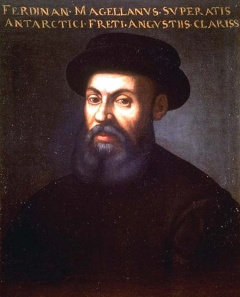
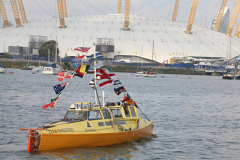
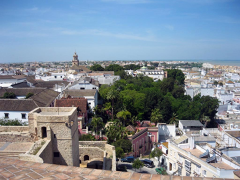
The Victoria, a battered carrack with only 18 surviving crew members aboard, limped into the harbor at Sanlucar de Barrameda, Spain, on September 6, 1522, completing the first circumnavigation of the globe. The ship had departed nearly three years earlier as part of a five-vessel fleet commanded by Ferdinand Magellan, who had been killed in the Philippines 17 months before the voyage ended. Juan Sebastian Elcano, a Basque navigator who had taken command after a series of mutinies, desertions, and Magellan's death, brought the Victoria home with a cargo of cloves that was valuable enough to pay for the entire expedition. Magellan's fleet of 270 men had sailed from Sanlucar on September 20, 1519, seeking a westward route to the Spice Islands of the Moluccas. The expedition crossed the Atlantic, navigated the treacherous strait at the southern tip of South America that now bears Magellan's name, and then spent 98 days crossing the Pacific without sighting land, a passage so brutal that the crew ate rats, sawdust, and the leather wrappings of the rigging. Twenty men died of scurvy during the Pacific crossing alone. Magellan was killed on April 27, 1521, in a skirmish with warriors led by Chief Lapu-Lapu on the island of Mactan in the Philippines. His decision to intervene in a local conflict, apparently to demonstrate Spanish military prowess and convert the islanders to Christianity, cost him his life and deprived the expedition of its most capable leader. The surviving ships and crew spent months wandering the Philippine and Indonesian archipelagos before finally reaching the Moluccas and loading the spice cargo that justified the voyage financially. Only 18 of the original 270 men completed the circumnavigation aboard the Victoria. The ship itself was so worm-eaten and leaky that it required constant pumping to stay afloat during the final leg across the Indian Ocean and around the Cape of Good Hope. The voyage proved conclusively that the Earth was round and that the world's oceans were connected, but it also demonstrated that a westward route to Asia was far longer, more dangerous, and less commercially viable than the Portuguese route around Africa.
September 6, 1522
504 years ago
Key Figures & Places
What Else Happened on September 6
The Maya Long Count calendar began its current cycle on this day, anchoring a sophisticated system of timekeeping that tracked thousands of years with mathemati…
The Battle of the Frigidus wasn't just Theodosius I defeating a usurper — it was the last time a Roman army fought under pagan standards against a Christian emp…
Columbus had already been to La Gomera once before and turned back. This time he left the Canary Islands on September 6, 1492, with three ships and roughly 90 m…
The Mayflower weighed anchor and departed Plymouth, England, on September 6, 1620, carrying 102 passengers and approximately 30 crew members on a 66-day voyage …
A September hurricane drove the Spanish galleon Nuestra Señora de Atocha to the ocean floor near Key West in 1622, drowning 260 of its 265 passengers and crew. …
John Endecott and his group of settlers established a permanent foothold at Naumkeag, soon renamed Salem. This outpost provided the logistical anchor for the Gr…
Talk to History
Have a conversation with historical figures who witnessed this era. Ask questions, explore perspectives, and bring history to life.