
Booth Killed: Manhunt Ends After Lincoln Assassination
Union cavalry cornered John Wilkes Booth in a tobacco barn on Richard Garrett's farm near Port Royal, Virginia, on April 26, 1865, ending the largest manhunt in American history twelve days after Booth assassinated President Abraham Lincoln. Booth had broken his leg leaping from the presidential box at Ford's Theatre and spent nearly two weeks evading capture with the help of Confederate sympathizers across southern Maryland and northern Virginia. Sergeant Boston Corbett shot Booth through a gap in the barn's wall, and the assassin died on the farmhouse porch at dawn, reportedly murmuring, "Useless, useless." Booth's escape route had been planned in advance, at least in its initial stages. He and co-conspirator David Herold crossed the Navy Yard Bridge out of Washington within minutes of the assassination, retrieved weapons cached at a tavern in Surrattville, Maryland, and sought medical treatment for Booth's broken leg from Dr. Samuel Mudd. The pair hid in a pine thicket for five days while federal troops searched the wrong areas, then crossed the Potomac and Rappahannock rivers with the help of Confederate agents before reaching Garrett's farm. The assassination was part of a broader conspiracy targeting the top three officials in the line of presidential succession. Lewis Powell attacked Secretary of State William Seward in his home, stabbing him and several family members but failing to kill anyone. George Atzerodt was assigned to assassinate Vice President Andrew Johnson but lost his nerve and spent the evening drinking at a hotel bar. Booth's original plan had been to kidnap Lincoln and exchange him for Confederate prisoners of war, but Lee's surrender at Appomattox on April 9 made that scheme pointless, and Booth escalated to murder. Eight conspirators were tried by a military tribunal in May and June 1865. Four were hanged on July 7, including Mary Surratt, who became the first woman executed by the federal government. Three others received life sentences. The trial's use of a military commission rather than a civilian court remains controversial, and Surratt's guilt has been debated for over 150 years. Booth's act did not save the Confederacy or reverse the outcome of the war; it removed the one leader with both the political skill and the personal inclination to pursue a lenient reconstruction of the South.
April 26, 1865
161 years ago
Key Figures & Places
assassin
Wikipedia
Union (American Civil War)
Wikipedia
Virginia
Wikipedia
Abraham Lincoln
Wikipedia
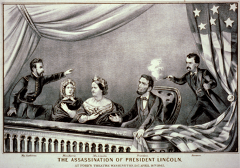
Abraham Lincoln assassination
Wikipedia
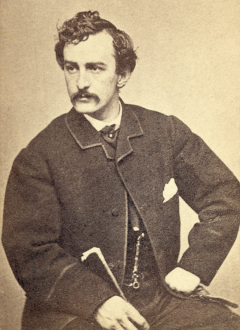
John Wilkes Booth
Wikipedia
Union
Wikipedia
John Wilkes Booth
Wikipedia
Assassination of Abraham Lincoln
Wikipedia
Virginia
Wikipedia
Abraham Lincoln
Wikipedia
David Herold
Wikipedia
1838
Wikipedia
What Else Happened on April 26
He climbed 6,000 feet of rock just to read his own letters in the wind. Petrarch didn't come for the view; he came because he felt trapped inside a stone tower.…
A fresco of the Virgin Mary and the Christ Child reportedly materialized on the wall of a half-finished church in Genazzano, Italy. This event transformed the s…
Giuliano's heart stopped under a chalice, his blood soaking the altar steps while Lorenzo ran for his life. The Pazzi conspirators thought they'd toppled Floren…
Assassins struck during High Mass in Florence's cathedral on April 26, 1478, stabbing Giuliano de' Medici to death and wounding his brother Lorenzo in a conspir…
The parish register of Holy Trinity Church in Stratford-upon-Avon records the baptism of "Gulielmus filius Johannes Shakspere" on April 26, 1564, three days aft…
English colonists made their first landfall in Virginia at Cape Henry on April 26, 1607, planting a cross on the sandy shore before proceeding up the James Rive…
Talk to History
Have a conversation with historical figures who witnessed this era. Ask questions, explore perspectives, and bring history to life.