Colonists Land at Cape Henry: Jamestown Begins
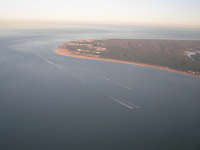
English colonists made their first landfall in Virginia at Cape Henry on April 26, 1607, planting a cross on the sandy shore before proceeding up the James River to establish what would become Jamestown, the first permanent English settlement in North America. The three ships, Susan Constant, Godspeed, and Discovery, carried 104 settlers and crew members who had endured four months at sea under the command of Captain Christopher Newport. Their mission, sponsored by the Virginia Company of London, was to find gold, establish trade, and locate a water route to the Pacific. The landing at Cape Henry nearly ended in disaster. A small party that went ashore to explore was attacked by a group of Powhatan warriors, and several colonists were wounded. The encounter was a preview of the complex and ultimately devastating relationship between the English settlers and the Powhatan Confederacy, a network of roughly thirty Algonquian-speaking tribes led by the paramount chief Wahunsenacah, known to the English as Powhatan. The colonists spent two weeks exploring the Chesapeake Bay and the James River before selecting a marshy peninsula fifty miles inland as the site for their settlement on May 14. The choice was militarily defensible, situated on deep water that allowed ships to dock close to shore, but it was ecologically disastrous. The site was swampy, lacked freshwater for much of the year, and was infested with mosquitoes carrying malaria. Within six months, more than half the colonists were dead from disease, starvation, and conflict with the Powhatan. Jamestown survived its first years through a combination of resupply from England, the leadership of Captain John Smith, and a fragile trade relationship with the Powhatan that alternated between cooperation and violence. The introduction of tobacco cultivation by John Rolfe in 1612, and his marriage to Pocahontas in 1614, provided the economic foundation and diplomatic breathing room the colony needed. The arrival of enslaved Africans in 1619 and the establishment of the House of Burgesses the same year planted the seeds of both American democracy and American slavery in the same Virginia soil.
April 26, 1607
419 years ago
Key Figures & Places

What Else Happened on April 26
He climbed 6,000 feet of rock just to read his own letters in the wind. Petrarch didn't come for the view; he came because he felt trapped inside a stone tower.…
A fresco of the Virgin Mary and the Christ Child reportedly materialized on the wall of a half-finished church in Genazzano, Italy. This event transformed the s…
Giuliano's heart stopped under a chalice, his blood soaking the altar steps while Lorenzo ran for his life. The Pazzi conspirators thought they'd toppled Floren…
Assassins struck during High Mass in Florence's cathedral on April 26, 1478, stabbing Giuliano de' Medici to death and wounding his brother Lorenzo in a conspir…
The parish register of Holy Trinity Church in Stratford-upon-Avon records the baptism of "Gulielmus filius Johannes Shakspere" on April 26, 1564, three days aft…
Over half the city vanished in minutes. Thousands perished under crumbling adobe walls while survivors scavenged rubble for days without water or medicine. Yet,…
Talk to History
Have a conversation with historical figures who witnessed this era. Ask questions, explore perspectives, and bring history to life.