Easter Rising Ignites: Irish Rebellion Against British Rule
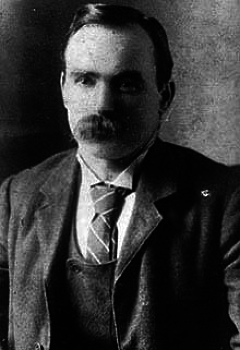
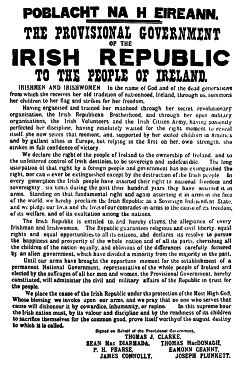
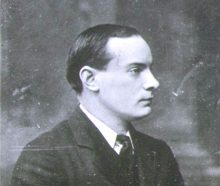
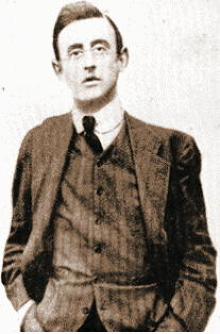
Roughly 1,200 Irish republicans seized key buildings across Dublin on Easter Monday 1916 and declared an independent Irish Republic from the steps of the General Post Office on O'Connell Street. Patrick Pearse, a schoolteacher and poet who commanded the rebel forces, read the Proclamation of the Irish Republic to a bewildered crowd of passersby. Most Dubliners had no idea an insurrection was planned. Many were openly hostile to it. The Rising was the work of a small, determined minority within the broader Irish nationalist movement. The Irish Republican Brotherhood, a secret organization that had infiltrated the Irish Volunteers, planned the rebellion over months, deliberately excluding the Volunteer leadership from key decisions. A shipment of German arms aboard the Aud was intercepted by the Royal Navy on Good Friday, and Eoin MacNeill, the nominal Volunteer commander, issued a countermand canceling all maneuvers when he learned the true purpose of the Easter exercises. The conspirators went ahead anyway, knowing the odds were hopeless. British forces responded with overwhelming firepower. A gunboat on the Liffey shelled Liberty Hall. Artillery reduced parts of O'Connell Street to rubble. Snipers on both sides made movement through central Dublin lethal. Civilian casualties were heavy, far exceeding military losses on either side. After six days, with much of central Dublin burning and further resistance futile, Pearse ordered an unconditional surrender on April 29. Sixty-four rebels, 132 British soldiers, and at least 254 civilians were dead. The British response to the surrender transformed Irish politics. Ninety death sentences were handed down by military courts. Sixteen leaders were executed by firing squad over ten days in May, including the badly wounded James Connolly, who was tied to a chair because he could not stand. Public opinion, initially hostile to the rebels, shifted dramatically. The executions created martyrs where there had been extremists, and within five years, the Irish War of Independence had begun. The Easter Rising failed militarily and succeeded completely as an act of political sacrifice.
April 24, 1916
110 years ago
Key Figures & Places

What Else Happened on April 24
A child inherited the throne of the most powerful empire on earth, and a woman ruled in his place for two decades. Thutmose III became pharaoh around 1479 BC up…
Greek soldiers crept out of a hollow wooden horse in the dead of night and opened the gates of Troy, ending a ten-year siege and launching one of the foundation…
Ten years of siege, one wooden horse hiding two thousand Greeks. When the gates creaked open, Priam's palace burned and his sons fell by the sword. Helen walked…
Eratosthenes pinned 1183 BC as the day Greek ships burned twelve thousand men and women alive inside wooden walls. He didn't care about gods; he counted the dea…
Charles V's horse, Euphrosine, bolted right into a swamp, leaving the Emperor stranded in muddy water while his son-in-law, the Duke of Alba, charged straight t…
Mary, Queen of Scots, wed the Dauphin François at Notre Dame, uniting the French and Scottish crowns under a single Catholic alliance. This marriage intensified…
Talk to History
Have a conversation with historical figures who witnessed this era. Ask questions, explore perspectives, and bring history to life.