
Library of Congress Founded: America's Knowledge Secured
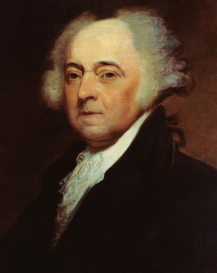
President John Adams signed an appropriation of $5,000 on April 24, 1800, to purchase "such books as may be necessary for the use of Congress," creating what would become the largest library in the world. The Library of Congress was initially a modest legislative reference collection, housed in the new Capitol building in Washington and limited to books on law, economics, and history that members of Congress might need for their work. Its ambitions were as small as its budget. The library's first major crisis was also its catalyst for transformation. British troops burned the Capitol during the War of 1812, destroying the entire collection of roughly 3,000 volumes. Thomas Jefferson, retired at Monticello and perpetually in debt, offered to sell Congress his personal library of 6,487 books, the largest private collection in the country. Congress accepted in 1815 for $23,950. Jefferson's library was encyclopedic, covering architecture, music, philosophy, science, and literature in multiple languages, and it fundamentally redefined the institution's scope. The Library of Congress was no longer a legislative tool. It was becoming a national library. Growth accelerated under Librarian of Congress Ainsworth Rand Spofford, who secured the 1870 copyright law requiring that two copies of every work registered for copyright be deposited with the library. That single provision transformed the Library of Congress into the de facto repository of American intellectual production. By the 1890s, the collection had outgrown the Capitol, and Congress authorized the construction of a dedicated building, the Thomas Jefferson Building, which opened in 1897 as the largest library building in the world. Today the Library of Congress holds more than 170 million items, including 40 million books, 73 million manuscripts, 15 million photographs, and 5.5 million maps. Its collections span every format from Gutenberg Bibles to digital archives. The institution Jefferson's purchase transformed serves not just Congress but researchers worldwide, preserving the recorded knowledge of human civilization on a scale no other institution matches. All of it grew from a $5,000 line item in a government budget.
April 24, 1800
226 years ago
Key Figures & Places

United States
Wikipedia
President of the United States
Wikipedia

Congress of the United States
Wikipedia
United States dollar
Wikipedia
John Adams
Wikipedia

Library of Congress
Wikipedia
Library of Congress
Wikipedia
John Adams
Wikipedia
United States Congress
Wikipedia
Washington, D.C.
Wikipedia
United States dollar
Wikipedia
Vietnam War
Wikipedia
What Else Happened on April 24
A child inherited the throne of the most powerful empire on earth, and a woman ruled in his place for two decades. Thutmose III became pharaoh around 1479 BC up…
Greek soldiers crept out of a hollow wooden horse in the dead of night and opened the gates of Troy, ending a ten-year siege and launching one of the foundation…
Ten years of siege, one wooden horse hiding two thousand Greeks. When the gates creaked open, Priam's palace burned and his sons fell by the sword. Helen walked…
Eratosthenes pinned 1183 BC as the day Greek ships burned twelve thousand men and women alive inside wooden walls. He didn't care about gods; he counted the dea…
Charles V's horse, Euphrosine, bolted right into a swamp, leaving the Emperor stranded in muddy water while his son-in-law, the Duke of Alba, charged straight t…
Mary, Queen of Scots, wed the Dauphin François at Notre Dame, uniting the French and Scottish crowns under a single Catholic alliance. This marriage intensified…
Talk to History
Have a conversation with historical figures who witnessed this era. Ask questions, explore perspectives, and bring history to life.