Olympics Revived: Athens Hosts First Modern Games
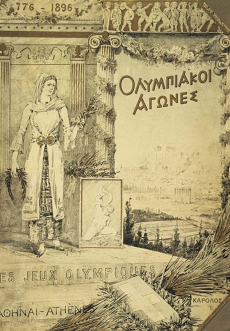
Eighty thousand spectators packed the Panathenaic Stadium in Athens on April 6, 1896, to watch the opening of the first modern Olympic Games, an event that a French aristocrat had spent years willing into existence against near-universal skepticism. Pierre de Coubertin, a pedagogue obsessed with the idea that athletic competition could promote international peace, had convened a congress in Paris in 1894 and persuaded delegates from twelve countries to approve the revival of the ancient Greek games. Athens was chosen unanimously as the host city, but the Greek government initially refused to fund the event. The games happened because of one man's wallet. Georgios Averoff, a wealthy Greek businessman living in Alexandria, Egypt, donated nearly one million drachmas to renovate the Panathenaic Stadium, which had been built for the ancient Panathenaic Games in 329 BC and lay in ruins. His donation covered the cost of rebuilding the stadium in white Pentelic marble, the same stone used for the Parthenon. A statue of Averoff was erected outside the stadium before the games began. Fourteen nations sent athletes, though the participation was haphazard. Several Americans from the Boston Athletic Association and Princeton University entered after organizing their own travel. Some competitors were tourists who happened to be in Athens. John Pius Boland, an Irish student at Oxford, entered the tennis tournament on a whim and won gold. The swimming events took place in the open sea at Piraeus, where water temperatures hovered around 55 degrees Fahrenheit and waves disrupted the races. The marathon, a race invented specifically for these games to commemorate the legend of Pheidippides, produced the most dramatic moment. Greek runner Spyridon Louis, a water carrier with no competitive running experience, entered the stadium in first place to delirium from the home crowd. King George I rose from his seat, and two Greek princes ran alongside Louis for the final meters. His victory remains the emotional cornerstone of Greek Olympic history. The most successful competitor was German wrestler and gymnast Carl Schuhmann, who won four gold medals across two sports, a feat of versatility unimaginable in the specialized modern games.
April 6, 1896
130 years ago
Key Figures & Places
What Else Happened on April 6
Julius Caesar's legions shattered the combined Republican forces at Thapsus in North Africa on April 6, 46 BC, in an engagement that devolved from battle into w…
Stilicho forced a tactical stalemate against Alaric’s Visigoths at the Battle of Pollentia, halting their initial invasion of Italy. By capturing the Visigothic…
Richard I of England, the warrior-king who had fought across three continents, died on April 6, 1199, from a gangrenous crossbow wound sustained while besieging…
Ayyubid Egyptian forces routed the French Crusader army and captured King Louis IX at the Battle of Fariskur, effectively destroying the Seventh Crusade in a si…
They burned their own king to keep him safe from the English crown. In 1320, Scottish nobles signed this letter at Arbroath Abbey, explicitly telling Pope John …
Petrarch first glimpsed Laura in the church of Saint Clare in Avignon, sparking a lifelong obsession that fueled his sonnets. This encounter transformed the ver…
Talk to History
Have a conversation with historical figures who witnessed this era. Ask questions, explore perspectives, and bring history to life.