

Caesar Destroys Republicans at Thapsus: Cato Takes Own Life
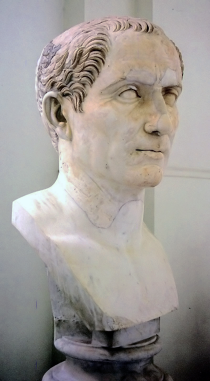
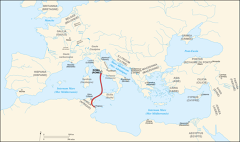
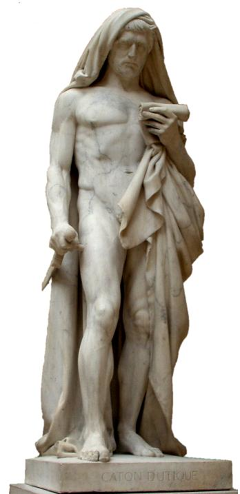
Julius Caesar's legions shattered the combined Republican forces at Thapsus in North Africa on April 6, 46 BC, in an engagement that devolved from battle into wholesale slaughter. Caesar's veterans, many of whom had fought with him in Gaul for a decade, broke formation before receiving orders and charged the enemy line. The Republican army, commanded by Quintus Caecilius Metellus Scipio and supported by King Juba I of Numidia, collapsed within hours. Caesar's troops killed an estimated 10,000 enemy soldiers and took no prisoners, ignoring their commander's attempts to restrain them. The battle was the climax of a civil war that had been consuming the Roman Republic for three years. Caesar had crossed the Rubicon in January 49 BC, driven Pompey the Great from Italy, defeated him at Pharsalus in Greece, and pursued the remnants of the Pompeian faction across the Mediterranean. The Republican holdouts had gathered in the province of Africa, where the fertile lands around Carthage and the military resources of Numidia gave them a formidable base. Scipio commanded ten legions plus Numidian cavalry and war elephants provided by King Juba. Caesar landed in Africa with a smaller force and spent months maneuvering to force a pitched battle on favorable terms. At Thapsus, he deployed his legions opposite Scipio's line and positioned archers and slingers specifically to target the elephants. When the battle began, the missile troops panicked the elephants, which stampeded through their own lines. The collapse of the Numidian wing exposed Scipio's infantry to a double envelopment. The aftermath was grimmer than the battle. Cato the Younger, the most principled of Caesar's opponents and the moral conscience of the Republican cause, was at Utica rather than Thapsus. When news of the defeat arrived, Cato read Plato's dialogue on the immortality of the soul, then stabbed himself in the abdomen. A physician attempted to stitch the wound, but Cato tore out the stitches with his own hands and died. His suicide became the defining act of Roman Stoic resistance to tyranny. Caesar returned to Rome and celebrated four triumphs simultaneously, but the Republic he claimed to defend was already dead.
April 6, 46 BC
Key Figures & Places
Julius Caesar
Wikipedia
battle of Thapsus
Wikipedia
Marcus Porcius Cato (Cato the Younger)
Wikipedia

Julius Caesar
Wikipedia

Quintus Caecilius Metellus Pius Scipio
Wikipedia

Cato the Younger
Wikipedia

Battle of Thapsus
Wikipedia
Años 40 a. C.
Wikipedia
Pompeyanos
Wikipedia
Titus Labienus
Wikipedia
Cesariano (facción)
Wikipedia
What Else Happened on April 6
Stilicho forced a tactical stalemate against Alaric’s Visigoths at the Battle of Pollentia, halting their initial invasion of Italy. By capturing the Visigothic…

Richard I of England, the warrior-king who had fought across three continents, died on April 6, 1199, from a gangrenous crossbow wound sustained while besieging…
Ayyubid Egyptian forces routed the French Crusader army and captured King Louis IX at the Battle of Fariskur, effectively destroying the Seventh Crusade in a si…
They burned their own king to keep him safe from the English crown. In 1320, Scottish nobles signed this letter at Arbroath Abbey, explicitly telling Pope John …
Petrarch first glimpsed Laura in the church of Saint Clare in Avignon, sparking a lifelong obsession that fueled his sonnets. This encounter transformed the ver…
He wasn't crowned in Lisbon's grand palace, but in the smoke-choked church of Aljubarrota, right after a battle where 14,000 men fell to stop a Spanish invasion…
Talk to History
Have a conversation with historical figures who witnessed this era. Ask questions, explore perspectives, and bring history to life.