

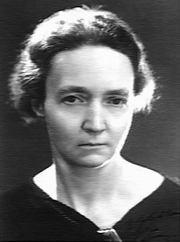
Joliot-Curie Dies: Nobel Physicist Claimed by Radiation
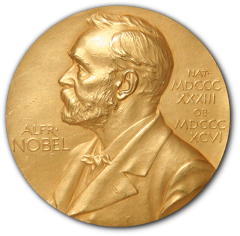
Irene Joliot-Curie died of acute leukemia on March 17, 1956, at age fifty-eight, almost certainly killed by the same element that had made her famous. Like her mother Marie Curie, who died of aplastic anemia caused by radiation exposure in 1934, Irene spent decades working with radioactive materials without adequate protection, absorbing doses that would eventually destroy her bone marrow. Born in Paris in 1897, Irene grew up in a household where Nobel Prizes were expected rather than extraordinary. Her mother had already won two of them. Irene served as a radiographer on the front lines during World War I at age seventeen, operating portable X-ray units to help surgeons locate shrapnel in wounded soldiers. The radiation exposure from those field units likely contributed to her eventual illness. Irene married Frederic Joliot in 1926, and the couple combined their surnames to Joliot-Curie. Working together at the Radium Institute, they made their most important discovery in 1934: artificial radioactivity. By bombarding aluminum with alpha particles, they created a new radioactive isotope of phosphorus, demonstrating for the first time that humans could create radioactive elements that did not exist in nature. The discovery earned them the 1935 Nobel Prize in Chemistry. The implications were enormous. Artificial radioactive isotopes became essential tools in medicine, industry, and scientific research. Radioactive tracers, used to track chemical processes in living organisms, revolutionized biology and medical diagnostics. The production of artificial isotopes also opened the pathway to nuclear fission, which Irene narrowly missed discovering herself in 1938 when she and her colleague Pavle Savic observed barium in uranium bombardment experiments but failed to interpret the results correctly. Irene was also politically active, serving as France's undersecretary of state for scientific research in 1936, one of the first women to hold a cabinet position in France. The Curie family produced four Nobel Prizes across two generations, and two of them died from the radiation that earned those prizes.
March 17, 1956
70 years ago
Key Figures & Places


What Else Happened on March 17

Caesar's best general had turned against him, and at the Battle of Munda on March 17, 45 BC, that betrayal nearly succeeded. Titus Labienus, who had served as C…
Marcus Aurelius succumbed to illness in Vindobona, ending the era of the Five Good Emperors. His death elevated his son, Commodus, to sole power, abruptly halti…
He was Rome's first emperor born into the purple — literally raised in the palace — and Marcus Aurelius knew it was a mistake. The philosopher-emperor spent his…
He murdered the emperor, then forced the widow to marry him — all within days. Petronius Maximus bribed enough senators to claim the Western Roman throne in Mar…
Petronius Maximus seized the Western Roman throne with the Senate’s backing just one day after orchestrating the assassination of Valentinian III. His reign las…

Patrick died at Saul, County Down, around March 17, 461, after spending nearly thirty years converting the Irish to Christianity. He arrived on an island of dru…
Talk to History
Have a conversation with historical figures who witnessed this era. Ask questions, explore perspectives, and bring history to life.