Saint Patrick Dies: Faith Takes Root in Ireland
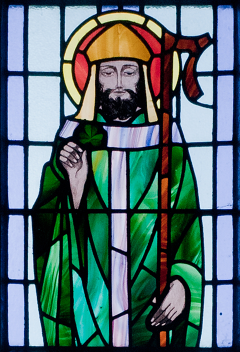
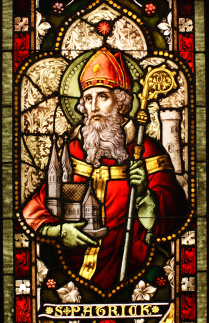
Patrick died at Saul, County Down, around March 17, 461, after spending nearly thirty years converting the Irish to Christianity. He arrived on an island of druids, tribal kings, and oral tradition, and left behind a church that would preserve Western learning through the darkest centuries of the early Middle Ages. The date of his death became the most celebrated saint's day in the Western world. Patrick was born in Roman Britain, probably in the late fourth century, to a Christian family of some standing. At age sixteen, Irish raiders captured him and carried him across the sea to work as a herder in the fields of what is now County Antrim. He spent six years in captivity, and by his own account in the Confessio, his faith deepened profoundly during this isolation. He eventually escaped, following a voice he heard in a dream, and made his way back to Britain. After ordination as a bishop, Patrick returned to Ireland around 432 with a mission to evangelize the Irish. He traveled extensively, confronting druids, negotiating with tribal kings, and establishing churches and monasteries across the island. His approach combined diplomacy with courage. He reportedly challenged the High King at Tara by lighting a paschal fire on the Hill of Slane in defiance of royal prohibition, and he used the three-leafed shamrock to explain the Christian Trinity in terms the Irish could understand. The monasteries Patrick and his successors established became centers of learning that attracted scholars from across Europe during the sixth and seventh centuries, when much of the continent was in turmoil. Irish monks preserved Latin and Greek texts, produced illuminated manuscripts, and sent missionaries to Scotland, England, France, and beyond. St. Patrick's Day was observed as a religious holiday in Ireland for centuries before it became a secular celebration. The first St. Patrick's Day parade took place not in Ireland but in New York City in 1762, organized by Irish soldiers serving in the British Army. The holiday's transformation into a global celebration of Irish identity accelerated in the 1990s, when the Irish government launched a campaign to market the day as a tourism event. Patrick changed Ireland, and the Ireland he changed preserved civilization.
March 17, 461
1565 years ago
Key Figures & Places

What Else Happened on March 17
Caesar's best general had turned against him, and at the Battle of Munda on March 17, 45 BC, that betrayal nearly succeeded. Titus Labienus, who had served as C…
Marcus Aurelius succumbed to illness in Vindobona, ending the era of the Five Good Emperors. His death elevated his son, Commodus, to sole power, abruptly halti…
He was Rome's first emperor born into the purple — literally raised in the palace — and Marcus Aurelius knew it was a mistake. The philosopher-emperor spent his…
He murdered the emperor, then forced the widow to marry him — all within days. Petronius Maximus bribed enough senators to claim the Western Roman throne in Mar…
Petronius Maximus seized the Western Roman throne with the Senate’s backing just one day after orchestrating the assassination of Valentinian III. His reign las…
Muhammad led his outnumbered forces to a decisive victory against the Quraysh at the Battle of Badr, securing the survival of the nascent Muslim community in Me…
Talk to History
Have a conversation with historical figures who witnessed this era. Ask questions, explore perspectives, and bring history to life.