

Caesar Wins His Last Battle at Munda: Pompey's Sons Crushed in Spain
Caesar's best general turned against him, and it nearly killed him. Titus Labienus had served under Caesar for eight years in Gaul, knew every one of his tactics, and commanded Pompey's sons at Munda with terrifying precision. The battle lasted eight hours. Caesar himself grabbed a shield and rushed into the front lines when his troops faltered—something a 55-year-old dictator absolutely wasn't supposed to do. Thirty thousand died that day in southern Spain. Less than a year later, Caesar was dead on the Senate floor, stabbed by men who'd watched him risk everything for victory. Turns out the real threat wasn't the general who knew his secrets.
March 17, 45 BC
Key Figures & Places
Titus Labienus
Wikipedia
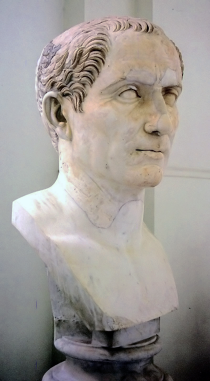
Julius Caesar
Wikipedia
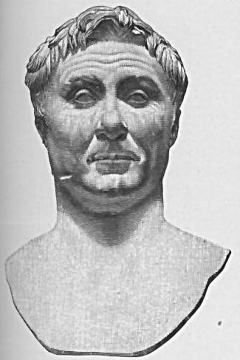
Pompey
Wikipedia
Gnaeus Pompeius
Wikipedia
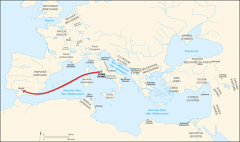
Battle of Munda
Wikipedia

Julius Caesar
Wikipedia

Pompey
Wikipedia
Titus Labienus
Wikipedia

Gnaeus Pompeius Magnus (son of Pompey)
Wikipedia

Battle of Munda
Wikipedia
45 a. C.
Wikipedia
98 av. J.-C.
Wikipedia
Römische Bürgerkriege
Wikipedia

Roman dictator
Wikipedia

Ancient Rome
Wikipedia
What Else Happened on March 17
Marcus Aurelius succumbed to illness in Vindobona, ending the era of the Five Good Emperors. His death elevated his son, Commodus, to sole power, abruptly halti…
He was Rome's first emperor born into the purple — literally raised in the palace — and Marcus Aurelius knew it was a mistake. The philosopher-emperor spent his…
He murdered the emperor, then forced the widow to marry him — all within days. Petronius Maximus bribed enough senators to claim the Western Roman throne in Mar…
Petronius Maximus seized the Western Roman throne with the Senate’s backing just one day after orchestrating the assassination of Valentinian III. His reign las…

Patrick died in Saul on March 17, 461, after four decades of preaching and building churches that transformed Ireland's spiritual landscape. His death sparked a…
Muhammad led his outnumbered forces to a decisive victory against the Quraysh at the Battle of Badr, securing the survival of the nascent Muslim community in Me…
Talk to History
Have a conversation with historical figures who witnessed this era. Ask questions, explore perspectives, and bring history to life.