

Napoleon Crowns Himself King of Italy
Napoleon placed the Iron Crown of Lombardy on his own head at Milan Cathedral on March 17, 1805, proclaiming himself King of Italy and declaring, "God gives it to me, woe to him who touches it." The crown, said to contain a nail from the True Cross, had been used to crown Lombard and Holy Roman rulers for centuries. Napoleon's act transformed the Italian Republic, which he had already controlled as president, into a hereditary kingdom under his direct rule. The transformation was not subtle. Napoleon had restructured northern Italy after his Italian campaigns of 1796-97 and again after Marengo in 1800, creating the Cisalpine Republic and then the Italian Republic with himself as president. The shift to a kingdom formalized what everyone already understood: northern Italy was a French possession, governed by French laws, taxed by French administrators, and garrisoned by French soldiers. Napoleon named his stepson Eugene de Beauharnais as viceroy to administer the kingdom in his absence. Eugene proved a capable administrator, implementing the Napoleonic Code, modernizing infrastructure, and building a functioning Italian state apparatus. The kingdom comprised Lombardy, Venetia, and parts of the Papal States and extended its control progressively as Napoleon's empire expanded. The coronation alarmed the rest of Europe. Austria, which had long considered northern Italy within its sphere of influence, viewed the kingdom as a direct provocation. Britain used the Italian coronation as further evidence of Napoleon's insatiable ambition. Within months, the Third Coalition formed against France, leading to the War of 1805 and Napoleon's decisive victories at Ulm and Austerlitz. The Kingdom of Italy survived until Napoleon's fall in 1814, when the Congress of Vienna returned most of northern Italy to Austrian control. But the decade of French administration had introduced concepts of centralized governance, legal equality, and national identity that Italian nationalists would draw upon during the Risorgimento. Napoleon intended to build a personal empire. He accidentally planted the seeds of Italian nationalism instead.
March 17, 1805
221 years ago
Key Figures & Places
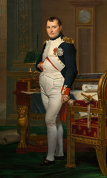
Napoleon I of France
Wikipedia
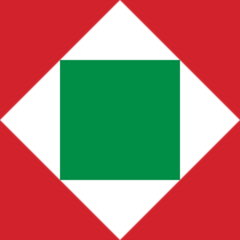
Italian Republic (Napoleonic)
Wikipedia
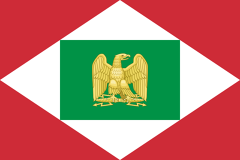
Kingdom of Italy (Napoleonic)
Wikipedia

Italian Republic (Napoleonic)
Wikipedia

Napoleon
Wikipedia

Kingdom of Italy (Napoleonic)
Wikipedia

King of Italy
Wikipedia

Italy
Wikipedia

Milan
Wikipedia
28 mai
Wikipedia

Eugène de Beauharnais
Wikipedia

Alessandro Volta
Wikipedia

Electric battery
Wikipedia

History of France
Wikipedia

Cisalpinische Republik
Wikipedia

François-Henri de Montmorency, duc de Luxembourg
Wikipedia

Franco-Dutch War
Wikipedia

Valenciennes
Wikipedia
Cerco de Utreque
Wikipedia

Rhine
Wikipedia

Sykes–Picot Agreement
Wikipedia

England
Wikipedia

France
Wikipedia

Russia
Wikipedia
What Else Happened on March 17

Caesar's best general had turned against him, and at the Battle of Munda on March 17, 45 BC, that betrayal nearly succeeded. Titus Labienus, who had served as C…
Marcus Aurelius succumbed to illness in Vindobona, ending the era of the Five Good Emperors. His death elevated his son, Commodus, to sole power, abruptly halti…
He was Rome's first emperor born into the purple — literally raised in the palace — and Marcus Aurelius knew it was a mistake. The philosopher-emperor spent his…
He murdered the emperor, then forced the widow to marry him — all within days. Petronius Maximus bribed enough senators to claim the Western Roman throne in Mar…
Petronius Maximus seized the Western Roman throne with the Senate’s backing just one day after orchestrating the assassination of Valentinian III. His reign las…

Patrick died at Saul, County Down, around March 17, 461, after spending nearly thirty years converting the Irish to Christianity. He arrived on an island of dru…
Talk to History
Have a conversation with historical figures who witnessed this era. Ask questions, explore perspectives, and bring history to life.