

Planck Discovers Quantum Law: Physics Reborn
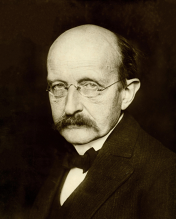
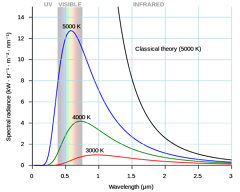
Max Planck sat at his desk in his Berlin home on the evening of October 19, 1900, and derived a mathematical formula that fit the experimental data for black-body radiation perfectly. The formula required an assumption that Planck himself found deeply troubling: energy was not emitted continuously, as classical physics demanded, but in discrete packets he called "quanta." With that reluctant insight, quantum physics was born, and the understanding of nature at its most fundamental level was permanently transformed. The problem Planck solved had been torturing physicists for years. Classical thermodynamics predicted that a heated object should radiate infinite energy at ultraviolet frequencies — a result so absurd it was called the "ultraviolet catastrophe." Experimental measurements showed that radiation peaked at a specific frequency depending on temperature and then declined, but no existing theory could explain the observed curve. Previous attempts by Lord Rayleigh and others had failed spectacularly. Planck's radical assumption was that energy could only be emitted or absorbed in multiples of a fundamental unit proportional to the frequency of the radiation. The constant of proportionality, now called Planck's constant (h), has the incredibly small value of 6.626 × 10⁻³⁴ joule-seconds. Planck initially regarded the quantization as a mathematical trick to make the equations work, not a description of physical reality. He spent years trying to reconcile his formula with classical physics and later described his discovery as "an act of desperation." Einstein was the one who took quantum theory seriously as physics. In 1905, he used Planck's quantum hypothesis to explain the photoelectric effect, showing that light itself comes in discrete packets — photons. Niels Bohr applied quantum ideas to atomic structure in 1913. By the 1920s, Werner Heisenberg, Erwin Schrödinger, and others had developed full quantum mechanics, revolutionizing chemistry, materials science, and eventually making possible transistors, lasers, and modern computing. Planck received the Nobel Prize in Physics in 1918, honored for a discovery he had never entirely believed was real.
October 19, 1900
126 years ago
Key Figures & Places

What Else Happened on October 19

Hannibal Barca, the Carthaginian general who had terrorized Rome for fifteen years, met his match at Zama in 202 BC when a younger Roman commander named Scipio …
King Gaiseric led his Vandal forces into Carthage, seizing the city without a fight after years of relentless pressure on Roman North Africa. By capturing this …
King John succumbed to dysentery at Newark-on-Trent, ending a disastrous reign defined by the loss of French territories and the forced signing of the Magna Car…
Heidelberg University held its first lecture on October 18, 1386. The Elector Palatine founded it after a theological dispute got his scholars expelled from Par…

French forces recaptured Bordeaux on October 19, 1453, and the Hundred Years' War — which had actually lasted 116 years — finally ground to a close. England ret…
Bordeaux surrendered to French forces on this day, ending the Hundred Years' War. By losing its final foothold in Aquitaine, England retreated from the continen…
Talk to History
Have a conversation with historical figures who witnessed this era. Ask questions, explore perspectives, and bring history to life.