Hundred Years' War Ends: France Recaptures Bordeaux
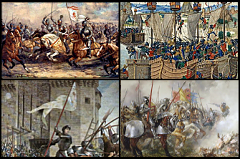
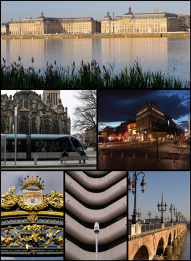
French forces recaptured Bordeaux on October 19, 1453, and the Hundred Years' War — which had actually lasted 116 years — finally ground to a close. England retained only the port of Calais on the entire European continent, and the medieval dream of an Anglo-French dual monarchy died on the battlefields of Gascony. The war that had begun with English longbows dominating French knights ended with French cannons demolishing English positions. The conflict began in 1337 when Edward III of England claimed the French throne through his mother Isabella, daughter of French King Philip IV. Early English victories were spectacular. The longbow devastated French cavalry at Crécy in 1346 and Poitiers in 1356, where the French king himself was captured. Henry V renewed the English claim with his legendary victory at Agincourt in 1415 and married the French king's daughter, positioning his infant son Henry VI as heir to both crowns. Joan of Arc reversed English momentum in 1429, lifting the Siege of Orléans and enabling Charles VII's coronation at Reims. After her capture and execution by the English in 1431, the French military continued its recovery. Charles VII rebuilt his army around professional companies equipped with the newest military technology: gunpowder artillery. The Bureau brothers, Jean and Gaspard, developed a French artillery corps that could reduce English-held castles and fortified towns in days rather than months. The final campaign centered on Gascony, which had been English for three centuries and whose population was largely loyal to the English crown. An English expeditionary force under the veteran commander John Talbot, Earl of Shrewsbury, arrived to support a Gascon uprising against French rule. At the Battle of Castillon on July 17, 1453, French artillery shattered Talbot's attacking force, killing the 80-year-old earl himself. Bordeaux surrendered three months later. No treaty formally ended the war — it simply stopped, as England descended into the Wars of the Roses and France consolidated under a strengthened monarchy. The conflict had transformed both nations, establishing their separate national identities and ending the feudal era in which kings could rule territories scattered across multiple countries.
October 19, 1453
573 years ago
Key Figures & Places
What Else Happened on October 19
Hannibal Barca, the Carthaginian general who had terrorized Rome for fifteen years, met his match at Zama in 202 BC when a younger Roman commander named Scipio …
King Gaiseric led his Vandal forces into Carthage, seizing the city without a fight after years of relentless pressure on Roman North Africa. By capturing this …
King John succumbed to dysentery at Newark-on-Trent, ending a disastrous reign defined by the loss of French territories and the forced signing of the Magna Car…
Heidelberg University held its first lecture on October 18, 1386. The Elector Palatine founded it after a theological dispute got his scholars expelled from Par…
Bordeaux surrendered to French forces on this day, ending the Hundred Years' War. By losing its final foothold in Aquitaine, England retreated from the continen…
The Second Treaty of Thorn ended the Thirteen Years' War, compelling the Teutonic Order to cede West Prussia to the Polish Crown. This territorial shift severed…
Talk to History
Have a conversation with historical figures who witnessed this era. Ask questions, explore perspectives, and bring history to life.